Why is Consultation Important Before Selecting a Braid Style?
Key Takeaways
|
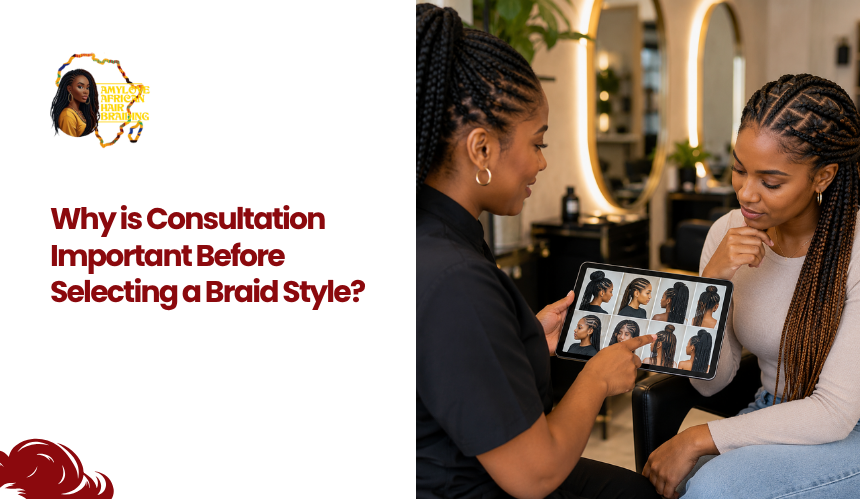
Choosing a braid style is not only about picking a look that seems beautiful in a photo. Every client’s hair type, scalp condition, lifestyle, and comfort level can affect how well a braid style fits, lasts, and protects the natural hair. Without proper guidance, even a trendy style may feel too tight, become difficult to maintain, or place unnecessary stress on the hairline.
A consultation gives the stylist a chance to understand the client’s needs before installation begins. It also helps create a style plan that feels practical, comfortable, and visually suited to the person wearing it. This blog explains why consultation is important before selecting a braid style.
How Does A Consultation Match The Braid Style To Hair Type And Condition?
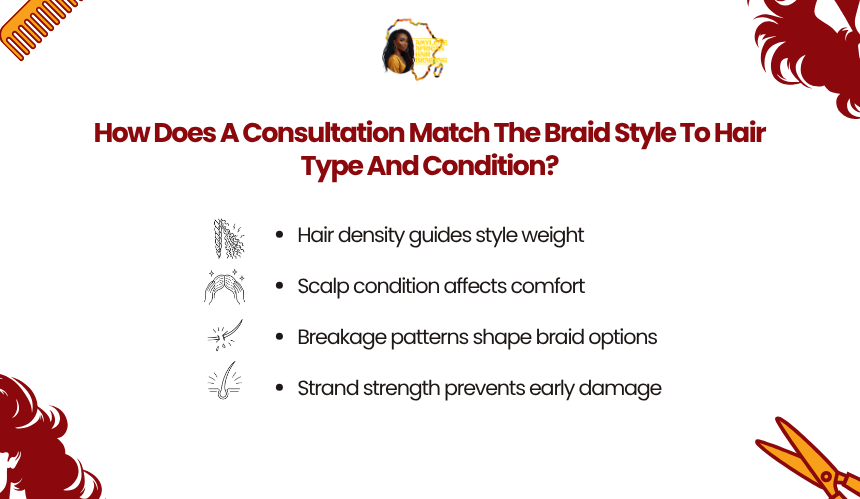
A braid consultation starts with a technical hair assessment. The stylist reviews texture, density, length, scalp response, and visible weak areas to understand which braid styles the hair can realistically support.
How Do Hair Density And Strand Strength Affect Style Choice?
Hair density determines how much weight the scalp and roots can safely support. Clients with fine, fragile, or low-density hair may experience stress if the selected style uses heavy extensions, very long braids, or tight parting patterns.
Strand strength also affects braid durability. Weak or over-processed hair may not hold certain braid styles without snapping, frizzing early, or loosening around the roots. During consultation, the stylist can identify whether lighter braids, medium-size parts, knotless techniques, or lower-tension styling would be more suitable.
Why Can Scalp Condition Change What Is Safe Or Comfortable?
The scalp directly affects how a braid style feels during and after installation. Dryness, flaking, tenderness, irritation, or sensitivity can make tight grip, small parts, or heavy extensions uncomfortable.
A consultation allows the stylist to adjust the styling approach before tension becomes a problem. For clients with recent chemical treatments, relaxers, color services, or scalp sensitivity, gentler sectioning and reduced pulling may be necessary to avoid inflammation, soreness, or unnecessary pressure on the follicles.
Do you know? A Johns Hopkins research review categorized hairstyle risk based on exposure to tension, added weight, heat, and hair-altering chemicals. It identified braids, dreadlocks, weaves, and extensions as higher risk when applied tightly or over chemically treated hair. A consultation helps identify these risk combinations before selecting the final braid plan. |
How Do Hair Length And Breakage Patterns Influence Installation Options?
Hair length affects how securely braids can be installed and how well the natural hair blends into the finished style. Very short sections may require specific braid techniques to prevent slipping, while uneven lengths may need careful parting to create a balanced result.
Breakage patterns also guide style selection. If the edges, crown, or nape are weaker than the rest of the hair, the stylist may avoid styles that place concentrated tension in those areas. This makes the consultation a practical step for choosing between knotless braids, box braids, cornrows, feed-in braids, or other protective styles.
Do you know? The American Academy of Dermatology states that losing 50 to 100 hairs per day is normal shedding, not necessarily hair loss. During a consultation, this distinction matters because a stylist can separate normal shedding from breakage, thinning edges, scalp irritation, or damage caused by excessive tension. |
How Does Consultation Prevent Tension, Discomfort, And Hair Damage?
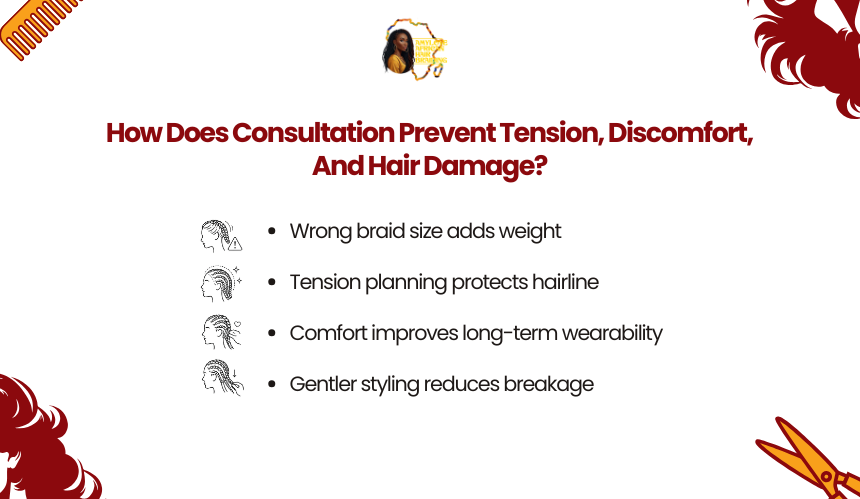
A braid consultation reduces the risk of choosing a style that creates avoidable scalp pressure or root strain. The goal is to prevent pain, breakage, bumps, and early removal before the braid installation begins.
Do you know? Research cited by Johns Hopkins reports that an estimated one-third of African-American women experience traction alopecia, making it one of the most common hair-loss concerns linked to high-tension styling in that group. This is why a braid consultation should review tension, extension weight, hairline strength, and scalp comfort before the final style is chosen. |
Why Can The Wrong Braid Size Create Too Much Weight?
Braid size affects how extension weight is distributed across the scalp. Large, long, or densely packed braids can pull heavily on the roots when the natural hair is fine, weak, or low in density.
Excess weight often creates pressure around the edges, nape, and crown because these areas are more vulnerable to tension. During consultation, the stylist can determine whether smaller sections, medium-length braids, lighter braiding hair, or a less bulky style would create a safer balance between appearance and hair support.
How Does Proper Tension Planning Protect The Hairline?
The hairline is one of the most sensitive areas during braided styling because the strands are usually finer and more exposed to repeated manipulation. If the grip is too tight or the parts are too small, the follicles may experience continuous pulling.
A consultation allows the stylist to plan tension before installation begins. This may include adjusting braid placement, using knotless methods, creating larger edge sections, or avoiding styles that require firm pulling near fragile areas. Proper tension control lowers the risk of breakage, thinning edges, and traction-related scalp stress.
Do you know? NCBI’s StatPearls summary reports South African data showing traction alopecia in up to 31.7% of adult women, while prevalence among children aged 6 to 15 ranged from 8.6% to 21.7%. These numbers show why consultation should begin early, especially when braids, cornrows, weaves, or extensions are worn repeatedly. |
Why Does Installation Comfort Affect Long-Term Wearability?
Comfort during installation is a reliable signal of whether the style can be worn safely for several weeks. A braid style that causes sharp pulling, headaches, or scalp tenderness at the start often becomes harder to manage as the scalp reacts to constant pressure.
When discomfort is addressed early, the stylist can reduce tension, modify the sectioning, or recommend a more suitable braid style. This prevents premature removal, scalp irritation, and unnecessary stress on the natural hair while making the finished style easier to maintain.
How Does Consultation Align A Braid Style With Lifestyle And Maintenance Needs?
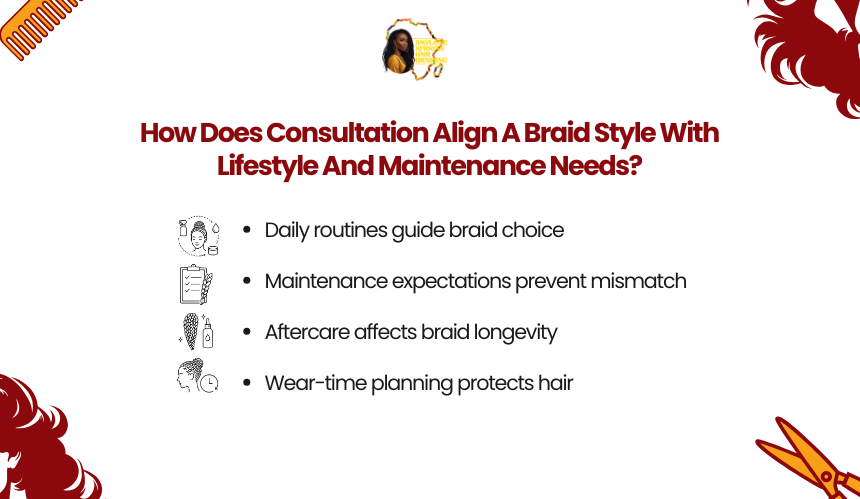
A braid style should fit the client’s daily routine, not create extra difficulty after installation. A consultation helps identify how the client works, sleeps, exercises, styles their hair, and manages upkeep so the chosen braid style remains practical beyond the salon appointment.
How Does Daily Routine Affect The Best Braid Style?
Daily routine influences braid length, size, pattern, and overall manageability. A client who works out often may need a secure, lightweight style that handles sweat and frequent scalp cleansing better than heavy or highly detailed braids.
Work settings, headwear, sleep habits, and personal styling preferences also affect the best choice. Someone who wears hats, uniforms, or professional hairstyles may benefit from medium-length braids, cleaner parting, or styles that can be pulled back without tension. Consultation turns these lifestyle details into practical styling decisions.
Many clients in Puyallup choose Knotless Braids because the area’s damp and frequently rainy climate can make everyday hair maintenance more difficult throughout the year. A lightweight protective style helps reduce constant heat styling, daily manipulation, and excess frizz exposure during changing weather conditions.
Whether someone is commuting through areas like South Hill or spending time around Downtown Puyallup, knotless braids are often preferred for their comfortable feel, cleaner finish, and easier long-term manageability.
Why Should Maintenance Expectations Be Clear Before Installation?
Different braid styles require different levels of care to stay neat. Some need regular scalp oiling, mousse application, edge control, gentle cleansing, nighttime wrapping, or occasional touch-ups to control frizz and preserve the parting pattern.
A consultation prevents mismatch between the client’s desired look and their actual maintenance capacity. If a client wants a low-effort routine, the stylist can recommend a simpler braid size, cleaner finish, or style variation that does not require frequent refresh appointments.
People in Puyallup also prefer Box Braids due to the style because it stays manageable through the area’s cool and rainy weather patterns. Since frequent moisture in the air can make natural hair harder to maintain daily, many clients choose protective styles that help minimize constant restyling and frizz exposure.
From busy days around Wildwood Park to routines near South Meridian, box braids are commonly selected for their structured look, long wearability, and lower day-to-day maintenance needs.
How Do Style And Aftercare Affect Braid Longevity?
Braid longevity depends on the relationship between the installation method and the client’s aftercare routine. Hair texture, braid size, extension type, scalp oil production, and sleeping habits all influence how long the style stays clean, secure, and comfortable.
A consultation helps set a realistic wear-time expectation before the style is installed. It also allows the stylist to explain when maintenance is needed, when frizz is normal, and when keeping braids too long may increase tangling, buildup, or breakage risk.
Do you know? Johns Hopkins reports that dermatology researchers recommend braided hairstyles generally remain in place no longer than 2 to 3 months, while weaves and extensions should be removed for a break after 6 to 8 weeks. Consultation helps set a realistic wear-time plan before buildup, tangling, or follicle stress becomes a problem. |
How Does Consultation Improve Visual Planning Before Choosing A Braid Style?
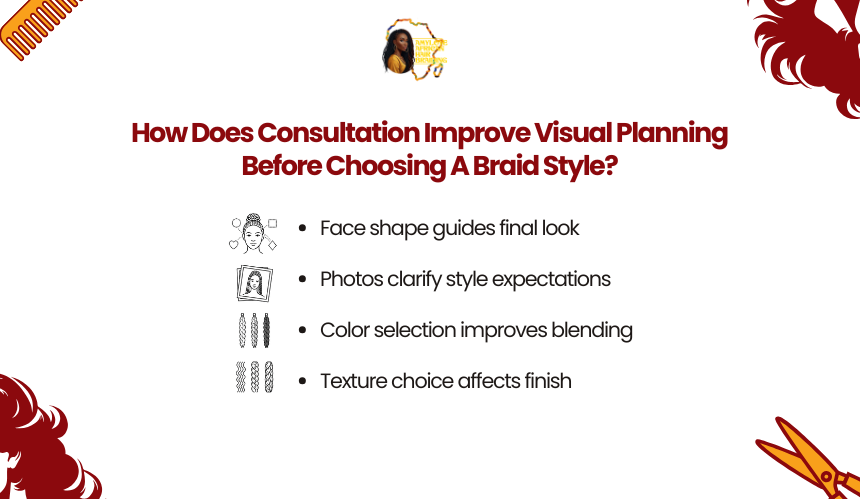
A braid consultation gives the client and stylist a shared visual direction before installation begins. It reduces confusion around length, fullness, color, parting, and finish so the final style looks intentional instead of simply copied from a reference photo.
How Do Face Shape And Personal Style Guide The Final Look?
Face shape affects how braid length, volume, and part placement frame the client’s features. Center parts, side parts, curved parts, and layered braid lengths can create very different visual balance, even when the base braid style is the same.
Personal style also changes the final recommendation. A client who prefers a polished, professional look may need cleaner parting and controlled fullness, while someone wanting a softer or bolder finish may choose boho pieces, color accents, or longer braids. Consultation connects the desired appearance with a style that suits the client’s features and comfort level.
Why Do Photos Help Clarify Braid Style Expectations?
Reference photos help identify the exact details behind the desired look, such as braid size, density, length, curl pattern, color blend, and parting layout. Without this visual check, the client and stylist may imagine different results from the same style name.
A consultation allows the stylist to explain what is realistic based on the client’s natural hair, scalp condition, and hair thickness. If the inspiration photo requires more length, volume, or extension hair than the client expected, adjustments can be made before the appointment starts.
Why Should Extension Color And Texture Be Selected Carefully?
Extension color affects how natural or bold the finished braid style appears. A shade that looks good online may not blend well with the client’s natural hair color, skin tone, or desired finish.
Texture and weight also matter. Smooth synthetic hair, pre-stretched braiding hair, curly pieces, and human-hair accents create different results in movement, softness, and maintenance. Consultation helps prevent mismatched tones, bulky bundles, excessive weight, or a finish that does not match the client’s original vision.
How Does Consultation Set Realistic Expectations For Time, Cost, And Results?
A braid consultation gives the client service-level clarity before booking. It outlines appointment length, pricing variables, add-ons, and realistic result limits so there are fewer surprises during or after the appointment.
Why Do Different Braid Styles Require Different Appointment Times?
Braid styles vary in installation time because each technique requires a different level of sectioning, part control, extension feeding, and finishing detail. Small knotless braids usually take longer than large box braids because they involve more individual sections and a more gradual attachment method.
Styles such as boho braids, stitch braids, and feed-in braids may also require added time for curl placement, clean parting, product control, and symmetry. A consultation helps the stylist estimate the appointment length based on braid size, hair density, desired length, and the complexity of the final look.
How Does Pricing Depend On Size, Length, Density, And Add-Ons?
Pricing often changes according to the amount of labor, product, and extension hair required. Smaller braids, longer lengths, high-density natural hair, layered designs, curly pieces, and custom color blends usually require more time and materials.
A consultation prevents pricing confusion by identifying these details before the service begins. It also allows the stylist to factor in preparation needs, takedown, detangling, wash services, or special finishing requests that may affect the final cost.
Why Does A Consultation Clarify What The Service Can Realistically Deliver?
Some requested braid styles require more time, extension hair, technical detailing, or sectioning precision than the client may expect. A consultation identifies whether the chosen look fits the appointment type, available materials, and required installation method.
If the exact style is not practical within the planned service, the stylist can recommend an adjusted version that keeps the main visual direction while aligning with time, cost, and hair suitability.
How Does Consultation Support Healthier Protective Styling Decisions?
A consultation turns braids into a planned protective style rather than a visual choice alone. The stylist considers the client’s hair goals, prep needs, and aftercare capacity so the style supports retention instead of causing preventable setbacks.
Do you know? NCBI’s StatPearls explains that traction alopecia often begins as a non-scarring and reversible condition, but chronic cases can progress to permanent scarring alopecia. This makes the consultation stage critical because tension, hairline weakness, scalp symptoms, and style history can be addressed before long-term damage develops. |
How Should A Protective Style Support Hair Retention?
A protective braid style should reduce daily manipulation while keeping the hairline, roots, and strands stable. When the installation is planned around the client’s hair condition, the style can support length retention, reduce friction, and limit unnecessary handling.
The goal is not only to make the braids look neat, but to create a wear period that does not compromise the scalp or weaken fragile areas.
Do you know? NCBI’s InformedHealth explains that scalp hair grows at about 1 centimeter per month, and about 90% of hair is usually in the growth phase at any time. This makes retention important: a braid style should protect existing growth instead of creating breakage that cancels out progress. |
How Can A Stylist Recommend Prep Before Braiding?
Hair preparation affects how well braids hold and how safely the hair remains tucked away. If the hair is tangled, dry, uneven, or coated with buildup, installation can become harder on the scalp and strands.
During consultation, the stylist may recommend detangling, trimming, deep conditioning, scalp cleansing, or moisture and protein balancing before the appointment. These steps create a cleaner foundation, reduce snagging during parting, and help the finished braid style last with less stress on the natural hair.
How Does The Right Braid Style Support Beauty And Hair Goals?
The right braid style should protect the client’s hair goals during the full wear period, especially when the focus is growth retention, edge preservation, scalp comfort, or easier maintenance.A style that looks good but causes pulling, dryness, or constant maintenance may not serve the client’s long-term hair goals.
Consultation helps balance appearance with hair health. The stylist can recommend a braid length, size, finish, and care plan that fits the client’s desired look while reducing avoidable damage and making the style easier to wear responsibly.
Ready to choose a braid style that feels as good as it looks? AmyLove helps clients find braid styles that match their hair type, scalp comfort, lifestyle, and long-term hair goals. From knotless braids to box braids and protective styling guidance, the right consultation can make every detail feel more intentional, comfortable, and easy to maintain. Reach out today to plan a braid style that fits you beautifully.
Frequently Asked Quetions
What should someone ask during a braid consultation?
A client should ask about braid size, extension weight, expected wear time, scalp care, takedown timing, and whether the style suits their hair density. They should also mention past breakage, edge thinning, sensitivity, chemical treatments, and daily routine so the stylist can recommend a safer, more manageable braid plan.
Can someone book braids without a consultation?
Booking without a consultation can work for repeat clients with healthy hair and a familiar style, but it is riskier for new clients, sensitive scalps, color-treated hair, or major style changes. A short pre-service discussion helps prevent mismatched expectations around tension, cost, length, maintenance, and final appearance.
How can a client tell if a braid style may be too much for their hair?
A style may be too much if the client has thinning edges, recent shedding, scalp tenderness, short broken sections, or hair that feels weak when detangled. Extra-long braids, dense parts, or heavy extensions can increase strain, so the stylist may suggest a lighter or lower-tension alternative.
Should hair be washed before a braid consultation or appointment?
Clean hair usually gives the stylist a clearer view of scalp condition, density, buildup, and breakage patterns. However, the client should avoid heavy oils, thick creams, or product layering before the appointment because buildup can affect parting, grip, extension blending, and how neatly the braids settle.
Can weather affect which braid style is best?
Weather can influence braid choice, especially in damp, humid, or rainy areas where natural hair may frizz faster or need more frequent styling. In places like Puyallup, clients may prefer knotless braids or box braids because they reduce daily manipulation while keeping the style easier to maintain.
When should someone delay getting braids?
A client should delay braids if the scalp is inflamed, painful, irritated, freshly burned from chemicals, or showing active sores. Braiding over compromised skin can increase discomfort and worsen tension-related stress. A stylist may recommend scalp recovery, conditioning, trimming, or professional hair care before installation.