
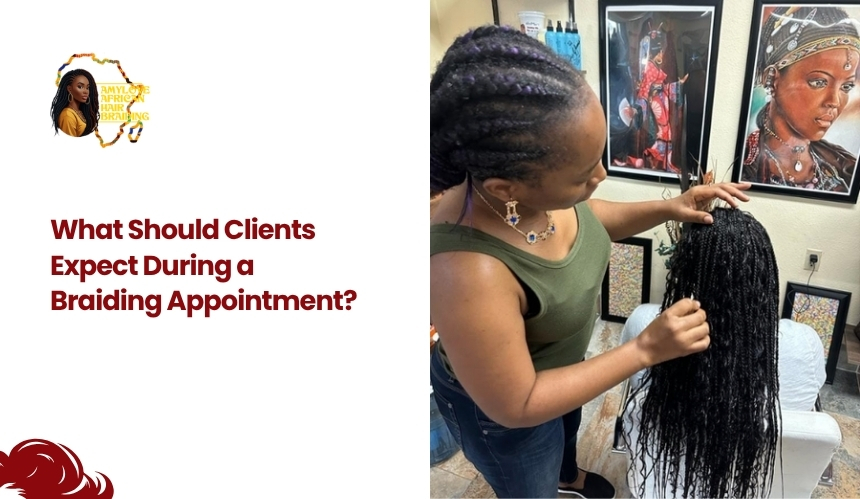
What Should Clients Expect During a Braiding Appointment?
Key Takeaways
|
A braiding appointment gives clients a comfortable and personalized styling experience that helps them feel prepared before the visit. Whether they want a protective style, a neat everyday look, or a long-lasting braid design, understanding the general flow of the appointment can make the process easier and more relaxed.
How The Appointment Usually Begins
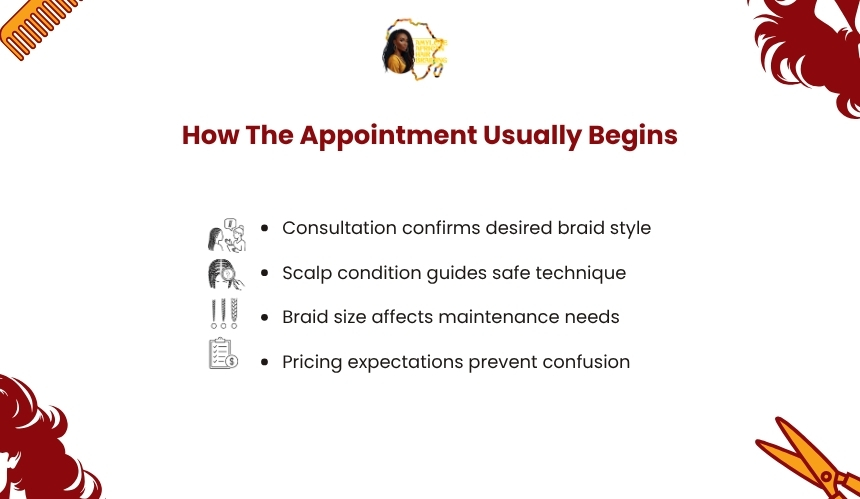
A braiding appointment usually begins with a consultation because the stylist needs to understand the client’s desired style before touching the hair. This first stage sets the direction for the full service, including braid size, parting pattern, added hair, styling time, price, and comfort expectations.
Across neighborhoods like Lakewood Village, Mayfair, and areas near Carson Park, braided hairstyles have become a go-to choice for people who want a neat, long-lasting look that fits busy routines.
Demand for protective styling has steadily grown in recent years, especially for knotless braids, with many clients in Lakewood choosing them for their lightweight feel, natural finish, and easy day-to-day maintenance. The style works well for both professional settings and casual outings, making it a flexible option for a wide range of lifestyles.
How Does The Stylist Confirm The Braiding Style?
The stylist may also ask how the client plans to wear the braids after the appointment. A style for daily work, school, workouts, travel, or a special event may require different length, weight, parting direction, and styling flexibility. For example, someone who needs easy ponytails may need a different braid placement than someone who wants a fuller, loose-hanging style.
This conversation helps the stylist connect the braid design with the client’s routine, not just the photo they like. It also allows the stylist to explain whether the requested style will be practical for sleeping, washing, tying up, or keeping for several weeks.
What Hair And Scalp Details Are Checked First?
The stylist may also look for signs that the braid service should be adjusted before it begins. Weak edges, recent relaxer use, heavy shedding, scalp tenderness, or short uneven areas can affect how much grip the stylist can safely use. In some cases, the stylist may recommend larger parts, less extension hair, a shorter length, or a lower-stress style.
This check gives the client a more realistic idea of what their hair can support at that appointment. It also prevents the stylist from forcing a braid style that may look good at first but become uncomfortable, unstable, or difficult to maintain.
Why Are Braid Size And Tension Discussed Early?
Braid size also affects how the style ages over time. Smaller braids often keep their shape longer because the sections are more detailed, while larger braids may show new growth sooner and may need earlier refreshing. The stylist can explain how different braid sizes affect wear time, daily styling, and the overall weight of the finished look.
This helps clients choose a braid size based on maintenance needs instead of appearance alone. A client who wants a lower-maintenance style may choose a different size than someone who prioritizes fullness, detail, or a specific visual effect.
Do You Know? The American Academy of Dermatology states that if a hairstyle feels painful, it is too tight. This matters during braiding because pain, stinging, scalp crusting, or pulling can signal stress on the hair follicles and may increase the risk of traction-related hair loss. |
When Are Timing, Pricing, And Maintenance Expectations Explained?
The stylist may also explain what is included in the service before the appointment moves forward. This can include added hair, wash service, blow-drying, length changes, color mixing, custom parts, curls, beads, or finishing products. These details matter because two braid styles may look similar in photos but require different labor, materials, and finishing steps.
This is also the right time for the client to understand salon policies, deposit requirements, cancellation rules, late arrival limits, and possible add-on charges. Clear service terms reduce confusion and help the appointment stay professional from the beginning.
What Happens During Hair Preparation
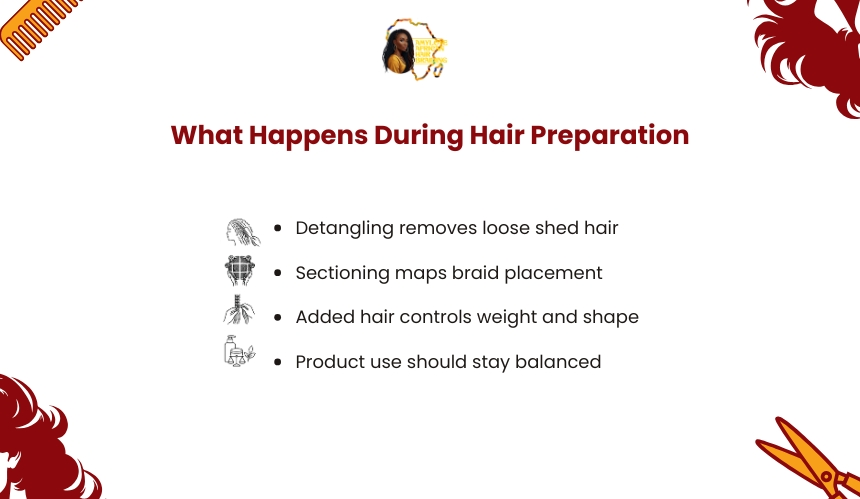
Hair preparation creates a workable base before the stylist begins the detailed braiding process. At this stage, the goal is not to create the finished look yet, but to make sure the hair can be handled, separated, and controlled without slowing down the service.
This step also helps the stylist identify areas that may need different handling. Dense areas, shorter pieces, dry ends, or sections with product buildup may require extra care before the braid pattern is started. Good preparation gives the stylist better control and helps avoid unnecessary interruptions once installation begins.
How Is The Hair Detangled Before Braiding?
The stylist may remove shed hair during detangling because loose strands can stay trapped near the roots or ends. If they are braided into the style, they can create knots, rough sections, or harder takedown later. Removing shed hair before installation keeps the hair easier to manage during and after the appointment.
Detangling also helps the stylist understand how the hair responds to handling. If the hair tangles quickly, feels dry, or has weak ends, the stylist may work in smaller sections or use a lighter product approach. This makes the preparation process more controlled and reduces avoidable stress on the strands.
Box braids are a timeless protective style that combine elegance, durability, and low-maintenance beauty, making them a top choice for clients who want a polished, long-lasting look. In different parts of Lakewood such as Mayfair, Lakewood Village, and areas near Lakewood Center, this style is especially popular for its versatility and clean, luxury finish.
Box braids in Lakewood are designed to enhance natural hair while offering endless styling options, from jumbo to waist-length looks, perfect for everyday wear, travel, or special occasions.
How Is The Hair Sectioned For Braids?
Sectioning is also where the stylist maps the full braid layout before the style takes shape. The stylist must consider the crown, sides, nape, hairline, and natural growth pattern so the braid placement looks balanced from every angle. Poor mapping can make the style appear crowded in one area and sparse in another.
For designed styles, sectioning becomes even more important. Curved parts, stitch patterns, side parts, middle parts, and feed-in designs need a clear layout before the first few braids are completed. This planning stage controls the structure of the entire style.
When Is Braiding Hair Added?
Before adding braiding hair, the stylist may check whether the extension hair matches the desired length, color, texture, and thickness. This prevents the style from looking too bulky, too thin, uneven, or different from what the client expected. If the client wants color blending, the stylist may also compare tones before installation begins.
The amount of braiding hair matters because it affects the final weight and shape of the style. Too much hair can make braids feel heavy, while too little can make them look flat or inconsistent. A professional stylist adjusts the added hair based on the client’s natural hair and selected braid type.
What Products Are Used Before Braiding Starts?
Clients should mention product allergies, fragrance sensitivity, scalp reactions, or previous irritation before any product is applied. Some gels, edge controls, oils, or sprays may contain ingredients that do not work well for every scalp. Sharing this information early helps the stylist choose products more carefully.
Product use should support the service without creating residue before the braids are even finished. If too much product is layered onto the hair, it can cause buildup, make the strands slippery, or leave the scalp feeling coated. A controlled product approach gives the stylist enough hold without overloading the hair.
What Clients Experience While Braids Are Being Installed
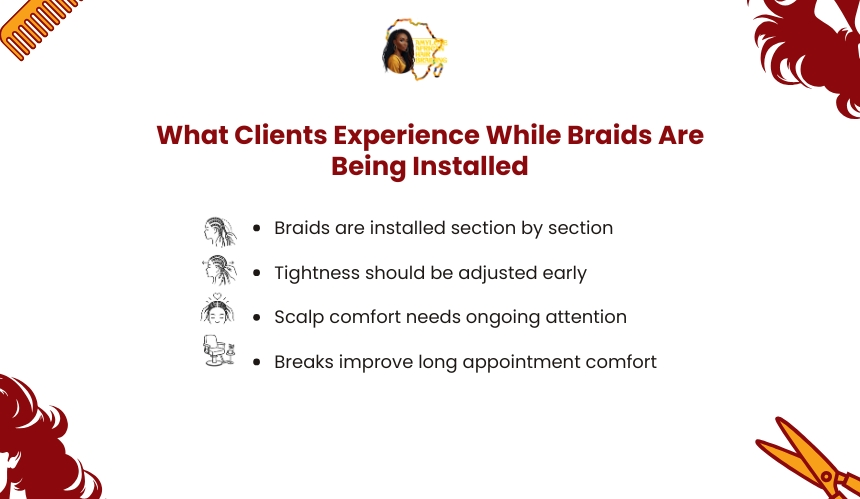
Once preparation is complete, the stylist begins installing the braids according to the confirmed style, parting pattern, and braid size. This stage is where clients should pay attention to comfort, tension, and communication because these factors affect both the final look and the health of the natural hair.
How Are Braids Installed Section By Section?
The stylist usually follows a planned order while installing the braids so the pattern stays consistent across the head. This order may start at the back, front, sides, or crown depending on the braid style. Following a clear sequence helps the stylist maintain control over part direction, braid flow, and overall layout.
This is especially useful for styles with visible scalp designs, stitch lines, feed-in patterns, or shaped parts. If the installation order is not controlled, the final style may lose symmetry or have sections that do not connect smoothly. A steady method keeps the design organized from start to finish
Why Should Maintenance Expectations Be Clear Before Installation?
Different braid styles require different levels of care to stay neat. Some need regular scalp oiling, mousse application, edge control, gentle cleansing, nighttime wrapping, or occasional touch-ups to control frizz and preserve the parting pattern.
A consultation prevents mismatch between the client’s desired look and their actual maintenance capacity. If a client wants a low-effort routine, the stylist can recommend a simpler braid size, cleaner finish, or style variation that does not require frequent refresh appointments.
People in Puyallup also prefer Box Braids due to the style because it stays manageable through the area’s cool and rainy weather patterns. Since frequent moisture in the air can make natural hair harder to maintain daily, many clients choose protective styles that help minimize constant restyling and frizz exposure.
From busy days around Wildwood Park to routines near South Meridian, box braids are commonly selected for their structured look, long wearability, and lower day-to-day maintenance needs.
How Is Tightness Managed During The Appointment?
Clients should give feedback as soon as something feels uncomfortable rather than waiting until the whole style is finished. If one section feels too tight, the same pressure may continue across the rest of the head unless the stylist knows there is a problem.
Early feedback gives the stylist time to adjust technique before the issue spreads through the style. The adjustment may involve changing hand pressure, braid angle, part size, extension amount, or how closely the braid begins at the root. This keeps the service more responsive and prevents avoidable discomfort.
What Should Clients Know About Scalp Comfort?
Scalp comfort can change as the appointment continues. A section may feel fine at first, but the overall weight of the style can become more noticeable as more braids are added. Clients should pay attention to how the style feels during the process, not only after the final braid is complete.
Some areas of the scalp may also respond differently. The hairline, temples, crown, and nape are often more sensitive than other sections. A stylist may handle these areas with lighter placement or smaller adjustments so the finished style feels more balanced.
How Do Breaks, Posture, And Appointment Duration Affect The Experience?
Long braid appointments require clients to prepare for stillness as much as time. Sitting in one position for a detailed braid style can affect the neck, shoulders, lower back, and legs. Short posture adjustments during the appointment can make the session easier without interrupting the stylist’s work too much.
Clients can also make the experience smoother by wearing comfortable clothing and avoiding tight collars, heavy earrings, or hairstyles that interfere with access to the scalp. These small choices help the client stay relaxed while allowing the stylist to work with better movement around the head.
How The Stylist Finishes The Braid Style
The finishing stage brings all small details together after the main installation is complete. At this point, the stylist may shape the ends, refine the hairline, check the overall direction of the braids, and make sure the final style looks intentional from different angles.
This step is not only cosmetic. Finishing also helps identify minor issues before the client leaves, such as loose pieces, uneven ends, unfinished curls, or areas that need extra smoothing. A careful finish makes the braid style feel complete instead of simply installed.
How Are Braid Ends Sealed?
Braid ends are sealed to keep the style from unraveling and to create a cleaner finish. The method depends on the braid type, hair extension material, and final style preference. Some braid ends may be dipped in hot water, while others may be curled, knotted, banded, or finished with a specific styling technique.
For synthetic braiding hair, hot water sealing is common because it softens the ends and helps them lay smoothly. The stylist may also shape the ends so they look even and controlled. Proper sealing keeps the braids intact, reduces fraying, and supports longer wear.
How Are Flyaways Trimmed And Edges Smoothed?
The stylist may trim loose extension fibers or small flyaways that stick out from the braids. This step improves the overall appearance without cutting the client’s natural hair. Clean trimming gives the braid style a sharper, more professional finish.
Edges may also be lightly smoothed depending on the client’s preference and scalp sensitivity. A small amount of edge control, mousse, or finishing product may be applied to refine the hairline and reduce frizz. The goal is not to make the style painfully tight, but to create a neat finish that still feels comfortable.
What Happens During The Final Style Check?
The final style check should include more than a quick front-facing mirror view. Clients can look at the sides, back, parting direction, braid length, and overall shape to confirm that the finished style matches what they expected. This is especially useful for longer braids, layered ends, curled tips, or designs that are more visible from the side.
Any small concern should be mentioned before leaving the chair. Minor adjustments are usually easier to handle immediately than after the client has gone home. This final review gives both the client and stylist a clear closing point for the service.
What Aftercare Guidance Clients Should Expect
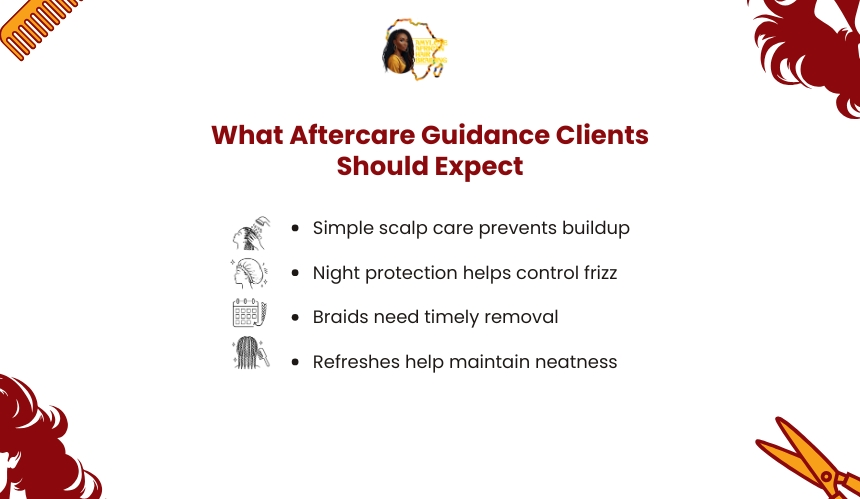
After the braiding appointment, the stylist should explain how to protect both the braid style and the natural hair underneath it. Good aftercare helps reduce dryness, frizz, scalp buildup, and unnecessary tension while keeping the style neat for longer.
How Should Clients Care For Their Scalp After Braiding?
Clients should keep the scalp routine simple after the appointment. Applying too many oils, sprays, creams, or styling products can create buildup between the parts and make the scalp feel heavy before the style is ready to come out.
A lighter routine is usually easier to maintain. Clients can focus on keeping the scalp comfortable, avoiding excessive scratching, and checking for signs of irritation. If the scalp feels coated or itchy, adding more product may not solve the problem and may make buildup worse.
How Can Clients Protect Braids At Night And Control Frizz?
The stylist may advise clients to wrap their braids at night with a satin scarf, bonnet, or silk pillowcase. These materials reduce friction, which helps protect the braid pattern, smooth the hairline, and limit frizz around the roots and ends.
Frizz control also depends on how the braids are handled during daily routines. Clients should avoid constant touching, rough tying, or sleeping without coverage. For longer braids, gathering them loosely before bed can reduce pulling at the scalp and help the style keep its shape.
Do You Know? The British Association of Dermatologists recommends covering Afro-textured hair at bedtime with a satin or silk cap or scarf, or using a satin or silk pillowcase. These materials help minimize friction, which can reduce frizz and dryness while the hair is braided. |
When Should Braids Be Removed Or Refreshed?
Removal should be planned before the braids become difficult to take down. When roots begin to tangle, shed hair collects at the base, or the style starts to feel heavy, waiting longer can make removal slower and increase the chance of breakage.
A refresh is different from full removal. Refreshing may work when only the front sections, parts, or edges need attention, but full removal is better when the natural hair needs cleansing, detangling, and rest. Knowing the difference helps clients avoid keeping a protective style past its useful stage.
Do You Know? The British Association of Dermatologists advises that braids should not be left in for longer than 6 weeks. Leaving braids in too long can increase tension, buildup, dryness, and scalp stress, especially if the style is heavy or tightly installed. |
How Clients Can Prepare Before Arriving
Clients can make the braiding appointment smoother by arriving with the right hair condition, clear style expectations, and enough time for the full service. Good preparation reduces delays and helps the stylist create a neater, more comfortable braid style.
Why Should Clients Arrive With Clean, Detangled Hair?
Clients should arrive with clean, detangled hair unless the stylist or salon provides washing as part of the service. Clean hair gives the stylist a better foundation to work with and helps products absorb more evenly during the appointment.
Detangling before arrival also reduces pulling, breakage, and extra preparation time. Knots, shed hair, or product buildup can make sectioning harder and may affect how smoothly the braids are installed. For textured, curly, or coily hair, stretching the hair lightly can also help the stylist create cleaner parts and more consistent braid placement.
Why Should Clients Bring Reference Photos Or Style Details?
Clients should bring photos that show more than one angle when possible. A front-facing image may show the general look, but side and back views can show braid length, fullness, layering, part direction, and how the style falls around the shoulders or back.
The client should also explain what they like most about the photo. Sometimes the appeal is the length, sometimes it is the braid size, color blend, curl pattern, or overall volume. Naming the exact detail helps the stylist understand the priority instead of guessing from the image alone.
How Should Clients Plan For Appointment Length And Comfort?
Clients should avoid booking a braiding appointment between tight commitments. Even with an estimated service time, braid appointments can shift depending on hair density, preparation needs, style changes, or finishing details. A flexible schedule reduces pressure on both the client and the stylist.
Planning also includes basic appointment readiness. Clients may want to charge their phone, eat beforehand, bring water, and avoid clothing that makes sitting uncomfortable for several hours. These details do not affect the braid technique directly, but they can make the appointment feel much easier from start to finish.
Ready for a braid style that feels comfortable, looks polished, and fits your everyday routine? AmyLove African Hair Braiding provides professional braiding services designed around each client’s hair condition, style preference, and long-term care needs. From knotless braids and box braids to detailed protective styles, AmyLove helps clients leave with a clean, confident look they can enjoy beyond the appointment.
Frequently Asked Quetions
Can clients get braids if their hair is short or uneven?
Clients with short or uneven hair can often still get braids, but the style may need adjustment. The stylist may recommend smaller parts, added braiding hair, shorter lengths, or a lower-tension option. Very short or fragile areas may not grip well, so realistic expectations help prevent slipping or unnecessary scalp stress.
What should clients avoid doing before a braiding appointment?
Clients should avoid heavy oils, thick creams, excessive gel, or last-minute chemical treatments before a braiding appointment. Product buildup can make the hair slippery and harder to part, while chemical services may leave the scalp more sensitive. Clean, manageable hair usually gives the stylist better control during installation.
Is it normal for braids to feel sore the next day?
Mild scalp awareness can happen after some braid styles, but sharp pain, bumps, burning, or tight pulling is not normal. Clients should contact the stylist if discomfort continues or worsens. Tight braids can stress the hairline and follicles, especially around edges, temples, crown, and nape areas.
How soon can clients wash their hair after getting braids?
Clients can usually cleanse the scalp while wearing braids, but they should avoid rough scrubbing or soaking the hair too heavily. A diluted shampoo, gentle scalp applicator, or lightweight cleansing method can reduce buildup without disturbing the braid pattern. Drying the scalp fully is important to prevent odor or irritation.
What should clients bring to a long braiding appointment?
For longer braid appointments, clients may bring water, a small snack, phone charger, headphones, and any approved braiding hair or accessories. Comfortable clothing also helps during extended sitting. Clients should confirm salon rules first because some stylists provide hair, products, or specific preparation instructions.
How can clients tell if braids are too heavy?
Braids may be too heavy if they pull the scalp downward, make ponytails uncomfortable, cause headaches, or create pressure around the roots. Excess extension hair, very long lengths, or oversized sections can increase weight. A lighter length, smaller hair amount, or different braid style may be safer.
What is the best way to take down braids without breakage?
Braids should be removed slowly by cutting only below the natural hair length, unraveling each braid carefully, and detangling shed hair before washing. Rushing removal can cause matting and breakage. A slippery conditioner or detangling product can help loosen buildup and protect the natural strands.