What Makes Fulani Braids Unique Among Braided Hairstyles?
Key Takeaways:
|
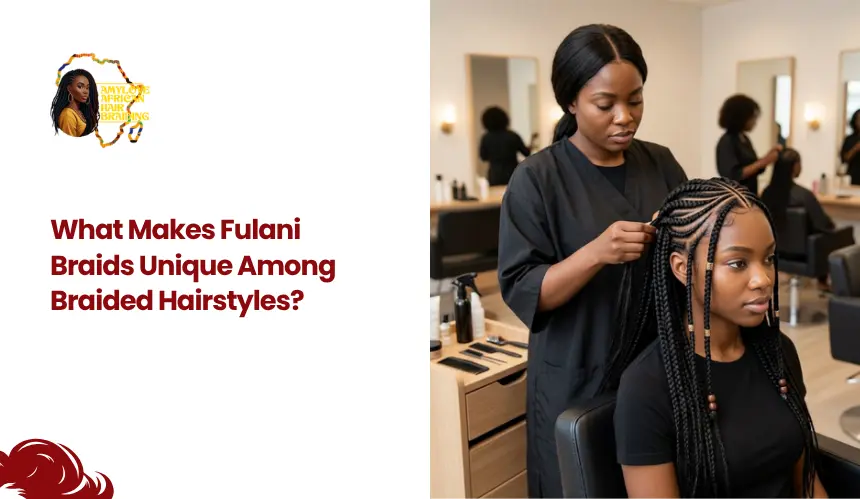
Fulani braids stand out due to their signature combination of a central braid, symmetrical side cornrows, detailed scalp parting, and culturally rooted adornments like beads and cuffs. Unlike other braided styles that rely on a single technique, this style integrates multiple braid patterns into one structured layout while maintaining a strong cultural identity. This article breaks down the structural design, cultural influence, and styling elements that define their uniqueness.
What Defines Fulani Braids at a Structural Level?
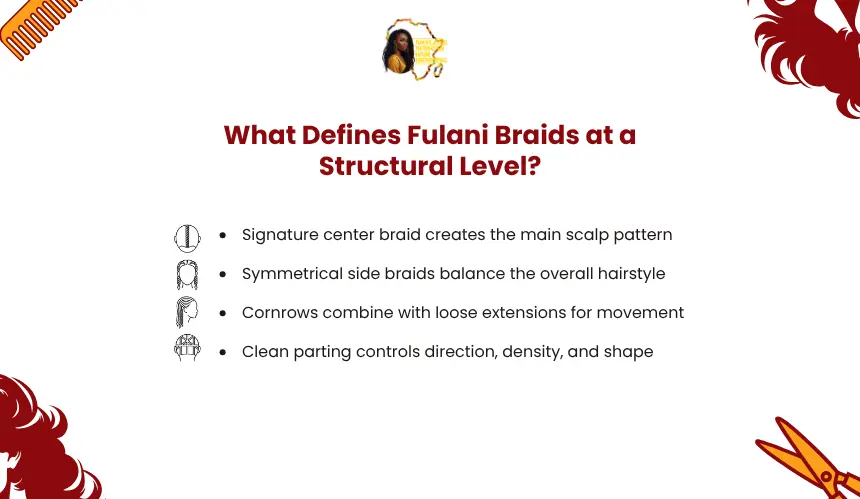
Fulani braids are identified by a precise combination of braiding techniques and scalp patterning that creates a structured yet flexible layout. Unlike single-method styles, this design integrates multiple braid types into one cohesive system.
Signature Center Braid and Symmetrical Side Patterns
A defining feature is the presence of a central cornrow running along the scalp, typically aligned from the forehead toward the crown or nape. This is balanced by evenly spaced side braids, creating a symmetrical framework that visually anchors the style. The alignment is intentional, ensuring proportional spacing rather than random distribution.
Pro Tip: For Fulani braids with detailed front patterns, the most delicate sections should sit near the hairline with less extension weight and a softer grip. Dermatology guidance links tight braids, cornrows, and extensions to traction alopecia when repeated pulling stresses follicles, especially around the temples and edges. |
Use of Cornrows Combined With Loose or Braided Extensions
The structure blends tight, scalp-based cornrows with free-hanging braids or extensions. This dual construction allows tension to be distributed across the scalp while maintaining length and movement. The contrast between anchored and loose sections gives the style both stability and visual depth.
Distinct Parting Techniques and Scalp Design Patterns
Parting plays a critical role in defining the final appearance. Clean, geometric sections such as straight lines, curves, or layered partitions are used to guide braid placement. These patterns are not purely aesthetic; they control braid direction, density, and overall symmetry, directly influencing how the style frames the face and holds over time.
How Do Cultural Origins Influence the Style of Fulani Braids?
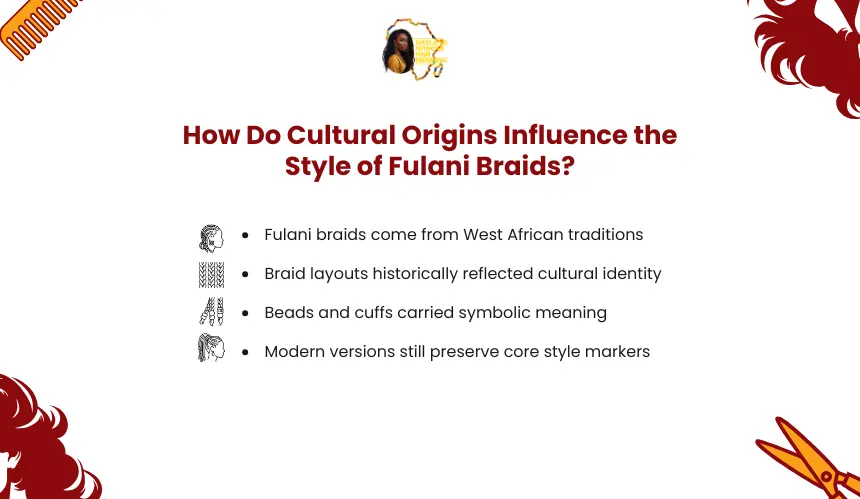
The design of Fulani braids is not arbitrary; it is shaped by cultural practices, identity markers, and long-standing hairstyling traditions. Understanding these origins clarifies why specific patterns, placements, and adornments are consistently used.
Roots in the Fulani Ethnic Group of West Africa
The style originates from the Fulani people, a widely distributed ethnic group across countries such as Nigeria, Mali, and Senegal. Traditional braiding methods were developed as part of daily life, where hair design functioned as a cultural identifier rather than purely an aesthetic expression.
Specific layouts, including central braids and side patterns, emerged from these regional practices and continue to define the modern style.
Symbolism Behind Braid Patterns and Adornments
Braiding patterns historically communicated information such as social status, marital position, or tribal affiliation. Accessories like beads and metal cuffs were not decorative alone; they indicated wealth, lineage, or personal milestones.
This symbolic layering gives Fulani braids a functional depth that extends beyond appearance, distinguishing them from styles created purely for visual trends.
Traditional vs Modern Adaptations of the Style
While the core structure remains consistent, modern interpretations have expanded the style’s flexibility. Contemporary versions may alter braid thickness, introduce color extensions, or modify parting patterns to suit current preferences.
Despite these changes, the foundational elements rooted in Fulani culture remain intact, preserving the identity of the style even as it evolves.
What Styling Elements Make Fulani Braids Visually Distinct?
Beyond structure and origin, Fulani braids are immediately recognizable due to specific styling choices that control how the braids frame the face and create visual contrast. These elements determine the overall aesthetic impact rather than just the base construction.
Pro Tip: Fulani braids can be styled in ponytails, buns, and half-up looks, but repeated tight updos can shift tension from the braid base to the same scalp points. Rotating between loose styles and low-tension looks helps preserve the protective benefit instead of converting the style into a traction risk. Dermatologists specifically warn that tightly pulled buns, ponytails, cornrows, and extensions can contribute to hair loss when they pull on the scalp. |
Use Of Beads, Cuffs, And Decorative Accessories
Adornments are strategically placed rather than randomly added. Beads are often attached to selected braid ends or focal strands to create movement and weight distribution, which affects how braids fall around the face. Metallic cuffs or rings are inserted along the braid length to introduce contrast in texture and reflect light, enhancing the visibility of individual braid lines.
Pro Tip: Before installing synthetic braiding hair, test a small amount against the skin or ask whether the hair can be pre-rinsed if the scalp is sensitive. Medical reviews have documented contact dermatitis linked to synthetic hair, with symptoms such as itching, scalp irritation, eczematous patches, and thinning sometimes mistaken for routine braid discomfort. |
Face-Framing Braids And Asymmetrical Accents
A key visual marker is the use of one or more braids positioned to fall along the sides of the face. These are not evenly mirrored in all cases, which introduces controlled asymmetry. This placement draws attention to facial contours and creates a layered framing effect that differs from uniformly pulled-back braid styles.
Combination Of Thickness Variations Within One Style
Fulani braids frequently combine micro braids with medium or thicker strands within the same layout. This variation changes the density profile of the hairstyle, preventing a flat or uniform appearance. Thicker braids act as structural anchors, while thinner braids fill gaps and add detail, resulting in a multi-dimensional finish that enhances depth and movement.
How Do Fulani Braids Compare To Other Popular Braided Hairstyles?
Understanding what makes Fulani braids unique becomes clearer when evaluated against other widely recognized braid styles. The distinction lies in layout logic, styling flexibility, and how multiple techniques are integrated into a single design.
Fulani Braids Vs Box Braids (Structure And Layout Differences)
Box braids are installed as individual, evenly sectioned plaits across the entire scalp, with no fixed directional pattern. In contrast, Fulani braids follow a defined scalp layout that combines cornrows with free-hanging braids. This creates a guided visual flow rather than a uniform grid, making the style more pattern-driven and structured.
Fulani Braids Vs Cornrows (Pattern Complexity And Styling Freedom)
Cornrows typically involve continuous braids running straight back or in simple curved designs, with all strands anchored to the scalp. Fulani braids extend this concept by introducing loose braids alongside cornrows, increasing styling versatility. This hybrid structure allows both fixed patterns and movable lengths within the same hairstyle.
Fulani Braids Vs Tribal Braids (Overlap Vs Distinct Identity)
Tribal braids are a broader category that includes various culturally inspired patterns, often combining different braid sizes and accessories. Fulani braids fall within this category but maintain a consistent identity through specific markers such as the central braid and face-framing elements. This consistency separates them from more variable tribal braid interpretations.
What Benefits Do Fulani Braids Offer In Washington’s Local Conditions?
Environmental factors in Washington, including areas like University Place, Lakewood, and Parkland, influence how braided styles perform over time. Fulani braids align well with these conditions due to their structured yet protective design.
The region’s frequent moisture and light rainfall can cause frizz and swelling in loose natural hair. Fulani braids limit this exposure by keeping strands secured within cornrows and controlled extensions, helping maintain a consistent appearance despite humidity changes. This reduces the need for frequent restyling.
In cooler months, reduced air moisture and indoor heating can lead to dryness and breakage. The braided structure helps retain scalp oils and minimizes daily manipulation, which supports moisture balance over longer periods. This is particularly useful in climates where hair is repeatedly exposed to temperature shifts between indoor and outdoor environments.
Additionally, the style’s durability makes it practical for active routines common in these areas. Once installed, it requires minimal daily adjustment, making it suitable for individuals balancing work, commuting, and outdoor activities without compromising hairstyle stability.
Frequently Asked Quetions
How long do Fulani braids usually last before needing maintenance?
Fulani braids typically last 3 to 6 weeks, depending on hair texture, scalp care, braid size, and installation tension. Smaller braids may hold longer, while larger or looser designs may need touch-ups sooner. Regular scalp cleansing, light moisturizing, and covering the hair at night help preserve the style.
Are Fulani braids suitable for fine or thin hair?
Fulani braids can work on fine or thin hair when installed with lightweight extensions and low-tension parting. Heavy braid packs, tight cornrows, or overloaded accessories may strain fragile edges. A skilled braider should adjust braid size, spacing, and extension weight to reduce scalp stress and protect natural density.
Do Fulani braids damage edges or the hairline?
Hairline damage usually comes from excessive tension, tight parting, heavy beads, or keeping the style in too long. Fulani braids are safer when the front braids are installed with a gentle grip and balanced weight. Sensitive edges may need larger sections, fewer face-framing braids, and minimal decorative pulling near the temples.
What type of hair extensions are best for Fulani braids?
Pre-stretched braiding hair is commonly used because it creates smoother ends, reduces installation time, and blends well with cornrow and free-hanging braid sections. Kanekalon-style synthetic hair is popular for structure and length, while softer textured extensions may be chosen when a more natural or bohemian finish is preferred.
Can Fulani braids be washed without ruining the style?
Fulani braids can be washed carefully using diluted shampoo applied mainly to the scalp. The goal is to remove buildup without disturbing the parting pattern or causing frizz. A nozzle bottle, gentle fingertip cleansing, and thorough drying help maintain scalp hygiene while keeping the braids neat.
What face shapes do Fulani braids usually suit best?
Fulani braids are adaptable because the braid direction, center part, side patterns, and face-framing pieces can be customized. Round faces may benefit from longer side braids for vertical balance, while oval or heart-shaped faces often suit detailed front accents. The final effect depends more on placement than face shape alone.