
Feed-In Braids: What They Are, Cost & How Long They Last
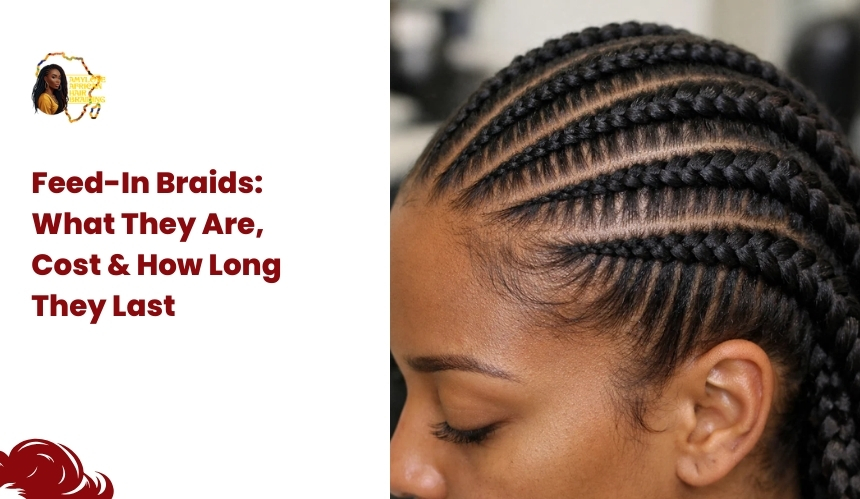
A Quick Answer: Feed-in braids are a modern braiding technique where extension hair is gradually added into natural hair to create a smooth, natural-looking braid that starts thin at the scalp and builds evenly. When installed correctly and cared for properly, feed-in braids typically last two to four weeks, depending on braid size, hair growth, scalp care, and daily habits. |
This style has gained attention because it blends visual realism with comfort. Unlike traditional braids that begin with a visible knot, feed-in braids offer a cleaner base and a more flexible finish. Many people explore this style not only for its appearance but also to understand its durability, cost expectations, and suitability for different hair goals.
The sections ahead break down how feed-in braids work, how long they realistically last, what influences pricing, and what to expect before choosing this style.
Understanding Feed-In Braids
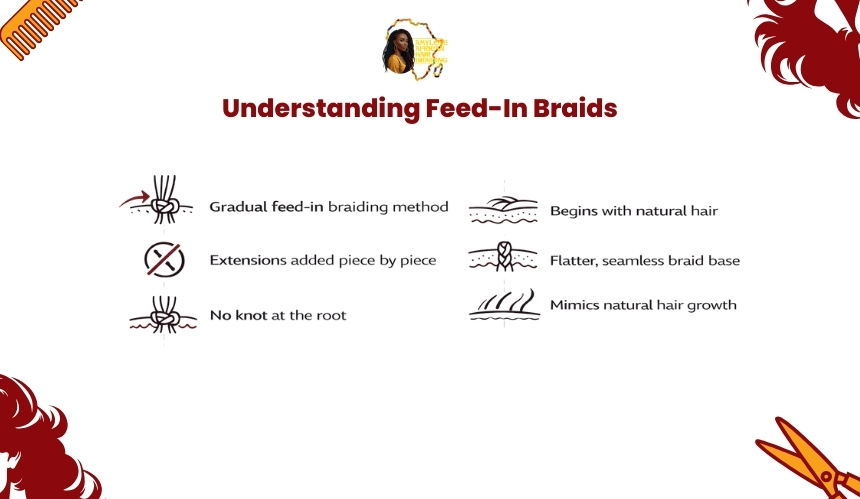
Feed-in braids are defined by how they are constructed rather than how they are styled. This section focuses specifically on the technique itself, explaining what makes feed-in braids structurally different and why that distinction affects appearance, comfort, and overall results.
What Are Feed-In Braids and How Does the Technique Work
Feed-in braids use a controlled braiding method where small amounts of extension hair are gradually added as the braid forms. Instead of attaching all the added hair at the start, the stylist feeds it in piece by piece.
This technique allows the braid to begin with natural hair and build in thickness smoothly, creating a seamless transition that closely mimics natural hair growth and produces a flatter, more realistic braid base.
How Feed-In Braids Differ From Traditional Braided Styles
Traditional braids typically rely on a knot at the root to secure extension hair, which can create bulk and visible tension at the scalp. Feed-in braids remove that knot entirely, resulting in cleaner parting and a lighter feel.
The absence of a knot also allows for greater control over braid size and spacing, improving symmetry while reducing stress on the hairline during installation.
Why the Feed-In Method Creates a More Natural Finish
Because extension hair is added gradually, feed-in braids maintain consistent tension and shape from root to tip. This approach prevents sudden changes in braid thickness and helps the style sit closer to the scalp. The result is a polished, natural-looking braid pattern that blends well with different hair textures while remaining flexible for various styling options.
Why Feed-In Braids Are So Popular
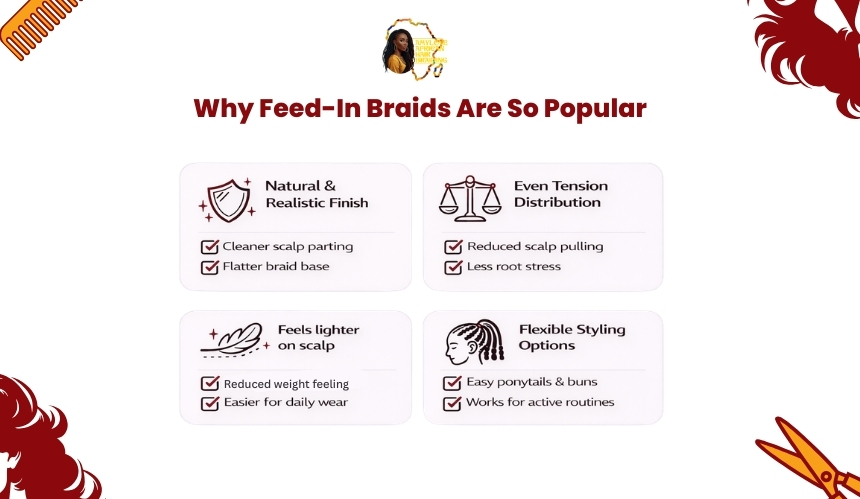
The popularity of feed-in braids reflects a shift toward braided styles that prioritize comfort, realism, and everyday wearability.
Rather than focusing solely on visual impact, many people now look for styles that feel lighter on the scalp and blend naturally with their hair, making feed-in braids a preferred option.
1. Natural Appearance and Styling Flexibility
Feed-in braids create a smooth transition from the scalp by gradually building braid thickness. This results in cleaner parts and a more realistic finish that closely resembles natural hair growth. Because the braid base sits flatter, the style adapts easily to different looks, including ponytails, buns, and side-parted arrangements, without exposing bulky roots.
2. Reduced Tension and Scalp Comfort
The feed-in technique distributes tension evenly throughout the braid instead of concentrating it at the root. This balanced approach significantly reduces pulling and tightness, especially around sensitive areas like the hairline. As a result, the style feels more comfortable during installation and remains easier to wear for extended periods.
3. Versatility for Different Lifestyles
Feed-in braids suit a wide range of routines, from low-maintenance daily wear to active schedules. Their lightweight feel and secure structure allow them to hold up well during normal activities while maintaining a neat appearance. This versatility makes them appealing to individuals seeking both practicality and a polished look in one style.
Feed-In Braid Styles You Can Choose From
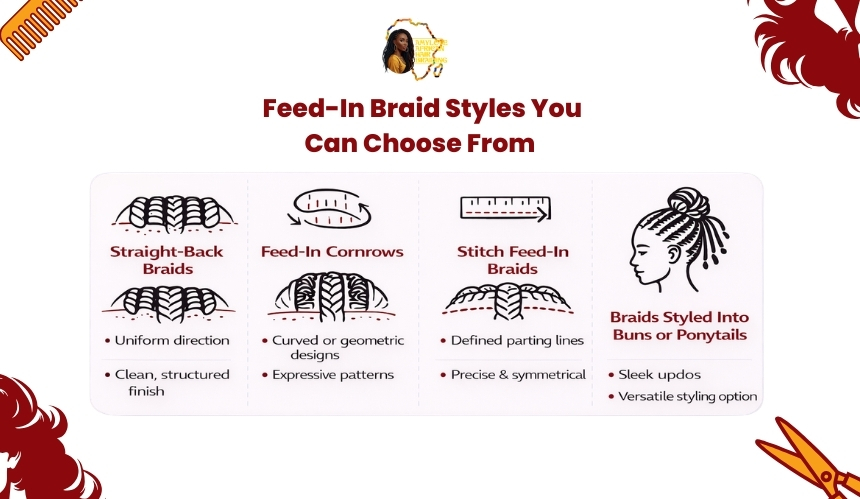
Feed-in braids are not limited to a single look. The technique adapts to multiple patterns and finishes, allowing the style to be customized based on personal preference, face shape, and daily routine.
1. Straight-Back Feed-In Braids
Straight-back feed-in braids follow a uniform direction from the hairline toward the back of the head. This style emphasizes clean parting and symmetry, making it one of the most popular choices for those who prefer a classic, structured appearance.
The gradual feed-in method enhances scalp realism, giving the braids a smooth, uninterrupted flow that works well for both casual and professional settings.
2. Feed-In Cornrows With Designs
This variation builds on traditional cornrow patterns by incorporating curved lines, zigzags, or geometric shapes. The feed-in technique allows these designs to appear sharper and more defined, since the braid base remains flat and consistent.
This option is often chosen by individuals who want a more expressive look while still maintaining the neat finish associated with feed-in braids.
3. Stitch Feed-In Braids
Stitch feed-in braids are known for their precise, evenly spaced sections that resemble stitched lines across the scalp. The clean parting is a defining feature, giving the style a bold and intentional appearance. This option appeals to those who prefer a polished, high-definition braid pattern that highlights detail and symmetry.
4. Feed-In Braids With Buns or Ponytails
Feed-in braids can also be styled into buns, high ponytails, or low gathered looks. Because the braid roots are flat and knot-free, these styles appear smoother and more refined. This variation works well for individuals who want the option to switch between tied-up and loose styles without compromising the overall appearance of the braids.
How Long Feed-In Braids Take to Install
Installation time is one of the most practical concerns for anyone considering feed-in braids. The process requires precision and patience, as the gradual addition of hair demands more control than knot-based braiding. Understanding what affects installation time helps set realistic expectations before the appointment.
Short vs Medium vs Long Braid Timelines
Short feed-in braids usually take 2 to 3 hours to complete, as the braiding length is limited and fewer extension layers are required. Medium-length feed-in braids often require 3 to 5 hours, since maintaining even tension and thickness over a longer length takes more control.
Long feed-in braids typically take 5 to 7 hours or more, especially when the goal is a consistent, natural finish from root to tip.
How Braid Size and Pattern Affect Installation Time
Small feed-in braids are the most time-intensive, commonly taking 5 to 7 hours, due to detailed sectioning and gradual hair feeding. Medium-sized braids generally fall within the 3 to 5 hour range, offering a balance between fullness and efficiency.
Large feed-in braids are faster to install, often completed in 2 to 4 hours, since fewer sections are needed. Designs such as stitch patterns or curved parts can add 30 to 60 minutes to the overall installation time because of the added precision required.
How Long Feed-In Braids Last
Longevity is one of the most searched aspects of feed-in braids because it directly affects value, upkeep, and styling decisions. This section focuses strictly on wear duration, explaining realistic timeframes and the factors that influence how long the style maintains a neat, comfortable appearance.
Average Wear Time Based on Braid Size
The size of feed-in braids plays a major role in how long they last. Small feed-in braids typically last three to four weeks because their tighter structure holds shape longer as hair grows.
Medium feed-in braids usually remain presentable for two to three weeks, balancing durability with ease of wear. Large feed-in braids tend to last one to two weeks, as new growth becomes visible more quickly and the braid base loosens sooner.
Factors That Influence How Long Feed-In Braids Stay Neat
Hair growth rate significantly affects longevity, since faster growth reveals new roots earlier. Natural hair texture also matters, as finer textures may show frizz sooner while coarser textures often maintain structure longer.
Daily habits such as frequent sweating, exposure to humidity, or regular styling can shorten wear time. Scalp care practices, including product choice and cleansing frequency, also influence how long feed-in braids maintain a fresh appearance.
Signs It Is Time to Remove or Refresh Feed-In Braids
Visible frizz at the roots, excessive new growth, and loss of braid definition are common indicators that the style has reached the end of its wear cycle.
Tightness relief followed by looseness near the scalp can also signal reduced structure. Recognizing these signs early helps prevent unnecessary stress on natural hair and supports healthier long-term styling choices.
Feed-In Braids Cost Breakdown
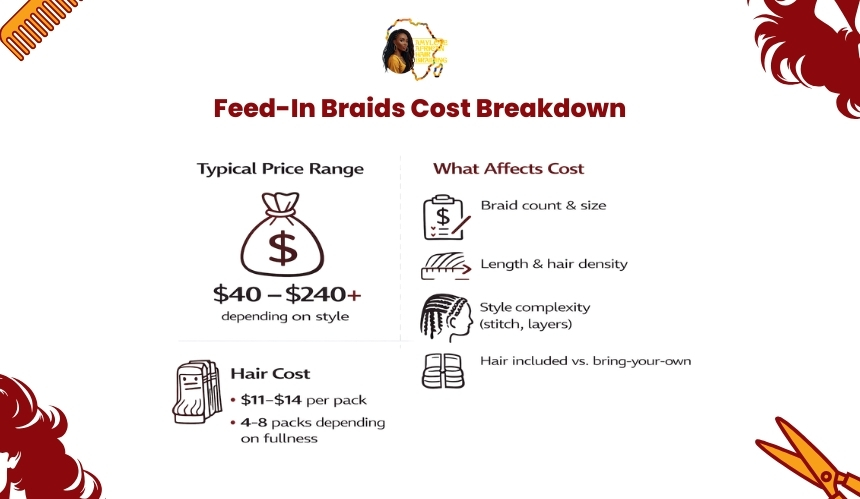
Pricing for feed-in braids varies, but most costs follow clear patterns based on braid count, size, and styling complexity. Breaking the pricing down this way helps set realistic expectations before booking.
Average Cost Range for Feed-In Braids
- 2 feed-in braids: Typically range between $40–$90, depending on length, finish, and whether hair is included.
- 4 feed-in braids: Commonly priced around $55–$115, with higher costs linked to longer braids or cleaner parting.
- 6 feed-in braids: Often fall between $85–$155, reflecting the added time needed for precision and balance.
- 8 feed-in braids: Frequently priced at $95–$165 or more, especially for fuller or longer styles.
- Small feed-in braids (full look): Usually range from $115–$180+, based on density and installation time.
- Two-layer feed-in braids: Commonly cost $200–$240, as this style involves stacked sections and extended labor.
What Factors Influence the Final Price
- Braid size and count: Smaller or more numerous braids require more time and detailed sectioning.
- Style complexity: Stitch parts, curved designs, and layered layouts increase labor and cost.
- Hair length and density: Longer or thicker natural hair may require more extension hair and time.
- Hair included vs. bring-your-own: Services that include braiding hair are usually priced higher.
- Extension hair costs: Synthetic braiding hair often costs $11–$14 per pack, and many styles require 4–8 packs, depending on length and fullness.
Why Feed-In Braids Often Cost More Than Traditional Braids
- The gradual feed-in technique requires advanced control and consistent tension throughout the braid.
- Installation takes longer than knot-based styles, especially for smaller or detailed braids.
- The added skill and time result in a cleaner base, flatter roots, and a more natural overall finish.
Are Feed-In Braids Good for Hair Health?
Hair health is a major consideration when choosing any protective style. Feed-in braids are often associated with better comfort and reduced stress, but their impact on natural hair depends on how they are installed, worn, and removed.
Benefits of Feed-In Braids for Hair Retention
Feed-in braids can support hair retention because the technique minimizes tension at the root. Since extension hair is introduced gradually, the braid begins with natural hair and avoids the tight knots that commonly stress the hairline.
This controlled tension helps reduce breakage around the edges and allows the scalp to remain more relaxed, which supports healthier growth during the wear period.
How Feed-In Braids Protect the Scalp
A flatter braid base allows the scalp to breathe more easily and makes it easier to access the roots for light cleansing and moisturizing. Reduced pulling also lowers the risk of irritation, tenderness, and inflammation.
For individuals with sensitive scalps, this can make feed-in braids a more comfortable alternative to tighter braided styles that concentrate stress in one area.
When Feed-In Braids Can Become Damaging
Feed-in braids are not risk-free if installed incorrectly or worn for too long. Excessive tightness during installation, overly small braid sections, or extended wear beyond the recommended timeframe can lead to thinning, dryness, or tension-related damage.
Removing the braids without proper care can also cause unnecessary shedding. Healthy results depend on proper technique, reasonable wear duration, and gentle handling throughout the process.
Who Feed-In Braids Are Best Suited For
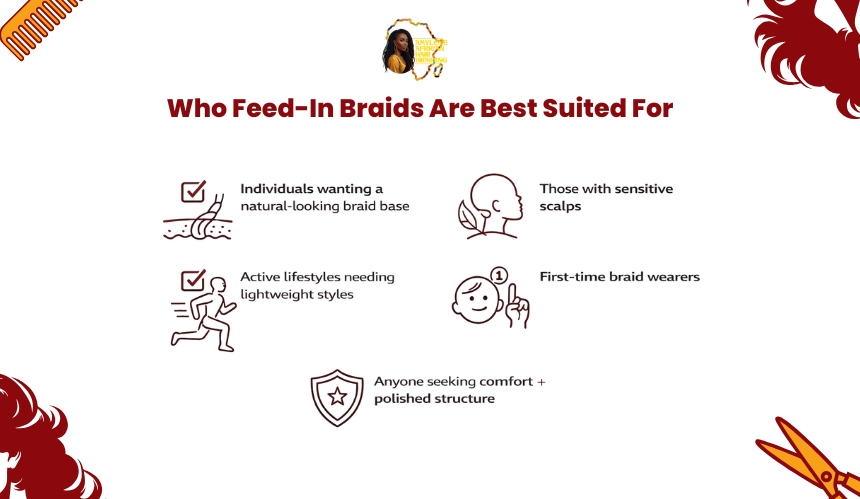
Feed-in braids work well for individuals looking for a polished style that balances comfort and structure. They are especially suitable for people with natural hair who want a protective option that minimizes tension at the scalp.
Those with active routines often prefer feed-in braids because the style stays secure while remaining lightweight. The technique also appeals to first-time braid wearers who want a natural-looking result without bulky roots.
Feed-In Braids Maintenance Basics
Proper care helps feed-in braids maintain a clean appearance while supporting scalp comfort throughout the wear period. A simple, consistent routine is usually enough to preserve the style.
- Night protection: Covering the braids with a satin or silk scarf or bonnet reduces friction while sleeping, helping prevent frizz and premature loosening at the roots.
- Scalp moisturizing: Applying a lightweight oil or leave-in product to the scalp keeps dryness under control without weighing down the braids or causing buildup.
- Gentle cleansing: Using a diluted shampoo or scalp cleanser every one to two weeks helps remove sweat and product residue while maintaining braid structure.
- Minimal manipulation: Limiting frequent restyling or excessive pulling helps the braids retain their shape and reduces stress on natural hair.
- Moisture balance: Lightly hydrating the braids themselves can prevent dryness, especially in longer styles, without compromising neatness.
Thinking about trying feed-in braids and want results that feel comfortable, natural, and long-lasting? AmyLove African Hair Braiding specializes in clean, precise feed-in techniques designed to match your style goals and hair needs. Book your appointment today and step out with braids that look effortless and feel just right.
Frequently Asked Questions
Can feed-in braids be done without added hair?
Feed-in braids can be created using only natural hair, particularly for short styles or minimal designs. In these cases, the stylist feeds in small sections of the client’s own hair instead of extensions. The result is a lighter, flatter braid style that is usually worn for shorter periods.
Are feed-in braids suitable for children?
Feed-in braids are often chosen for children because the technique allows for better tension control. When installed properly, they feel lighter on the scalp and reduce pulling around the hairline. Stylists typically adjust braid size and length to keep the style comfortable and age-appropriate.
Can feed-in braids be reused after removal?
Feed-in braids are not designed to be reused once taken down. Because the hair is integrated gradually throughout the braid, the structure cannot be preserved during removal. Any unused extension hair, if kept clean and untangled, may still be usable for future styles.
Do feed-in braids work for thin or fine hair?
Feed-in braids can be a good option for thin or fine hair when the braid size and tension are carefully managed. Smaller, lightweight sections help reduce stress on delicate strands, while the gradual feeding method prevents bulky roots that can overwhelm finer hair types.
Can feed-in braids be refreshed without reinstalling everything?
In some cases, feed-in braids can be partially refreshed by redoing the front sections or smoothing the roots. This option depends on braid size, new growth, and overall wear. A full reinstall is usually recommended once the structure loosens significantly.