
How Do Professional Hair Braiding Salons Differ from At-Home Braiding?
Key Takeaways
|
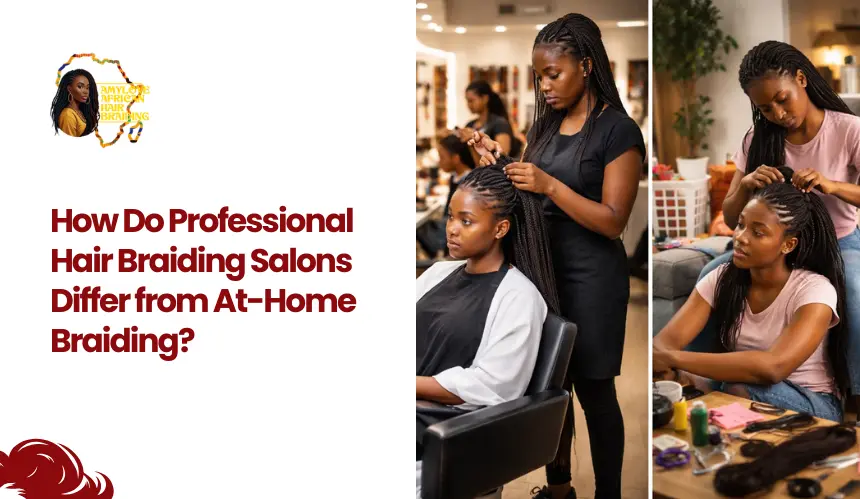
Hair braiding is often viewed as a simple styling task, but the process and results can vary significantly depending on where and how the braiding is done. Many people compare professional hair braiding salons with at-home braiding to determine which option delivers better durability, comfort, and overall hair outcomes.
While both approaches can produce visually appealing styles, the differences extend beyond appearance into technique, hair handling, and long-term wear. This article focuses on the practical and outcome-based differences between professional braiding services and at-home braiding.
1. Skill Level and Technical Precision in Hair Braiding
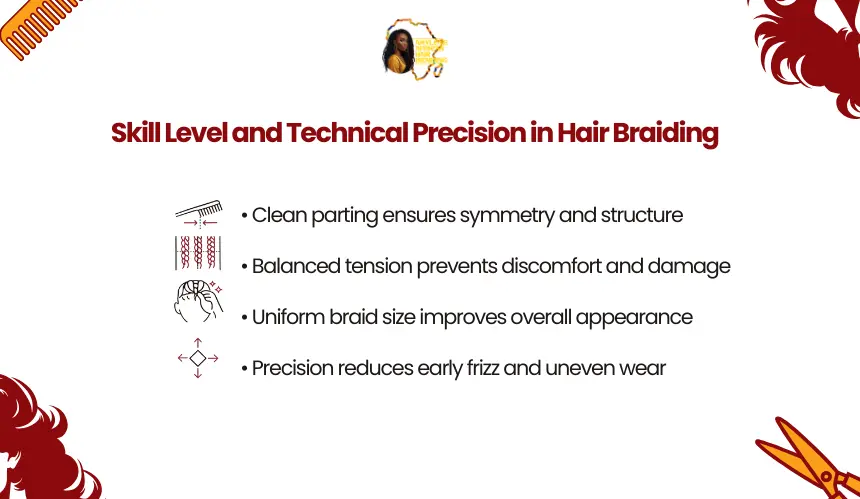
The quality of a braided style is largely determined by how accurately the technique is executed. While both salon and at-home braiding rely on the same basic concept of sectioning and weaving, the level of technical control involved can differ substantially. These differences influence symmetry, tension balance, and how the finished style holds up over time.
How Professional Braiders Maintain Technical Accuracy
Professional hair braiding salons operate on trained, repeatable techniques rather than improvisation. Braiders develop precision through consistent practice across different hair textures, lengths, and styles.
This allows them to control parting width, braid alignment, and strand distribution with minimal variation from start to finish. Even spacing and structured patterns are intentional outcomes, not incidental results.
This level of technical accuracy directly affects braid uniformity, reduces early frizz, and leads to more predictable styling results. The technique is applied consistently from start to finish rather than being adjusted mid-process.
Why At-Home Braiding Often Relies on Estimation
At-home braiding typically depends on personal experience rather than standardized technique. Without external visibility or professional training, part sizes and braid tension are often estimated rather than measured.
This can result in subtle inconsistencies that are not immediately noticeable but become more apparent as the style settles.
Variations in hand positioning, strand control, and braid tightness commonly occur, especially when working on the back of the head or complex patterns.
These inconsistencies are not failures, but they reflect the absence of technical calibration that defines professional braiding environments.
The Impact of Technique on Final Appearance
Technical precision directly shapes how polished a braided style appears. Professional execution produces consistent braid thickness, clean part lines, and stable structure throughout the style. In contrast, at-home results may vary across sections, even when the same braid pattern is attempted.
This distinction is not about creativity or effort. It is about how controlled technique influences visual consistency and structural reliability in braided hairstyles.
2. Scalp Care, Hair Assessment, and Preparation Standards
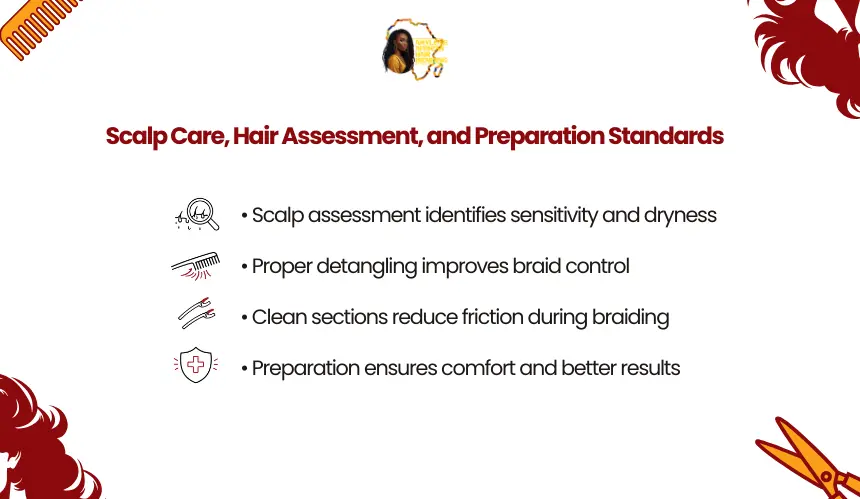
Before any braiding begins, the condition of the scalp and hair plays a decisive role in how the style feels and performs. Differences between professional salons and at-home braiding become clear at this early stage, where evaluation and preparation shape comfort, tension tolerance, and overall hair response during the braiding process.
How Professional Salons Assess Scalp and Hair Condition
Professional hair braiding salons typically begin with a visual and tactile assessment of the scalp and hair. This includes identifying dryness, buildup, sensitivity, thinning areas, or uneven density. These observations guide decisions such as part size, braid placement, and how much tension the hair can comfortably handle.
This assessment is not cosmetic. It functions as a preventive step that helps avoid discomfort, irritation, or stress on vulnerable areas.
By adjusting the approach based on scalp condition, professional braiders align the style with the hair’s current state rather than applying a fixed method to every client.
Why Preparation Is a Structured Step in Salon Braiding
Hair preparation in a professional setting follows a defined sequence. Detangling is performed evenly across sections, the scalp is cleaned or refreshed as needed, and the hair is organized to minimize friction during braiding. Each step supports smoother strand control once braiding begins.
This structured preparation reduces resistance in the hair, allowing braids to form without excessive pulling. It also helps maintain scalp comfort throughout the process, especially during longer or more detailed styles.
How At-Home Braiding Often Skips Evaluation and Prep
At-home braiding usually starts without a formal assessment of scalp or hair condition. Preparation may be limited to quick detangling or surface-level grooming, particularly when time or tools are limited. As a result, existing dryness, sensitivity, or uneven texture may go unnoticed.
Without this early evaluation, tension and sectioning choices are often made without considering how the scalp will respond over time.
This does not imply negligence, but it highlights the difference between an intuitive approach and a methodical one designed to reduce strain and discomfort.
Why Early Preparation Affects Comfort During Braiding
When scalp condition and hair readiness are addressed before braiding, the process feels more controlled and manageable. Proper preparation allows the hair to move naturally during braiding rather than resisting manipulation. This reduces the need for corrective pulling once the style is underway.
In contrast, limited preparation can cause friction that only becomes noticeable after braiding begins, at which point adjustments are harder to make without disturbing completed sections.
3. Consistency, Longevity, and Wearability of Braided Styles
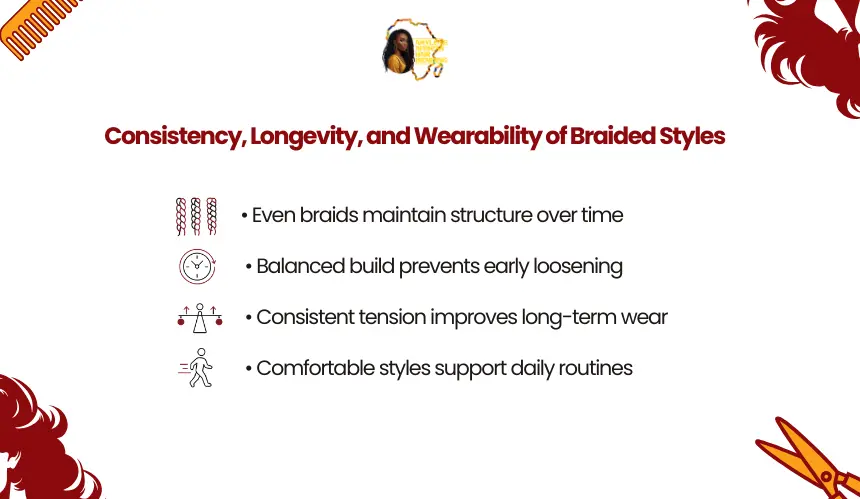
Once a braided style is completed, the true difference between professional and at-home braiding becomes noticeable during daily wear. Consistency across the style, how long the braids maintain their structure, and how comfortable they feel during normal activities all depend on how the braids were built to perform over time.
How Professionally Braided Styles Maintain Structural Consistency
Professional hair braiding salons design styles with uniform structural balance. Each braid is formed to behave similarly as the hair settles, meaning the style loosens evenly rather than in isolated sections.
Because the structure is planned from the beginning, the style retains a cohesive appearance even as natural movement and exposure occur. The result is a braided style that looks intentional throughout its wear cycle, rather than appearing partially worn while other sections remain intact.
How Longevity Is Influenced by Braiding Execution
Longevity in braided styles is not accidental. Professional braiding takes into account how hair responds to movement, moisture, and friction over time. When the structure is balanced correctly, braids are less likely to loosen prematurely or unravel at stress points.
In contrast, at-home braiding may produce areas that relax faster than others. This uneven breakdown shortens the practical lifespan of the style, even if parts of it remain visually acceptable. Longevity is therefore shaped by how evenly the braids were constructed, not by how tight they appeared initially.
Wearability in Daily Routines and Environments
Wearability refers to how a braided style feels during regular activities such as commuting, working, exercising, or resting. Professionally braided styles are built to distribute weight evenly across the scalp, which helps reduce localized discomfort during extended wear.
In active urban environments like Washington, DC, where people often move between indoor and outdoor settings, braid wearability becomes especially noticeable. Styles that shift, tug, or loosen unevenly can become distracting over time, while balanced braids remain comfortable during long days.
Why At-Home Braids Often Change Faster During Wear
At-home braids may look stable immediately after completion but can change more quickly as the hair adjusts. Differences in braid size or internal balance can cause some sections to loosen faster, altering the overall shape of the style.
This does not reflect effort or care. It reflects how small structural differences influence how braids respond to motion and daily handling. Over time, these differences affect how long the style remains comfortable and visually consistent.
Time Efficiency and Outcome Predictability
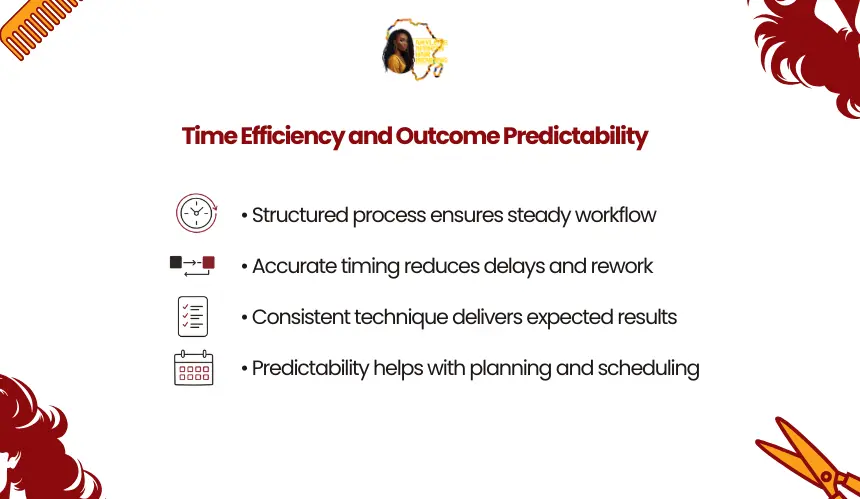
Beyond how a braided style looks or wears, many people weigh their choice based on how much time the process requires and how reliably the final result matches expectations.
This is where professional hair braiding salons and at-home braiding differ in practical, experience-based ways that affect planning and decision-making.
Why Professional Braiding Follows a Predictable Time Structure
Professional braiding services operate within a defined workflow. The braider follows a sequence that is familiar, repeatable, and paced according to the style being created. Because the process is refined through repetition, time estimates are usually accurate and delays are minimal.
This predictability allows clients to plan around the appointment without uncertainty. The braiding session progresses steadily, with fewer pauses for correction or rework, resulting in a clear start-to-finish timeline.
How At-Home Braiding Time Often Expands Unexpectedly
At-home braiding tends to take longer than anticipated, especially for detailed or unfamiliar styles. Without a structured pacing system, time is often spent adjusting sections, correcting alignment, or redoing portions that do not meet expectations.
These interruptions are not inefficient by nature. They reflect a flexible, trial-based process where results are refined gradually rather than executed in a fixed sequence. As a result, total braiding time can vary widely, even for similar styles.
Outcome Predictability Versus Outcome Discovery
Professional braiding is built around predictable outcomes. The client typically knows how the style will look, feel, and sit once completed. This reliability comes from standardized execution rather than experimentation.
At-home braiding, by contrast, often involves outcome discovery. The final result may evolve during the process as adjustments are made. While this can allow for personalization, it also introduces uncertainty, especially when attempting complex or unfamiliar braid patterns.
Why Predictability Matters for Scheduling and Commitments
When time constraints or upcoming commitments are involved, predictability becomes a deciding factor. Professional services reduce uncertainty around both duration and results, which is particularly relevant when braiding must fit into a fixed schedule.
At-home braiding offers flexibility but requires additional time buffers. Understanding this difference helps set realistic expectations about effort, planning, and the likelihood of achieving the intended result within a specific timeframe.
5. Access to Tools, Products, and Braiding Setup
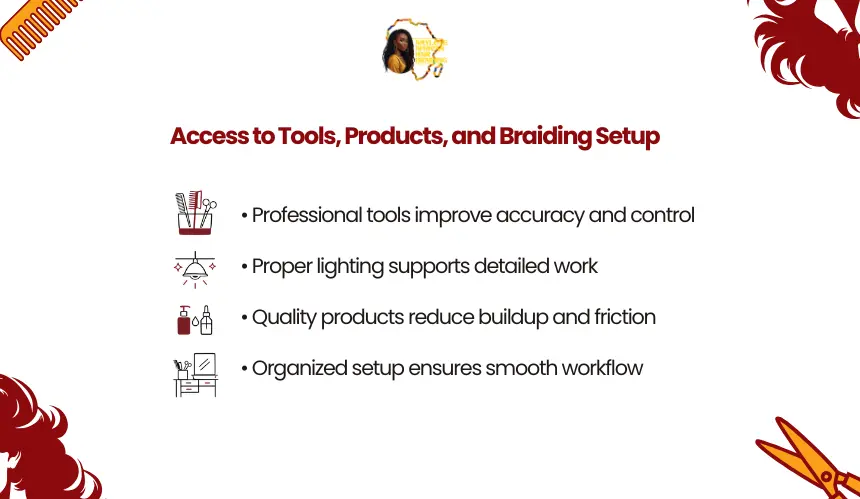
The physical environment in which braiding takes place plays a meaningful role in how smoothly the process unfolds. Differences between professional salons and at-home settings become evident in the tools available, the way the space is organized, and how the setup supports sustained focus during the braiding process.
How Professional Salons Are Equipped for Braiding Precision
Professional hair braiding salons are designed specifically for detailed styling work. Tools such as fine-tooth parting combs, sectioning clips, grip-controlled brushes, and styling mirrors are selected to support accuracy and control.
Products are also chosen for compatibility with braided styles, including lightweight creams, scalp oils, and anti-slip aids that help manage different hair textures.
The setup itself is intentional. Adjustable chairs, proper lighting, and organized workstations allow braiders to maintain consistent positioning throughout the service.
This environment supports uninterrupted workflow and reduces the need to adapt mid-process due to space or equipment limitations.
Why At-Home Braiding Is Often Limited by Setup Constraints
At-home braiding typically relies on general-use tools rather than braiding-specific equipment. Mirrors may be fixed, lighting may be uneven, and seating may not support extended styling sessions. These constraints require frequent repositioning and adaptation during the process.
In many urban homes and apartments, including compact layouts common in older row houses, space limitations can further restrict movement and visibility. While these environments are familiar and comfortable, they are not optimized for detailed, long-duration braiding work.
Product Access and Selection Differences
Salons maintain access to a range of professional-grade hair products tailored for braiding. These products are formulated to provide grip without buildup and moisture without heaviness. Selection is often adjusted based on hair texture and braid type.
At home, product choices are usually limited to what is readily available. While effective results are possible, substitutions may be made out of convenience rather than suitability.
This can affect how smoothly the braiding process progresses, especially when working with unfamiliar hair textures or styles.
Why Setup Influences the Braiding Experience
A controlled setup reduces distractions and minimizes the need for physical adjustments during braiding. Professional environments are structured to support sustained attention to detail from start to finish.
At-home setups prioritize comfort and accessibility, which can be beneficial for casual styling. However, when the setup does not fully support the task, additional effort is required to compensate for visibility, posture, or tool limitations.
When At-Home Braiding May Be Sufficient
At-home braiding can be appropriate for simple braid styles that require minimal tension and straightforward sectioning. Basic braids used for casual styling or short-term wear often do not demand advanced structure or extended durability, making them manageable in familiar settings.
This option may also work well when the person braiding has experience with their own hair texture and understands how it responds to handling. In these cases, the risk of uneven results or discomfort is reduced. Expectations should remain realistic, as minor variations in appearance or wear are more likely without professional execution.
When Professional Hair Braiding Is the Better Choice
Professional hair braiding becomes the preferred option when styles involve intricate patterns, detailed parting, or precise structure. These designs rely on controlled execution to achieve consistent results across the entire style.
Protective styles intended to last for weeks also benefit from professional services, as they are built with long-term wear in mind. Professional braiding is especially important for individuals with sensitive scalps or fragile hair, where careful handling and structured approach help reduce stress and support healthier outcomes.
If you want your braids to feel comfortable, look intentional, and hold their shape beyond the first few days, the right hands matter. AmyLove African Hair Braiding focuses on braiding that respects your hair, your scalp, and your time. When you are ready for a style that feels as good as it looks and fits your lifestyle with confidence, this is where care and craftsmanship come together.
Frequently Asked Questions
Do professional hair braiding salons work with all hair textures and lengths?
Professional hair braiding salons are trained to work with a wide range of hair textures, densities, and lengths. This includes natural hair, relaxed hair, transitioning hair, and added extensions. The ability to adapt braid size, placement, and pattern allows styles to be adjusted without forcing the hair into a one-size approach.
How often should braided styles be refreshed or redone?
The refresh timeline depends on hair growth rate, scalp condition, and daily maintenance habits. Some styles benefit from partial refreshes around the hairline, while others are best redone fully once the foundation grows out. Monitoring scalp comfort and braid stability helps determine the right timing.
Can professional braiding help reduce styling stress over time?
Yes. Consistent professional braiding can reduce daily styling manipulation, which may lower mechanical stress caused by frequent brushing, pulling, or heat use. This can be especially helpful for individuals seeking lower-maintenance hair routines over extended periods.
Are braiding consultations important before choosing a style?
Consultations allow braiders to discuss lifestyle needs, maintenance expectations, and styling goals before braiding begins. This helps align the chosen style with daily routines, work schedules, and comfort preferences, reducing the likelihood of dissatisfaction after completion.
Is professional hair braiding suitable for first-time braided styles?
Professional braiding is often recommended for first-time styles because it provides guidance on maintenance, realistic wear expectations, and style selection. This support helps individuals understand how braided styles fit into their routine without relying on trial-and-error.