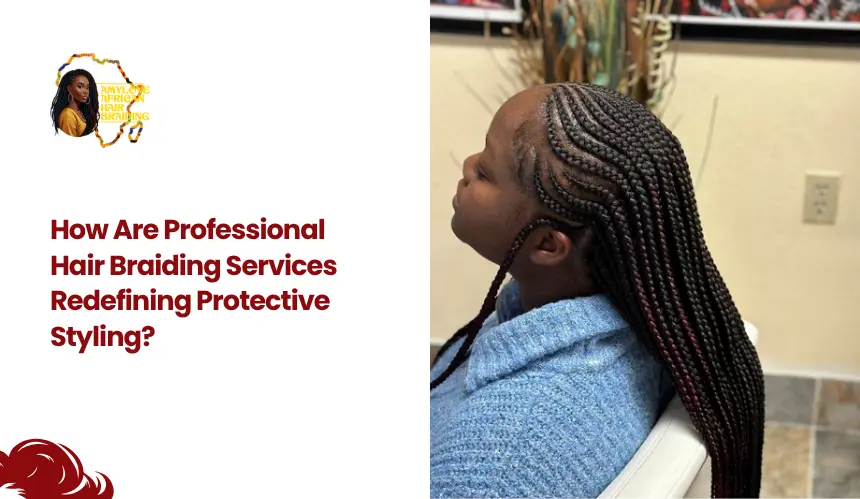
How Are Professional Hair Braiding Services Redefining Protective Styling?
Key Takeaways
|
Protective styling has evolved far beyond simply choosing a braid pattern that looks neat or lasts for weeks. Today, more clients see braiding as a thoughtful way to care for natural hair while maintaining personal style, comfort, and confidence. Professional hair braiding services are helping reshape this approach by making protective styles feel more intentional, polished, and supportive of everyday hair needs.
Instead of treating braids as just a temporary hairstyle, modern braiding focuses on creating a better styling experience from start to finish. This blog explains how professional hair braiding services are redefining protective styling.
Protective Styling Is Becoming More Health-Focused
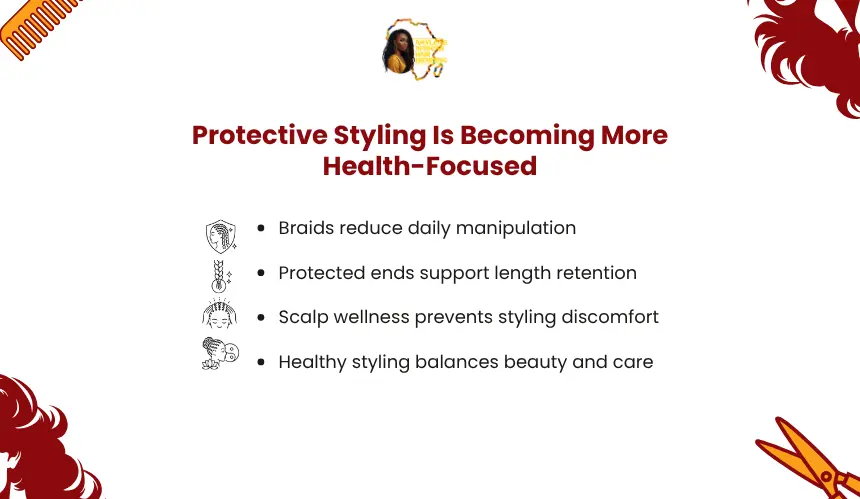
Protective styling is no longer treated as a simple way to keep hair tucked away. Professional braiding now focuses on reducing stress on natural hair while supporting comfort, manageability, and healthier long-term styling habits.
How Do Braids Reduce Daily Manipulation?
Braids help limit repeated brushing, combing, heat styling, and restyling that can weaken strands over time. When hair is constantly pulled, detangled, or exposed to styling tools, the cuticle can become more vulnerable to dryness, split ends, and breakage.
A professionally installed braid style keeps the hair organized and secured, which reduces unnecessary handling. This gives textured, coily, curly, or transitioning hair a better chance to remain protected during daily routines.
How Does Professional Braiding Support Length Retention?
Length retention depends on protecting the oldest and most fragile parts of the hair, especially the ends. Professional braid placement helps keep these ends tucked away, reducing friction from clothing, pillows, weather exposure, and frequent styling.
A skilled braider also considers braid size, section balance, and extension weight. When these factors are managed correctly, the style can protect the hair without placing excess pressure on the scalp or hairline.
Did you know? NIH’s StatPearls notes that healthy scalp hair grows about 0.35 mm per day, which equals roughly 0.5 inch per month or 6 inches per year. This is why professional protective styling focuses so much on preventing breakage. The goal is not to “make hair grow faster,” but to help clients keep more of the length they naturally grow. |
Why Does Scalp Wellness Matter In Protective Styling?
A protective style should not block basic scalp care. Modern braiding considers parting patterns, scalp access, product buildup, and comfort so the style remains manageable after installation.
Scalp wellness also affects how long a style can be worn safely. Braids that are too tight, too heavy, or difficult to cleanse can lead to irritation, itching, flaking, or tension around sensitive areas. Professional services help make protective styling more balanced by connecting appearance with hair and scalp condition.
Afro Twist is becoming a popular choice in Parkland because it offers a natural, soft-textured finish that feels less structured while still keeping the hair neatly protected. In areas like Waller Road area and around Meadow Park vicinity, many clients are drawn to this style for its relaxed volume and versatility, making it easy to wear for both casual and more styled looks. It provides a balance between comfort and expression without the tight, rigid appearance of traditional braiding styles.
Professional Technique Is Changing How Braids Feel And Last
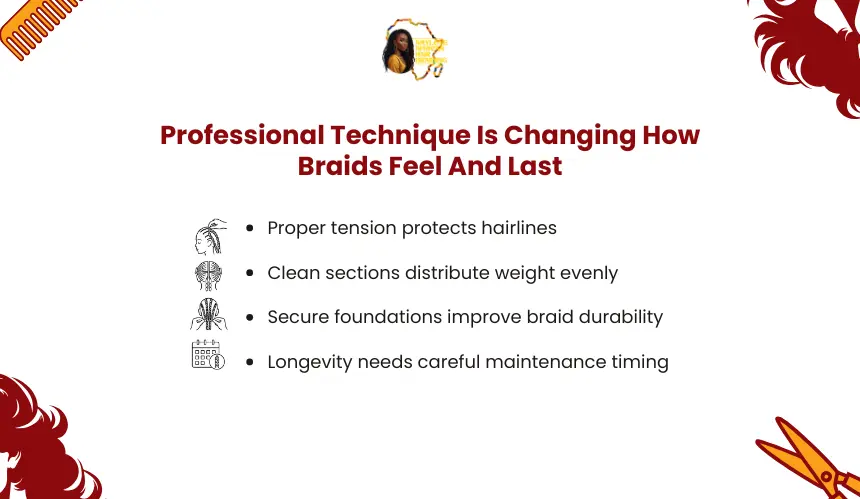
The way braids are installed determines how evenly they settle, how well they hold their shape, and how wearable they feel over time. Professional technique creates structure without relying on excessive pull, bulk, or rushed placement.
Why Does Proper Tension Control Matter?
Proper tension control prevents braids from pulling too tightly on the scalp, roots, and hairline. When tension is excessive, it can cause scalp soreness, bumps, headaches, edge thinning, or traction-related hair damage.
A skilled braider adjusts grip based on hair density, scalp sensitivity, braid size, and placement. This creates a secure style without forcing the follicles to carry unnecessary stress.
Box braids have gained immense popularity in Parkland by its residents due to the area’s cool, damp, and often rainy climate, which can make natural hair harder to manage and more prone to frizz. In areas like Pacific Lutheran University area and around Woodland District, residents often choose this style because it keeps hair neatly protected from moisture while reducing the need for daily heat styling or frequent restyling. The result is a long-lasting, low-maintenance protective style that stays polished despite changing weather conditions.
Did you know? The American Academy of Dermatology identifies cornrows, locs, tightly braided hair, tight ponytails, updos, extensions, and weaves as styles that can contribute to traction alopecia when they pull too tightly. This makes professional tension control one of the most important parts of safer protective styling. |
How Do Clean Sectioning And Secure Foundations Improve Braids?
Clean sectioning creates even weight distribution across the scalp. When parts are balanced and braid bases are consistent, each braid sits more naturally and holds its shape without creating pressure points.
Secure foundations also improve style durability. Professional braiders use controlled grip, neat parting, and appropriate extension placement so the braids last longer without needing excessive tightness to stay in place.
Why Should Braid Longevity Be Managed Carefully?
Braids should last long enough to reduce daily styling, but not so long that they create buildup, matting, or root tension. Professional services help clients understand when a style needs maintenance, refreshing, or safe removal.
Overextended braid wear can trap shed hair, product residue, and scalp debris near the roots. Managing braid longevity protects the style’s appearance while reducing the risk of tangling, dryness, and post-removal breakage.
Customization Is Making Protective Styles More Practical
Protective styles are more effective when they are not copied directly from a reference photo. Professional braiding services make each style more practical by shaping the final look around the client’s hair type, daily routine, and styling expectations.
How Are Braid Styles Matched To Hair Texture And Density?
Different hair types require different levels of support during braiding. Fine hair may need smaller sections, lighter extensions, and lower tension to reduce stress on the roots, while thick or dense hair may need structured parting to keep the style balanced and manageable.
Coily, relaxed, or transitioning hair also responds differently to grip, extension weight, and braid size. A professional braider evaluates texture, strand strength, shrinkage, and breakage-prone areas before choosing a method that protects the hair instead of overwhelming it.
How Do Braiders Adapt Styles For Work, Events, And Daily Routines?
Professional braiding services now treat lifestyle as part of the style selection process. Knotless braids may suit clients who want a lighter, more flexible look, while box braids can offer structure and long-wear convenience. Feed-in braids, cornrows, and goddess braids can be adjusted for polished, casual, or event-ready styling.
Daily routine also affects the best choice. Someone with a busy schedule may need a low-maintenance braid style that stays neat with minimal restyling, while another client may prefer a style with more movement, curl detail, or creative parting for personal expression.
People living in Parkland often prefer Fulani Braids because the style works well with everyday routines across different parts of the area, including busy residential and commuting zones like Summit View and surrounding neighborhoods near Clover Creek.
The style stays neat for weeks, which is helpful for people managing school, work, and outdoor activities common in the local environment. Its structured cornrow base with braided lengths also makes it practical for maintaining a clean look in varying weather conditions while still allowing a stylish, expressive finish.
Why Do Braid Size And Weight Matter?
Braid size and weight directly affect scalp comfort, installation time, and hairline protection. Larger braids may take less time to install but can place more weight on each section, while smaller braids offer more styling flexibility but require longer installation and careful tension management.
A professional braider balances the visual goal with the hair’s capacity to support the style. This prevents unnecessary pulling around the edges, reduces pressure on sensitive scalp areas, and helps the finished look remain practical for everyday wear.
Modern Protective Styling Includes Maintenance Guidance
Professional braiding services now go beyond installing the style. A stronger protective styling approach includes aftercare guidance so braids stay cleaner, neater, and safer for the hair and scalp throughout wear.
How Does Scalp Cleansing And Moisture Support Protect Braids?
Scalp care affects how well a protective style performs after installation. When sweat, oil, and product residue collect around the roots, braids can become itchy, heavy, or difficult to maintain.
Professional braiders often guide clients toward lightweight scalp sprays, gentle cleansing methods, and oils that support moisture without creating thick buildup. This keeps the scalp more comfortable while reducing the risk of flakes, clogged follicles, and residue around the braid base.
How Can Night Protection Reduce Frizz?
Night protection limits friction between braids and cotton bedding. Without protection, braids can loosen faster, develop frizz, and lose their clean finish around the hairline and parts.
Satin bonnets, silk scarves, satin pillowcases, mousse, and gentle tie-down methods help preserve the braid structure while keeping flyaways under control. These habits extend the polished appearance of the style without requiring heavy products or constant restyling.
Why Does Safe Removal Matter After Wearing Braids?
Safe removal protects the roots, new growth, and loose shed hair that collect while braids are worn . Shed hair naturally collects inside braids, so rough takedown methods can cause tangling, knotting, and damage near the roots.
Professional aftercare guidance often includes slow detangling, separating shed hair carefully, cleansing the scalp, and using deep conditioning treatments after removal. Giving the scalp and strands a short break between braid appointments also supports recovery before the next protective style.
Did you know? The American Academy of Dermatology says it is normal to shed 50 to 100 hairs per day. That means a person wearing braids for several weeks may see a larger-looking amount of shed hair during takedown, simply because loose hairs were held inside the style instead of falling daily. |
Protective Braiding Is Becoming A Confidence And Lifestyle Solution
Protective braiding now supports more than hair preservation. Professional braid services are making protective styles easier to wear in real life by combining convenience, personal expression, and long-term hair care priorities.
How Do Braids Save Time Without Sacrificing Style?
Braids simplify daily routines by giving clients a finished style that does not need constant reshaping before work, school, travel, or events. This makes protective braiding especially useful for people who need their hair to stay presentable across different settings.
A well-planned braid style also reduces decision fatigue. Clients can move through busy schedules with a consistent look that remains polished without requiring a full styling routine each day.
How Are Creative Braid Options Expanding Protective Styling?
Modern protective styling offers more flexibility through color blends, varied lengths, curl finishes, layered shapes, and detailed parting designs. These options allow clients to choose styles that reflect personal taste while still keeping natural hair protected.
Natural-looking knotless techniques have also changed how braids appear and feel. Because they start with a softer base and less bulk at the roots, they create a lighter finish that can look more seamless, flexible, and wearable.
How Do Professional Braiders Align Styles With Client Priorities?
Professional braiders help clients choose styles based on how they want the braids to function in daily life. Some clients may want a polished work-ready look, while others may need a low-maintenance style for travel, school, events, or active routines.
This approach makes protective braiding more practical because the style is not selected by appearance alone. The braider considers schedule, styling preference, upkeep tolerance, and desired finish so the final look fits the client’s real lifestyle.
What To Look For In A Professional Hair Braiding Service
Choosing a professional hair braiding service should involve more than checking photos of finished styles. The right braider uses a clear process, explains expectations, and helps clients understand whether a requested style is realistic for their hair and routine.
Why Should Consultation Come Before Installation?
A consultation allows the stylist to understand the client’s hair history before beginning the service. Previous braid experiences, recent chemical treatments, shedding concerns, or discomfort with certain styles can influence whether the requested look should be adjusted.
This step also sets expectations for installation time, style duration, extension use, upkeep, and final appearance. A professional consultation helps the client make an informed decision before the braiding process begins.
Why Are Clear Service Expectations Important?
Clear service expectations prevent confusion during and after the appointment. A professional braider should explain what the style can realistically achieve, how long the process may take, and what level of upkeep the client should expect.
This matters because not every braid style suits every routine. When expectations are clear, clients can choose a style that matches their schedule, preferred finish, and ability to maintain the look between appointments.
What Does Comfort-First Braiding Mean?
Comfort-first braiding means the stylist treats discomfort as feedback during the service. If the client feels pulling, pressure, or soreness, the braider should be willing to pause and adjust instead of continuing with a technique that feels uncomfortable.
This standard separates professional braiding from rushed installation. A finished style should feel secure, wearable, and manageable, allowing the client to leave with confidence instead of assuming pain is part of the process.
For protective styles that feel comfortable, polished, and thoughtfully matched to your hair goals, Amy Love offers professional hair braiding services designed around beauty, scalp comfort, and long-lasting wear. From consultation to aftercare guidance, clients can choose braid styles that support everyday confidence while keeping natural hair needs in focus.
Frequently Asked Quetions
How long should someone wait before getting braids again?
A short break between braid appointments allows the scalp to recover, shed hair to be fully removed, and natural hair to be moisturized before another installation. The ideal gap depends on scalp sensitivity, hair density, previous tension, and how long the last style was worn. Rushing into back-to-back braids can increase dryness and root stress.
Can professional braiding help if someone has thinning edges?
Professional braiding can support thinning edges only when the stylist avoids heavy extensions, tight grip, and small high-tension parts around the hairline. A responsible braider may recommend larger sections, softer styles, or leaving fragile edges out. Severe thinning should be assessed by a dermatologist before another protective style is installed.
What should someone do before a hair braiding appointment?
Hair should usually be clean, detangled, stretched, and free from heavy oils or thick product buildup before braiding. This gives the stylist better control during sectioning and helps the style sit more evenly. Clients should also mention scalp sensitivity, recent chemical treatments, breakage, or past braid discomfort during consultation.
Are knotless braids always better than traditional box braids?
Knotless braids are often lighter at the roots and may feel more flexible, but they are not automatically the best choice for every client. Hair density, desired fullness, budget, installation time, and maintenance expectations all matter. Traditional box braids can still work well when tension, section size, and extension weight are controlled properly.
How can someone tell if braids are too tight?
Braids may be too tight if there is throbbing pain, scalp bumps, headaches, redness, pulling around the edges, or difficulty moving the eyebrows or sleeping comfortably. A secure style should not cause ongoing discomfort. Pain should be treated as a warning sign, not as proof that the braids will last longer.
How does someone know when it is time to remove braids?
Braids should be removed when there is excessive buildup, matting near the roots, persistent itching, visible new growth tangling, or tension around the hairline. Keeping braids too long can make takedown harder and increase breakage risk. A professional braider can suggest a safe wear time based on style size and hair condition.