Passion Twists vs. Spring Twists vs. Senegalese Twists
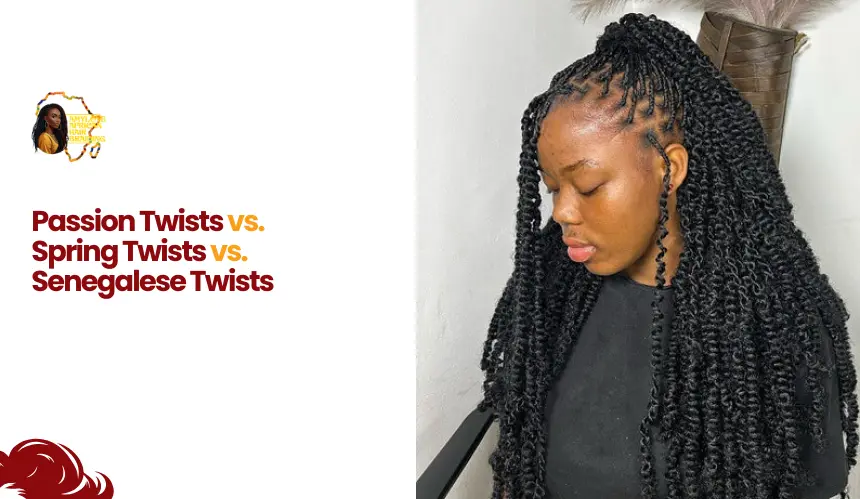
A Quick Answer: Passion twists, spring twists, and Senegalese twists differ mainly in texture, structure, and overall finish. Passion twists are soft with a loose, curly pattern that creates a natural, relaxed look. Spring twists are tightly coiled with a bouncy, uniform curl that feels lightweight and defined. Senegalese twists are smooth and rope-like, offering a sleek, polished appearance with long-lasting wear. |
Choosing between these styles is not just about looks. Each twist style serves a different purpose depending on hair goals, comfort preferences, and how much time someone wants to invest in upkeep.
While all three fall under protective twist hairstyles, their behavior, feel, and visual impact vary in ways that directly affect daily wear and satisfaction. This article breaks down passion twists vs. spring twists vs. Senegalese twists in a clear, structured way.
Understanding Twist Hairstyles and Why the Differences Matter
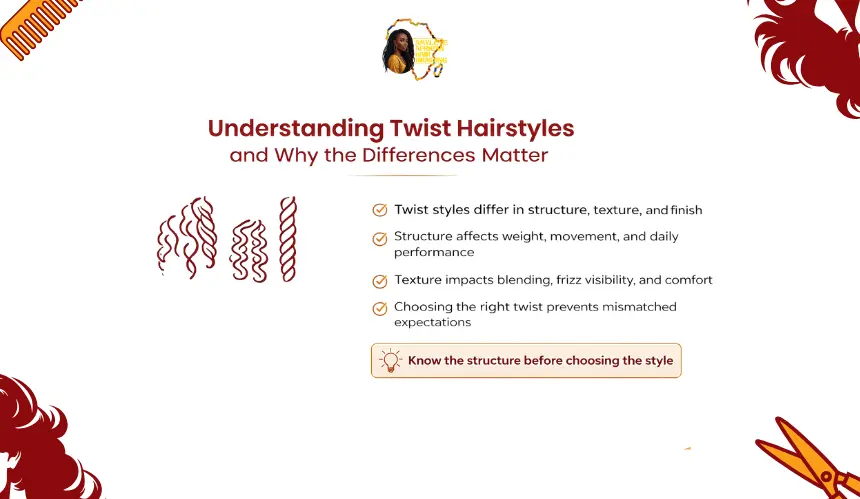
Twist hairstyles are often grouped together as a single category, but they function very differently depending on how they are constructed, the type of hair used, and the intended finish. Understanding these differences early helps avoid mismatched expectations, discomfort during wear, or dissatisfaction with the final look.
How Twist Structure Affects Texture, Weight, and Movement
The way a twist is formed determines how it looks and behaves over time. Some twists are designed to mimic natural curls, while others prioritize definition or smoothness.
Tighter coils tend to spring back into shape and feel lighter, while smoother twists hold their form and appear more uniform. These structural differences explain why certain twists feel airy and flexible, while others feel heavier and more controlled.
From a practical standpoint, structure influences how twists respond to humidity, friction, and styling manipulation. Understanding this relationship makes it easier to predict daily performance rather than choosing a style based on appearance alone.
Why Texture and Finish Change the Overall Wearing Experience
Texture plays a central role in how a twist style blends with natural hair and frames the face. Softer, textured twists create a relaxed, effortless appearance, while smooth finishes offer a clean, refined look. These visual differences also affect how noticeable new growth becomes and how often styling adjustments are needed.
Finish impacts comfort as well. Styles with looser textures typically place less tension on the scalp, while sleeker twists may feel firmer due to tighter wrapping. Recognizing how texture and finish influence both aesthetics and comfort helps set realistic expectations before committing to a specific twist style.
What Are Passion Twists?
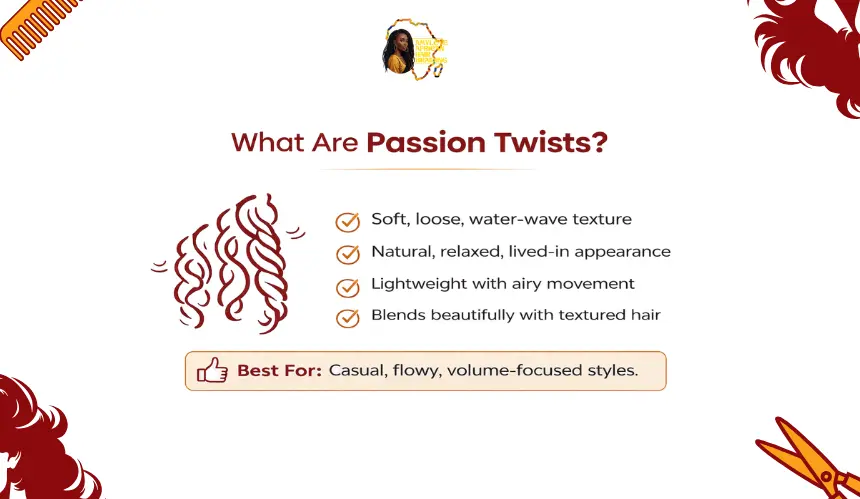
Passion twists are known for their soft texture and relaxed appearance, making them a popular choice for people who want a natural-looking protective style.
This twist style was designed to blend seamlessly with textured hair patterns rather than creating a rigid or overly structured finish.
Unlike traditional twists that emphasize uniformity, passion twists focus on movement and texture. The hair used and the installation method work together to create a lived-in look that feels lightweight and flexible from the start.
How Passion Twists Achieve a Soft, Curly Texture
The defining feature of passion twists is their loose, water-wave texture. The hair used already has a pre-curled pattern, which allows each twist to appear slightly varied rather than identical. This variation creates a more organic look that closely resembles naturally curly hair.
Because the twists are not tightly coiled or smoothed down, they move freely and respond naturally to motion. This texture makes passion twists visually fuller without adding excessive weight, which is a key reason they are often chosen for volume-focused styles.
What Hair Types and Style Goals Passion Twists Suit Best
Passion twists tend to work best for individuals who want a relaxed, effortless appearance rather than a sleek or highly defined finish. They blend well with textured natural hair and are often preferred by those seeking a softer frame around the face.
From a styling perspective, passion twists suit people who enjoy flexible looks and casual styling options. They are less about precision and more about flow, making them appealing to anyone prioritizing comfort, movement, and a natural aesthetic over long-term rigidity or perfectly uniform twists.
What Are Spring Twists?
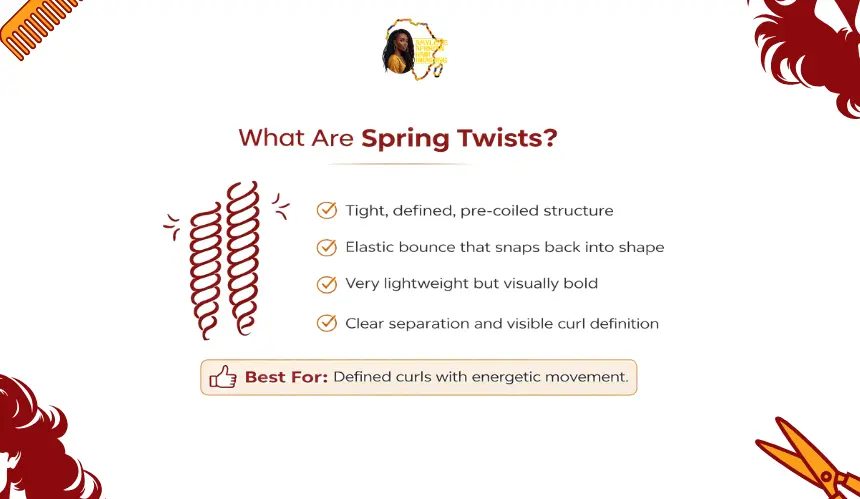
Spring twists are recognized for their tight, coiled structure and consistent curl definition. This twist style is designed to deliver a lightweight feel while maintaining a bold, energetic appearance. Spring twists stand out because they hold their shape exceptionally well, making them visually striking from installation through daily wear.
Unlike styles that rely on softness or smoothness, spring twists emphasize elasticity and form. Their construction creates a lively look that feels intentional and structured without appearing stiff or heavy.
How Spring Twists Create Defined, Bouncy Curls
Spring twists use pre-coiled hair that naturally forms small, uniform spirals. Each twist follows a consistent curl pattern, which gives the style its signature spring-like bounce. This built-in elasticity allows the twists to snap back into shape after movement, maintaining a fresh appearance throughout the day.
The defined curl structure also enhances separation between twists, preventing them from blending together. As a result, spring twists maintain clarity and shape, even with regular activity or light styling.
Who Spring Twists Are Best Suited For
Spring twists are well-suited for individuals who prefer a more defined and energetic look. They appeal to those who enjoy visible curl structure and want a style that feels light on the scalp. Because the twists retain their form easily, they are often chosen by people who want consistent results without frequent reshaping.
This style also works well for those who value movement and dimension. The bounce and lift of spring twists create a dynamic appearance that stands out without requiring heavy styling products or daily adjustments.
What Are Senegalese Twists?
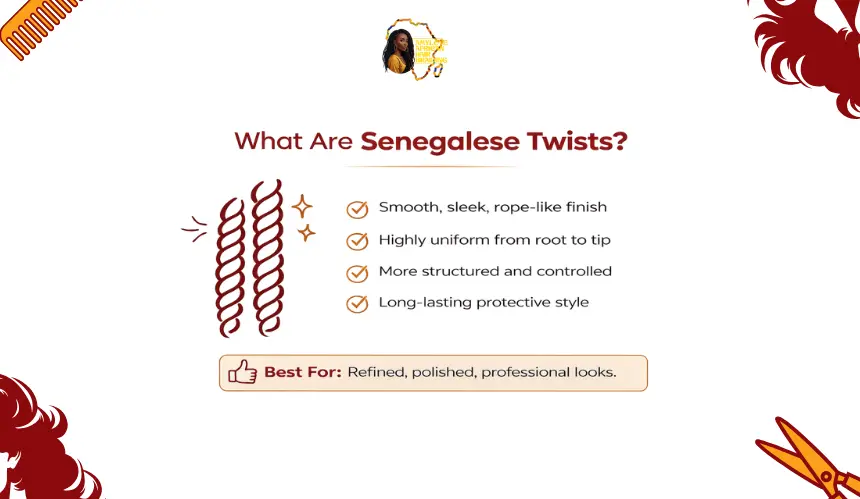
Senegalese twists are a classic protective style known for their smooth texture and polished finish. This twist style is created using a two-strand technique that produces a rope-like appearance, giving it a clean and refined look. Senegalese twists are often associated with durability and long-term wear.
Compared to more textured twist styles, Senegalese twists focus on uniformity and control. Their sleek construction makes them a popular choice for people seeking a neat, structured hairstyle that maintains its form over time.
How Senegalese Twists Achieve a Sleek, Uniform Finish
The defining characteristic of Senegalese twists is their smooth surface. The hair is tightly wrapped, which minimizes frizz and creates a consistent twist pattern from root to tip. This method results in twists that look identical in size and shape, contributing to a highly polished appearance.
Because of this smooth construction, Senegalese twists reflect light evenly and maintain a tidy look. This makes them ideal for styles where precision and symmetry are important.
When Senegalese Twists Are the Preferred Choice
Senegalese twists are often chosen by individuals who prioritize longevity and a refined aesthetic. Their structure allows them to last longer than more textured styles, making them suitable for those who want a low-maintenance option over an extended period.
This style is also appealing to people who prefer a sleek finish for professional or formal settings. The controlled appearance of Senegalese twists offers a timeless look that remains consistent with minimal daily styling effort.
Passion Twists vs. Spring Twists vs. Senegalese Twists: Key Differences at a Glance
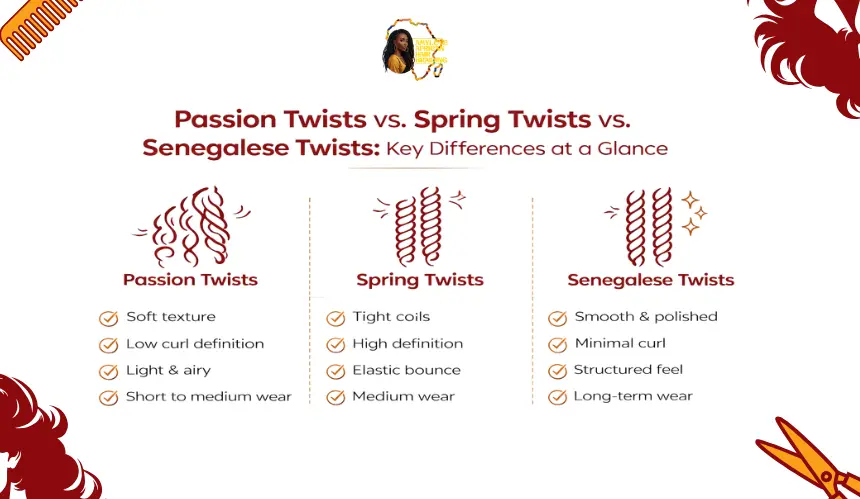
When comparing these three twist styles, the differences become clearer when viewed side by side. Each style serves a distinct purpose based on texture preference, structure, comfort, and how long the style is expected to last.
The table below provides a direct comparison without overlapping details, helping readers quickly identify which twist style aligns with their expectations.
Feature | Passion Twists | Spring Twists | Senegalese Twists |
Overall Texture | Soft, loose, and curly with a natural flow | Tight, coiled, and springy with visible definition | Smooth, rope-like, and polished |
Visual Finish | Relaxed and effortless | Bold and energetic | Clean and refined |
Weight Feel | Lightweight with airy movement | Very lightweight with elastic bounce | Heavier due to tight wrapping |
Curl Definition | Low to moderate, intentionally varied | High and uniform | Minimal, straight twist structure |
Scalp Tension | Generally low | Low to moderate | Moderate due to firm grip |
Longevity | Short to medium-term wear | Medium-term wear | Long-term wear |
Maintenance Level | Moderate, frizz-friendly | Low to moderate | Low, maintains shape well |
Best For | Natural-looking, casual styles | Defined curls and movement | Sleek, long-lasting protective styles |
This comparison highlights how passion twists focus on softness, spring twists emphasize curl definition, and Senegalese twists prioritize structure and durability.
Care Tips That Help Twist Styles Last Longer
Proper care plays a major role in how well twist styles hold up over time, regardless of which option is chosen. While passion twists, spring twists, and Senegalese twists differ in texture and structure, certain care practices apply universally.
Consistent care not only extends the life of the style but also protects scalp health and natural hair underneath. Small adjustments in daily routines can prevent premature frizz, dryness, or discomfort.
1. Maintaining Moisture Without Weighing Twists Down
Keeping twists hydrated is essential for both appearance and comfort. Lightweight leave-in sprays or diluted oils help maintain moisture without causing buildup. Applying moisture directly to the scalp supports natural hair health while allowing the twists to remain flexible.
Overloading twists with heavy products can reduce movement and attract lint. Using minimal product and focusing on balance helps twists retain their intended texture and shape.
2. Protecting Twists During Sleep and Daily Activity
Nighttime protection significantly affects how long twists stay neat. Covering the hair with a satin bonnet or using a silk pillowcase reduces friction, which helps preserve the twist structure. This habit minimizes frizz and prevents premature unraveling.
During the day, avoiding excessive pulling or repeated manipulation keeps twists intact. Gentle handling supports both the style and scalp comfort over time.
3. Supporting Scalp Health While Wearing Protective Styles
A healthy scalp ensures twists remain comfortable throughout their lifespan. Regular cleansing with diluted shampoo or scalp cleansers removes buildup without disturbing the twists. Keeping the scalp clean reduces irritation and helps maintain a fresh feel.
Light scalp massages improve circulation and relieve tension, especially for styles worn over longer periods. Prioritizing scalp care allows twist styles to remain wearable and comfortable from installation to removal.
Finding the right twist style is more than a beauty decision. It is about confidence, comfort, and feeling truly seen when you look in the mirror. If you are ready to turn inspiration into a style that fits your hair goals and your lifestyle, let AmyLove African Hair Braiding bring your vision to life. With skilled hands and a deep understanding of twist styles, this is where texture, care, and creativity come together to help you feel your absolute best.
Frequently Asked Questions
How do twist styles behave in humid or wet weather?
Humidity affects each twist style differently, but overall performance depends on texture and curl structure. Looser, textured twists tend to expand slightly in moisture-heavy environments, while tightly coiled or smooth twists hold their shape more consistently. Understanding how twists respond to weather helps with styling expectations during different seasons.
Can twist styles be styled into updos or tied back easily?
Most twist styles allow for flexible styling, but comfort varies based on weight and structure. Lightweight twists are easier to gather into ponytails or buns without causing scalp strain. Heavier or longer twists may require looser styling to avoid tension during extended wear.
Are twist styles suitable for fine or low-density hair?
Twist styles can work well for fine or low-density hair when installed with proper sizing and tension. Choosing an appropriate twist thickness helps prevent stress on the roots while still achieving full coverage. This consideration is especially important for maintaining scalp comfort and hair health.
How soon can twists be refreshed or reinstalled after removal?
Allowing natural hair and scalp time to rest between installations supports long-term hair health. A short break helps reduce tension buildup and dryness before moving into another protective style. Light conditioning treatments during this period prepare the hair for the next installation.
Do twist styles limit natural hair growth?
Protective styles do not stop hair growth. Instead, they help retain length by reducing daily manipulation and breakage. Consistent scalp care and proper removal techniques play a larger role in supporting healthy growth than the twist style itself.