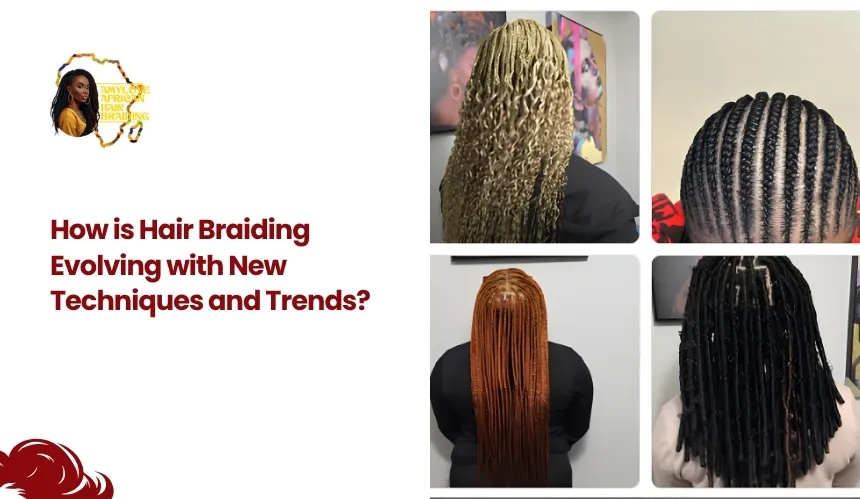
How is Hair Braiding Evolving with New Techniques and Trends?
Key Takeaways:
|
Hair braiding has moved far beyond a simple styling choice. Today, it reflects personal expression, cultural creativity, comfort, and hair health all at once. From softer finishes to low-tension methods and more customized patterns, braiding continues to evolve with the way people want to look, feel, and care for their hair.
Modern braid styles are no longer only about neatness or longevity; they are about creating a look that feels natural, wearable, and true to individual style. This blog explains how hair braiding is evolving with new techniques and trends.
Modern Braiding Is Becoming More Personalized And Protective
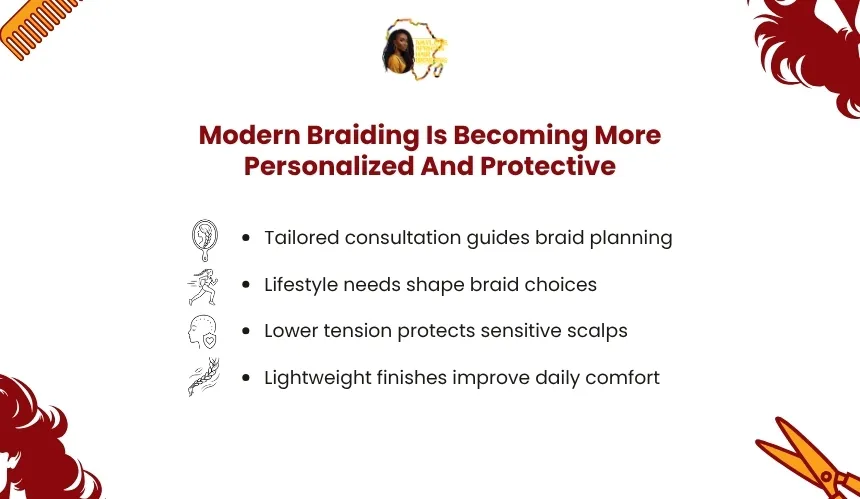
Braiding services now begin with a more tailored consultation, where the stylist considers hair density, scalp sensitivity, lifestyle demands, and preferred finish before choosing the technique.
Do you know? The American Academy of Dermatology warns that hairstyles that pull tightly on the scalp, including tight braids, can contribute to traction alopecia. Early warning signs can include scalp pain, stinging, crusting, or areas where the scalp looks pulled upward. This makes tension control one of the most important parts of modern protective braiding. |
How Are Braids Being Designed Around Lifestyle, Not Just Appearance?
Braiding choices are becoming more practical and customized. A person with an active routine may prefer knotless braids, cornrows, or braided ponytails because they stay secure and are easier to manage during workouts or busy schedules. Someone who wants a softer finish may choose boho braids, goddess braids, or curly-ended styles for more movement and visual texture.
This lifestyle-based approach changes how stylists plan braid size, parting pattern, braid length, extension weight, and styling versatility. Instead of applying one standard method, modern braiding considers how often the client styles their hair, how long they want the look to last, and how much daily upkeep they can manage.
Protective Styling Is Focusing More On Scalp Comfort
Protective braiding now places more attention on tension control, scalp access, and hairline protection. Older braid installations often prioritized tightness for longer wear, but excessive pulling can stress the follicles, weaken edges, and cause discomfort around sensitive areas.
Modern protective styles use softer grip techniques, cleaner sectioning, and lower-tension installation methods to reduce strain. This makes braids more wearable for people with fine hair, fragile edges, sensitive scalps, or previous breakage. A protective style only works well when it protects both the hair shaft and the scalp underneath.
Why Are Clients Choosing Lighter, Softer, And More Flexible Braid Finishes?
Clients are moving toward braid finishes that feel less heavy and more natural during daily wear. Lightweight braiding hair, knotless bases, curly pieces, and softer extension blends can reduce scalp pressure while creating movement that looks less rigid.
Flexible braid finishes also support easier styling. Braids can be worn down, tied up, shaped into buns, or adjusted without creating sharp pulling at the roots. This evolution makes modern braiding more comfortable, adaptable, and aligned with both beauty preferences and hair health.
New Techniques Are Changing How Braids Are Installed
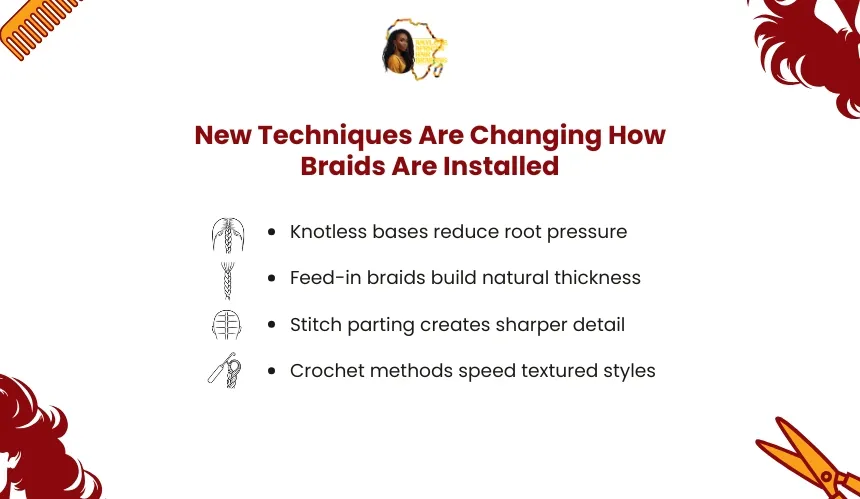
Braiding methods are evolving through better section control, cleaner extension placement, and installation techniques that reduce bulk at the root. These changes affect how natural the style looks, how evenly weight is distributed, and how efficiently textured finishes can be created.
How Do Knotless Braids Create A Smoother And Lower-Tension Base?
Knotless braids start with the natural hair first, then gradually add extension hair as the braid progresses. This removes the bulky knot traditionally placed at the root and creates a flatter, more seamless base.
The technical advantage is controlled weight distribution. Because the extension hair is fed in gradually, the braid places less immediate pressure on the root area. The result is a smoother scalp appearance, easier movement from the first day, and a finish that blends more naturally with the client’s own hair.
Feed-In And Stitch Braids Offer Cleaner Parting And Sharper Detail
Feed-in braids use small, controlled amounts of extension hair to build thickness gradually. This method creates a more natural transition from the scalp to the braid while keeping the base neat and structured.
Stitch braids add a more defined visual pattern by using precise parting and section separation. The clean “stitched” effect depends on consistent spacing, product control, and accurate hand placement. This technique is especially useful for styles where the braid pattern itself is the main design feature.
Why Are Crochet-Assisted Methods Making Textured Braid Styles Faster?
Crochet-assisted braiding reduces installation time by allowing pre-textured or pre-looped hair to be attached through a braided foundation. Instead of creating every curl or loose piece manually, the stylist can build volume and texture more efficiently.
This method is commonly used for boho-inspired braids, goddess textures, curly extensions, and fuller protective styles. The main benefit is production speed without losing visual softness. It also allows stylists to create layered texture with less repetitive hand tension during the service.
Crochet Braids in Lakewood are a popular protective styling option for clients looking for low-maintenance hair with added volume and flexibility. Many people in the Lakewood area choose crochet styles because they work well with different curl patterns, braid textures, and seasonal weather conditions, while also helping reduce daily heat styling and manipulation of natural hair.
Human Hair And Blended Extensions Improve Natural Movement
Human hair and blended extension fibers are changing the final behavior of braided styles. Compared with stiff synthetic hair, softer blends can move more naturally, hold curls better, and create a less rigid finish.
This matters most in styles with loose curls, wavy ends, face-framing pieces, or mixed textures. Better extension quality affects the braid’s weight, shine, flexibility, and long-term appearance. As braiding becomes more detail-focused, the hair material is now part of the technique, not just an add-on.
Current Braid Trends Are Mixing Structure With Softness
Braid trends are moving away from flat, uniform finishes and toward styles that combine clean sectioning with visible texture. The result is a more dimensional look where the braid pattern provides structure while curls, accessories, and softer ends create movement.
Boho And Goddess Braids Add Curls, Waves, And Loose Texture
Boho and goddess braids create softness by leaving selected strands curly, wavy, or loosely finished throughout the style. This breaks the rigid appearance of traditional box braids and gives the hair more volume, movement, and visual variation.
The trend works because it blends two styling effects in one look: the braid delivers shape and control, while the loose texture adds a relaxed finish. Curl placement, hair type, and extension quality affect how polished or natural the final style appears.
Fulani And Tribal Braid Patterns Are Being Updated With Modern Details
Fulani and tribal-inspired braid patterns are evolving through sharper parting, mixed braid sizes, side details, and creative front-facing designs. These styles keep the structured identity of patterned braiding, allowing more room for customization.
Modern updates often include curved parts, symmetrical scalp designs, face-framing braids, curly ends, or selective accessories. The value comes from controlled pattern planning: the style looks intentional because the braid layout, density, and decorative details work together instead of competing.
Fulani Braids in Lakewood are a popular choice for clients looking for a detailed protective style that combines straight-back braids, curved patterns, and signature braided sections along the sides. Many people in the Lakewood area choose Fulani braids because the style works well for both lightweight everyday wear and long-lasting hair protection while allowing different bead designs, parting styles, and braid lengths to match personal preferences.
Braided Ponytails, Half-Up Styles, And Sculpted Looks Are Becoming More Polished
Braided ponytails, half-up braid styles, and sculpted updos are becoming more refined because stylists are focusing on shape, balance, and finish. These looks rely on clean base control, smooth tension management, and precise braid direction to create a sleek final silhouette.
The polished effect is especially visible in high ponytails, braided buns, crown braids, and half-up goddess styles. Each design needs enough structure to hold its shape, but enough softness to avoid looking stiff or overly tight.
Beads, Color Blends, Curly Ends, And Accessories Are Adding Individuality
Accessories and color placement are turning braids into more personalized style statements. Beads, cuffs, ombré extensions, peekaboo color, curly ends, and thread details can change the mood of a braid style without changing the full installation method.
These details work best when they support the braid’s shape rather than overload it. A subtle color blend can add depth, curly ends can soften the outline, and beads can highlight face-framing sections. This makes modern braiding more expressive while keeping the overall look controlled and wearable.
Social Media Is Speeding Up Braid Innovation
Social media has changed how braid trends move from stylist portfolios to everyday client requests. Visual platforms shorten the trend cycle because users can compare styles, save references, and request specific braid patterns before entering the salon.
How Are TikTok And Instagram Turning Niche Braid Styles Into Mainstream Trends?
TikTok and Instagram make braid styles easier to discover through short videos, transformation reels, tutorials, and close-up styling shots. A braid pattern that was once limited to a specific salon, city, or stylist community can become widely requested once users see the installation process and final result.
This speeds up demand for styles such as freestyle cornrows, boho braids, stitch braids, and layered braided ponytails. The visual format also helps clients understand details like parting style, curl placement, braid length, and density before choosing a look.
Do you know? Pew Research Center reports that YouTube is used by 90% of U.S. teens, while more than half of teens use TikTok and Instagram. This explains why braid tutorials, transformation reels, and saved reference videos can quickly move a niche style into everyday salon demand. |
DIY-Friendly Techniques Are Making Salon-Inspired Looks More Accessible
Tutorial content has made basic braid maintenance and simplified styling methods more accessible to non-professionals. Users can now learn how to refresh edges, manage frizz, add beads, wrap braids at night, or create simple braided looks at home.
This does not replace professional braiding for complex installations, but it changes client expectations. People arrive with clearer references, stronger style vocabulary, and better awareness of what affects the outcome, including section size, extension type, tension level, and finishing method.
Do you know? TikTok’s own beauty marketing guide notes that creator-led beauty content, including tutorials, transformations, and reviews, often feels more relatable and credible to audiences than traditional advertising. This supports why braid education and styling inspiration now spread so quickly through creator videos. |
Celebrity And Red-Carpet Braids Are Influencing Everyday Styling Choices
Celebrity styling turns braids into high-visibility fashion references. Red-carpet appearances, music videos, editorial shoots, and influencer campaigns often introduce polished versions of braided ponytails, sculpted cornrows, goddess braids, and embellished braid designs.
The influence works because these looks translate well into real-life styling. Clients may not copy the full celebrity version, but they often borrow specific elements such as sleek parting, dramatic length, curled ends, metallic cuffs, or face-framing braid details.
Hair Health Is Becoming A Major Part Of Braid Selection
Braid selection is becoming more health-focused because the wrong style can create tension, dryness, breakage, or scalp irritation. Modern clients are choosing braids based on how the style performs over time, not only how it looks on the first day.
How Do Lower-Tension Styles Reduce Pulling Around The Hairline?
Lower-tension braid styles reduce direct stress on the edges, temples, and nape, where the hair is often finer and more fragile. Methods such as knotless braids, feed-in braids, and larger parting patterns distribute pressure more evenly instead of concentrating weight at the root.
This matters because repeated pulling can weaken the hairline and increase the risk of traction-related breakage. A healthier braid installation should feel secure without causing soreness, bumps, tightness, or visible strain on the scalp.
Lightweight Braiding Hair Can Improve Comfort During Long Wear
The weight of braiding hair directly affects comfort, scalp pressure, and daily manageability. Heavy extensions can pull downward as the style settles, especially in long braids, jumbo braids, or high-density installations.
Lightweight braiding hair reduces that load and makes the style easier to wear for several weeks. It also improves styling flexibility because the braids can be tied up, wrapped, or moved without placing excessive pressure on the roots.
Scalp Hydration and Nighttime Protection Help Braided Styles Last Longer
Braided styles last better when the scalp and exposed natural hair stay balanced. Dryness can lead to itching, flaking, frizz, and early loosening, while product buildup can make the scalp feel irritated or heavy.
A practical maintenance routine usually includes light scalp hydration, gentle cleansing when needed, and nighttime protection with a satin scarf, bonnet, or pillowcase. These habits help preserve the braid pattern, reduce friction, and keep the style cleaner between appointments.
Do you know? The British Association of Dermatologists recommends covering Afro-textured hair with a satin or silk cap or scarf at bedtime, or using a satin or silk pillowcase, to help minimize friction. This supports the blog’s point that nighttime protection can help braided styles stay smoother and cleaner for longer. |
Why Does Style Duration Depend On Hair Type, Technique, And Maintenance Routine?
Braid longevity depends on how well the style matches the client’s hair texture, density, scalp condition, and daily routine. Fine hair may loosen faster under heavy extensions, while dense or coily hair may hold structured braids longer when properly moisturized and sectioned.
Technique also affects wear time. Clean parting, secure but gentle tension, and appropriate braid sizing can extend the life of the style without overloading the scalp. Maintenance completes the process because even a well-installed braid style can break down early if moisture, friction, and buildup are not managed.
Choosing A Modern Braid Style Depends On Comfort, Upkeep, And Desired Look
The right braid style should be selected by matching the client’s scalp sensitivity, hair density, styling routine, and preferred finish. Instead of choosing only by trend, modern braid selection works best when the technique supports both appearance and daily wear.
Choose Knotless Or Feed-In Braids For A Natural Finish
Knotless and feed-in braids are best for clients who want a cleaner root appearance and easier movement from the start. They suit people who prefer a natural-looking base, flexible styling, and a braid finish that does not feel bulky near the scalp.
Choose Boho Or Goddess Braids For A Textured Style
Boho and goddess braids work well for clients who want curls, waves, or a softer outline built into the style. They create more visual movement than fully braided looks, but they also need more care because loose textured pieces can frizz or tangle faster.
Choose Stitch, Fulani, Or Freestyle Cornrows For Pattern Detail
Stitch, Fulani, and freestyle cornrows are better for clients who want the braid pattern to stand out. These styles place more focus on visible parting, braid direction, symmetry, and scalp design, making them suitable for polished or statement-driven looks.
Choose Hybrid Or Crochet-Assisted Methods For Faster Styling
Hybrid and crochet-assisted braid methods are useful when the client wants volume, curls, or length with less installation time. They work best when the foundation is clean, and the added hair blends naturally with the braid pattern.
Ready for a cleaner parting pattern, longer-lasting braids, and a style that actually feels comfortable to wear? Amy Love Braiding delivers detailed braid work with attention to tension, neat sections, and styles designed to hold up through everyday wear. Book your next appointment with Amy Love Braiding for protective styles that look sharp from day one to takedown day.
Frequently Asked Quetions
How can someone tell if braids are too tight after installation?
Braids may be too tight if the scalp feels sore, raised bumps appear, the hairline looks pulled, or turning the head feels uncomfortable. Mild tightness can happen at first, but pain, stinging, or swelling should not be ignored. A stylist should loosen problem areas before tension causes breakage or scalp irritation.
Should hair be washed before getting braids?
Hair should usually be washed, detangled, and fully dried before braiding. A clean scalp reduces buildup under the style, while detangled strands help the stylist section the hair without unnecessary pulling. Heavy oils or thick products before installation can make parts slippery and may shorten how neatly the braids hold.
How long should someone wait between braid installations?
A short rest period between braid styles gives the scalp and hairline time to recover. The ideal gap depends on hair condition, previous tension, and shedding level, but many people benefit from waiting at least one to two weeks before reinstalling. During that time, gentle cleansing, conditioning, and low-manipulation styling are useful.
Can people with fine or thinning hair still wear braids?
Fine or thinning hair can be braided, but the style needs lower density, smaller amounts of extension hair, and careful part sizing. Heavy braids or tight, small sections can overload fragile strands. A stylist should adjust the braid size and length so the natural hair can support the added weight safely.
Why do some braids get frizzy faster than others?
Frizz can develop faster when the natural hair texture is looser, the sections are too large, the hair was not fully detangled, or the style has loose curly pieces. Humidity, friction, and frequent restyling can also roughen the surface. Using light mousse, a scarf, and minimal touching can slow frizz.