
Most Low-Maintenance Braids for Active Lifestyles
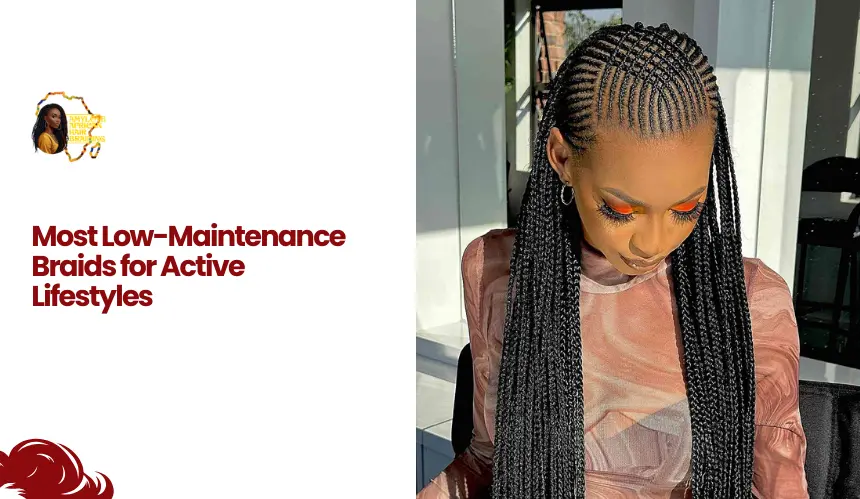
For people with busy routines, low-maintenance braids are not about trends or complexity. They are about reliability, comfort, and the ability to focus on life without worrying about constant hair adjustments. Active people want braids that stay neat through workouts, resist frizz from moisture, and remain comfortable during long days of movement.
This article focuses specifically on those needs, highlighting braid styles that reduce daily effort while supporting physically demanding routines.
What “Low-Maintenance” Actually Means for Active Individuals
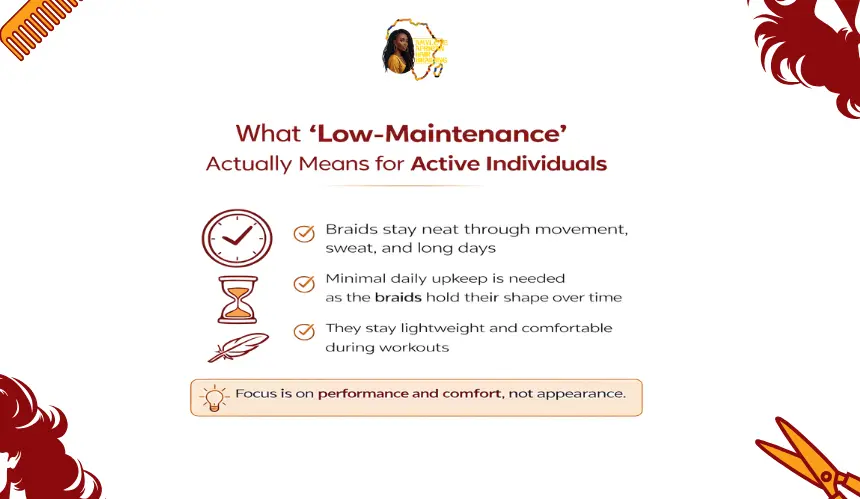
For people with active routines, low-maintenance braids are defined by how little daily attention they require while staying reliable under physical stress.
A style is considered low maintenance when it remains neat through movement, sweat, and long days without constant checking, adjusting, or restyling. This shifts the focus away from appearance and toward performance in real-world conditions.
Longevity is a core part of this concept. Braids that maintain their structure over time reduce the need for frequent touch-ups or early reinstallation. When a style can withstand friction, moisture, and repeated securing without unraveling, it naturally lowers overall upkeep and time investment.
Comfort completes the definition. Braids that feel lightweight, balanced, and flexible allow unrestricted movement and reduce scalp strain. When a style stays comfortable throughout workouts and daily activity, it is less likely to be disturbed, making it genuinely low maintenance rather than just visually simple.
Why Active Lifestyles Change Braid Selection
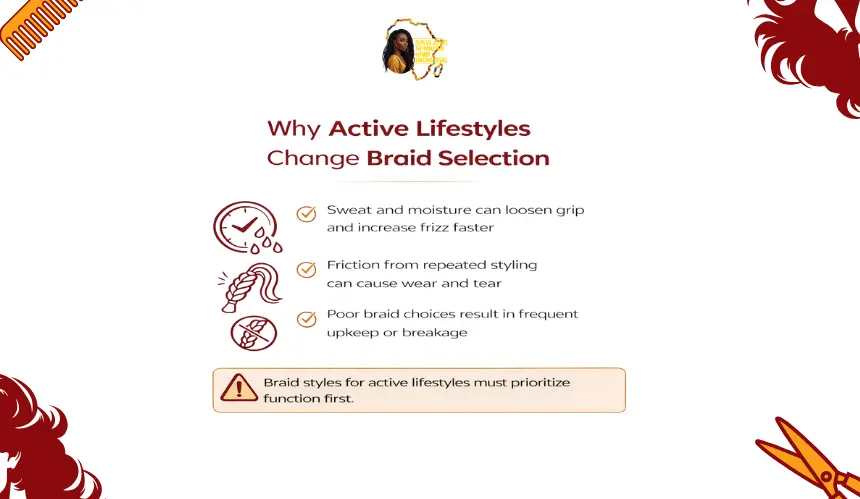
Hair behaves differently when it is exposed to constant motion, moisture, and repeated styling throughout the day. Activities such as training sessions, outdoor workouts, or long workdays on the move introduce stress that casual routines do not.
This is why braid selection for active lifestyles must prioritize function first. Choosing styles without accounting for these conditions often results in faster breakdown, discomfort, and increased upkeep.
How Sweat And Moisture Affect Braid Performance
Sweat changes the environment of the scalp and hair shaft, influencing how long braids remain neat. Moisture buildup can loosen grip at the roots, increase frizz along the length, and shorten the lifespan of certain braid patterns.
Styles that manage moisture well tend to maintain definition longer and require fewer touch-ups, making them better suited for people who sweat regularly during physical activity.
Why Friction And Repeated Styling Increase Maintenance
Active routines often involve pulling hair into buns, ponytails, or protective wraps multiple times a day. This repeated contact creates friction against clothing, equipment, and accessories, which accelerates fraying and loosening.
Braid styles designed to sit close to the scalp or distribute tension evenly experience less movement-related wear. As a result, they remain stable longer and reduce the need for daily adjustments or corrective styling.
Braided Styles That Require the Least Daily Upkeep
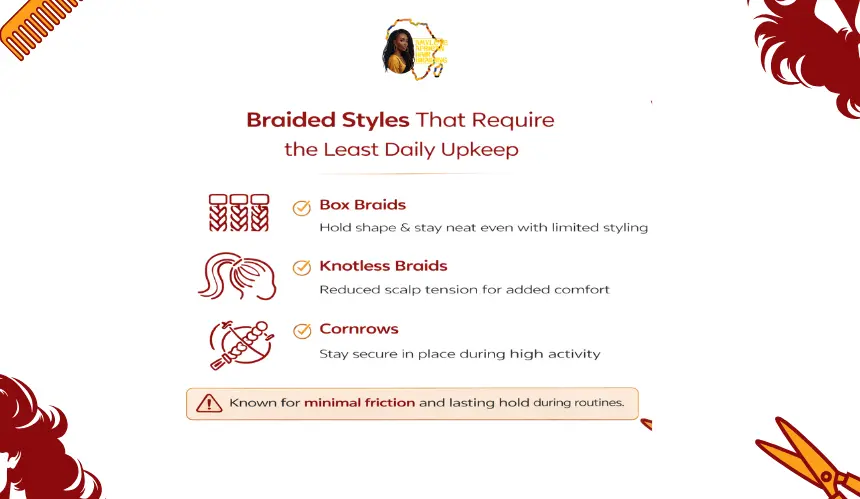
Some braid structures are naturally better suited for active routines because they limit movement, reduce friction, and hold their form longer. The following styles are widely recognized for minimizing daily effort while remaining reliable under consistent physical activity.
1. Box Braids for Extended Wear
Box braids are designed with evenly sized sections that help maintain balance and consistency across the scalp. This structure allows the braids to stay intact even with frequent movement, tying, or light moisture exposure.
Because box braids hold their shape independently, daily styling is optional, which makes extended wear possible without increasing maintenance demands.
2. Knotless Braids for Reduced Scalp Stress
Knotless braids start gradually at the root, eliminating the tight base that often causes tension. This reduces scalp strain during workouts and long active days, making the style more comfortable to wear continuously. When discomfort is minimized, there is less need for adjustment, allowing the braids to remain neat with minimal daily interference.
3. Cornrows for High-Movement Activities
Cornrows are secured close to the scalp, which limits excess motion and friction during physical activity. Their compact pattern keeps hair in place during workouts, sports, or outdoor routines where movement is constant. Since the style remains fixed, upkeep is largely limited to basic scalp care rather than frequent restyling.
Braids That Hold Up Best During Frequent Physical Activity
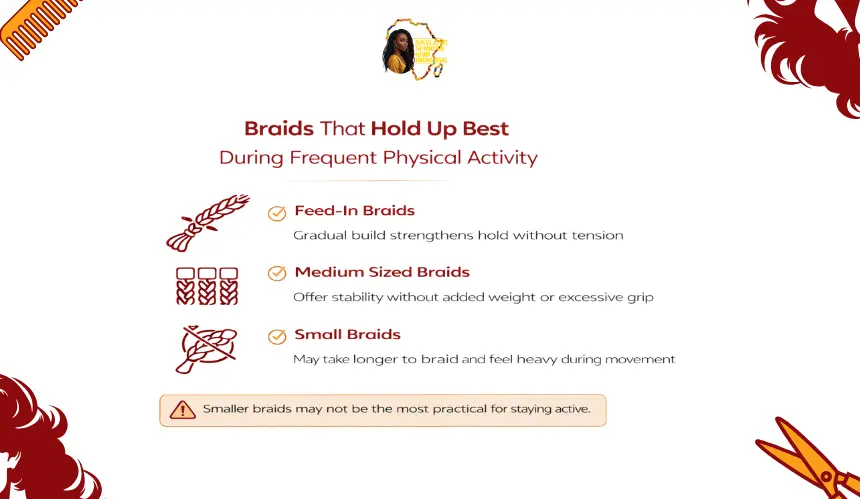
Some braid styles perform better when movement is constant and routines are physically demanding. Durability becomes the deciding factor when hair is exposed to repeated motion, sweat, and regular securing throughout the day.
1. Feed-In Braids for Secure Hold
Feed-in braids are built by gradually adding hair into the braid, creating a smooth and compact structure from the root. This technique improves grip without relying on tight anchoring, which helps the braids stay secure during high-impact movement.
Because the tension is distributed evenly, feed-in braids resist loosening and maintain definition longer, even when workouts or active tasks are part of the daily routine.
2. Medium-Sized Braids vs Small Braids for Active Routines
Braid size plays a direct role in how well a style holds up during frequent activity. Medium-sized braids offer a balance between durability and flexibility, making them easier to manage without excessive weight or tension.
Smaller braids may last longer overall, but they require more time to install and can feel heavier during extended movement. For active individuals prioritizing stability with manageable upkeep, medium-sized braids often provide the most practical performance.
How Hair Texture Influences Maintenance Requirements
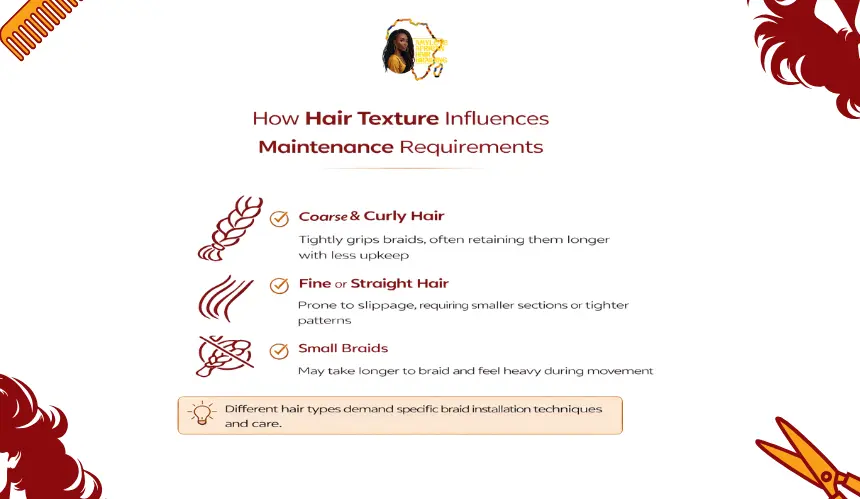
Hair texture plays a significant role in how braids behave once installed, especially for active individuals. The way hair grips extensions, reacts to moisture, and resists frizz directly affects how much effort is needed to keep braids looking neat over time.
Understanding this relationship helps set realistic maintenance expectations and prevents choosing styles that require more upkeep than anticipated.
Maintenance Expectations for Coarse and Curly Hair
Coarse and curly hair types tend to hold braids more securely due to their natural texture and density. This built-in grip helps braids stay intact during movement and reduces slippage at the roots. As a result, these hair types often experience longer-lasting styles with less frequent touch-ups, making them well suited for active routines that demand consistency and durability.
Maintenance Considerations for Fine or Straight Hair
Fine or straight hair typically has a smoother surface, which can make it more prone to loosening under sweat and friction. To maintain stability, braid patterns often need smaller sections or tighter construction, which may slightly increase maintenance requirements.
While low-maintenance styles are still achievable, they usually require more intentional installation techniques and closer attention to early signs of slippage.
Low-Effort Care Routines That Keep Braids Looking Fresh
Even the most durable braid styles rely on basic care to maintain their appearance and comfort. For active individuals, the goal is not elaborate routines but consistent, low-effort habits that prevent buildup, irritation, and premature wear.
Simple maintenance practices help braids last longer without adding time-consuming steps to already busy schedules.
Weekly Scalp Care With Minimal Time Investment
Keeping the scalp clean supports both comfort and braid longevity. Light cleansing methods, such as diluted shampoos or scalp sprays, remove sweat and residue without disturbing the braid pattern. This approach prevents itchiness and buildup while preserving the structure of the style, making it easier to maintain over weeks rather than days.
Night Protection And Friction Reduction
Nighttime friction can undo the benefits of a low-maintenance braid style. Using smooth coverings, such as satin or silk wraps, reduces rubbing that causes frizz and loosening. Protecting the hair during sleep minimizes morning adjustments, allowing braids to remain neat and ready with little to no daily styling effort.
When Low-Maintenance Braids Are Not the Best Option
Low-maintenance braids work well for many active routines, but they are not universally ideal. Certain conditions introduce challenges that even durable braid structures cannot fully offset.
Understanding these limits helps set realistic expectations and prevents frustration when a style does not perform as hoped.
Extremely High-Impact Or Daily Water Exposure Activities
Activities that involve constant water contact or intense, prolonged sweating can shorten the lifespan of braided styles. Frequent swimming, daily water immersion, or repeated saturation increases moisture retention at the scalp and roots, which can loosen braids faster and raise hygiene concerns.
In these situations, maintenance increases regardless of braid type, making simpler protective alternatives more practical.
Short-Term Commitments Versus Long-Term Wear Goals
Low-maintenance braids are designed to reduce effort over extended periods. When hair is styled for short-term events, quick transitions, or temporary routines, the installation time and care requirements may outweigh the benefits. In these cases, flexible styles that can be installed and removed quickly often provide better convenience than long-wear braided options.
If an active lifestyle demands a hairstyle that keeps up without constant effort, AmyLove African Hair Braiding is ready to help make that choice feel easy and personal. Every braid is created with real life in mind, so comfort, durability, and confidence come naturally.
Book a visit and step into a style that moves with you, supports your routine, and lets you feel put together even on your busiest days.
Frequently Asked Questions
How long should active individuals wait before re-braiding their hair?
Re-braiding timelines depend on scalp condition rather than appearance alone. Signs such as persistent itching, tenderness, or buildup indicate it is time for a reset. Waiting too long can compromise scalp health, even if the braids still look intact.
Are braids suitable for daily gym sessions without protective styling?
Braids can handle daily workouts, but skipping basic protection increases friction and moisture exposure. Simple measures like securing braids properly or using breathable wraps help preserve structure and comfort without adding maintenance-heavy steps.
Do shorter braids require less maintenance than longer styles?
Shorter braids generally experience less friction from clothing and movement, which can reduce wear. They are also easier to manage during workouts and sleep, making them a practical option for people prioritizing ease over styling versatility.
Can low-maintenance braids support hair growth over time?
Braids themselves do not cause growth, but reduced manipulation helps retain length. Styles that limit daily handling and tension allow hair to remain protected, supporting healthier long-term growth patterns when paired with proper scalp care.
How does seasonal weather affect braid maintenance for active people?
Heat and humidity increase sweat and moisture retention, while colder seasons can lead to dryness and friction from layered clothing. Adjusting care routines seasonally helps maintain braid quality without changing the style itself.
Is professional installation necessary for truly low-maintenance results?
Professional installation often improves braid longevity because sectioning, tension control, and pattern consistency are optimized. While self-installed braids can work, professionally installed styles tend to require fewer corrections over time, especially for active routines.