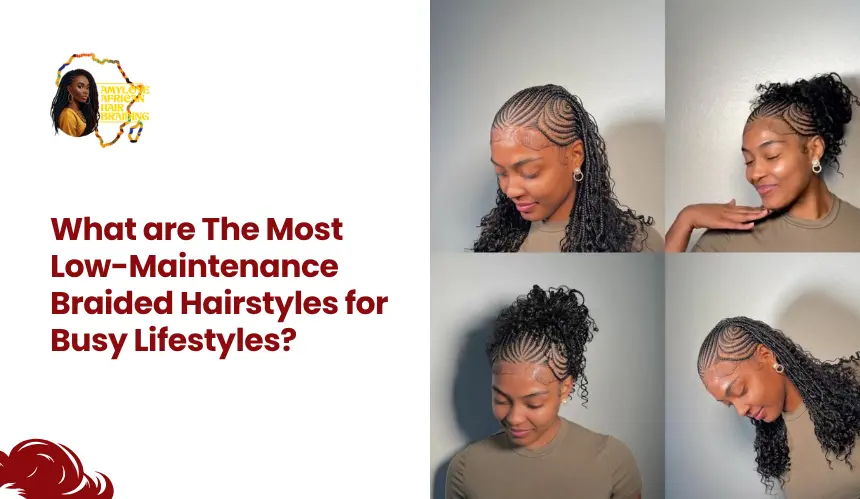
What are The Most Low-Maintenance Braided Hairstyles for Busy Lifestyles?
Key Takeaways
|
Mornings feel rushed. Work meetings start early. Gym sessions, school drop-offs, travel plans, and social commitments leave little time for styling.
Many people want a hairstyle that looks polished yet does not demand daily effort. That is where low-maintenance braided hairstyles become a practical solution. This guide breaks down which braided styles require the least upkeep, how they fit different lifestyles, and how to choose one that supports both appearance and practicality.
What Makes a Braided Hairstyle Truly Low-Maintenance?
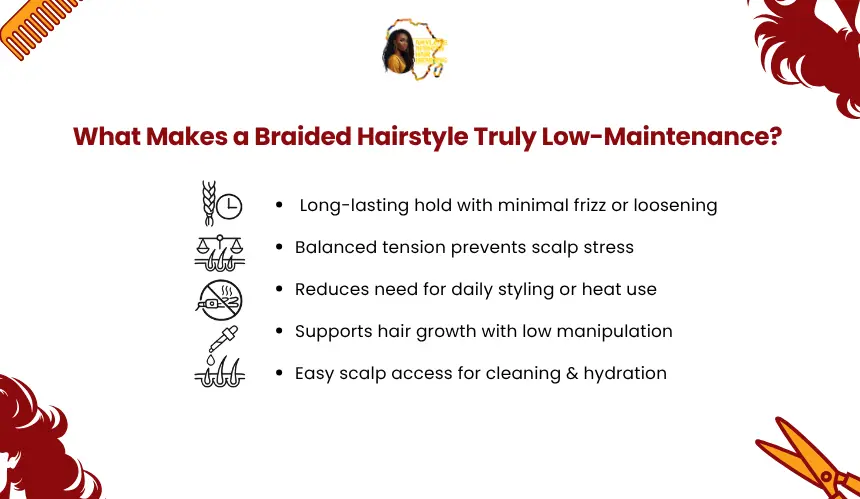
Not every braided style automatically qualifies as low maintenance. A truly low-maintenance braid lasts several weeks without excessive frizz, loosening, or constant re-styling. Durability, balanced tension, and neat parting all contribute to a long-wear protective style that holds its shape with minimal daily effort.
Another key factor is reduced manipulation. Styles that eliminate the need for daily heat styling, heavy edge control, or frequent retouching save time and protect natural hair from breakage. Low manipulation braids also support hair retention, especially for those focused on growth and scalp health.
Scalp accessibility completes the equation. A practical braid style allows for easy cleansing, lightweight moisturizing, and breathable sectioning. When a hairstyle supports both convenience and hair health, it truly meets the standard of minimal upkeep for busy lifestyles.
Most Low-Maintenance Braided Hairstyles That Save Time
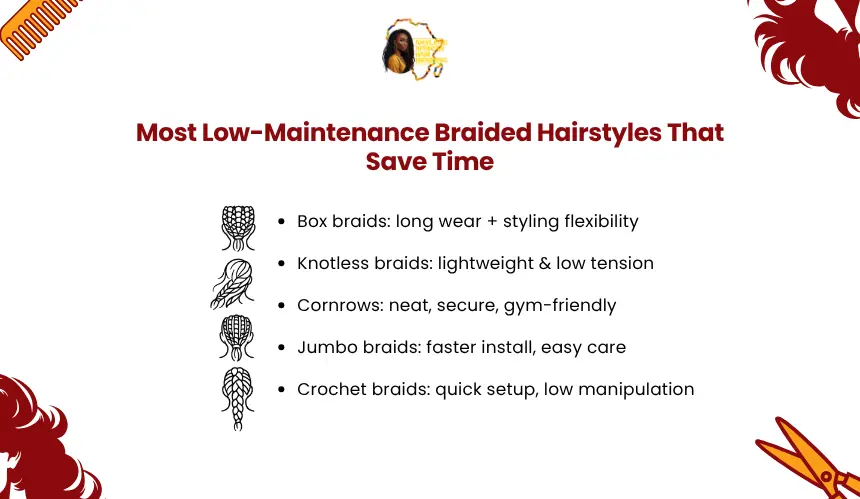
Some braided styles naturally hold their structure longer, resist frizz, and require less daily styling effort. The following options are widely recognized as durable protective hairstyles that align with busy routines, minimal upkeep, and long-lasting wear.
1. Box Braids (Classic & Knotless Variations)
Box braids are known for their longevity and styling flexibility. Medium-sized classic box braids can last four to eight weeks with proper scalp care and nighttime wrapping. Their individual sectioning allows for versatile looks such as buns, ponytails, and half-up styles without daily manipulation.
Knotless braids offer a lighter, low-tension alternative. Because extensions are gradually fed in, they reduce strain on the scalp and hairline. This method supports protective styling principles while maintaining a natural finish and comfortable wear.
2. Cornrows (Straight Back & Feed-In Styles)
Cornrows are ideal for structured, close-to-scalp styling that remains neat with minimal effort. Straight-back cornrows provide a clean, professional appearance, while feed-in braids create a seamless and natural transition from the scalp.
Their flat structure makes them practical for active lifestyles, including workouts and frequent travel. Since more of the scalp remains accessible, cleansing and moisturizing are easier, which supports scalp hydration and long-term hair health.
3. Fulani Braids (Minimal Accessory Version)
Fulani braids combine cornrow detailing at the crown with individual braids flowing toward the back. When styled without heavy beads or accessories, they become a manageable and long-lasting option.
This tribal braid variation offers both structure and versatility. The defined parting helps maintain neatness, while the mixed braid pattern reduces daily styling needs. It balances aesthetic appeal with practical maintenance.
4. Jumbo Braids for Faster Installation
Jumbo braids use larger sections, which significantly reduce installation time. Because there are fewer braids overall, washing and moisturizing require less effort, and drying time is shorter.
When installed with balanced tension, jumbo braids can reduce scalp stress compared to very small plaits. They are especially suitable for individuals seeking quick-install braids that still offer bold definition and long wear.
5. Crochet Braids (Low Manipulation Option)
Crochet braids are installed by looping hair extensions through a cornrow base, which shortens chair time compared to individual braiding. This makes them a practical choice for time-conscious individuals.
The base remains secure underneath, allowing the outer texture to maintain shape with minimal daily styling. Crochet protective styles are often lightweight and versatile, making them an efficient low-manipulation solution for busy schedules.
How to Choose the Right Low-Maintenance Braid for Your Lifestyle
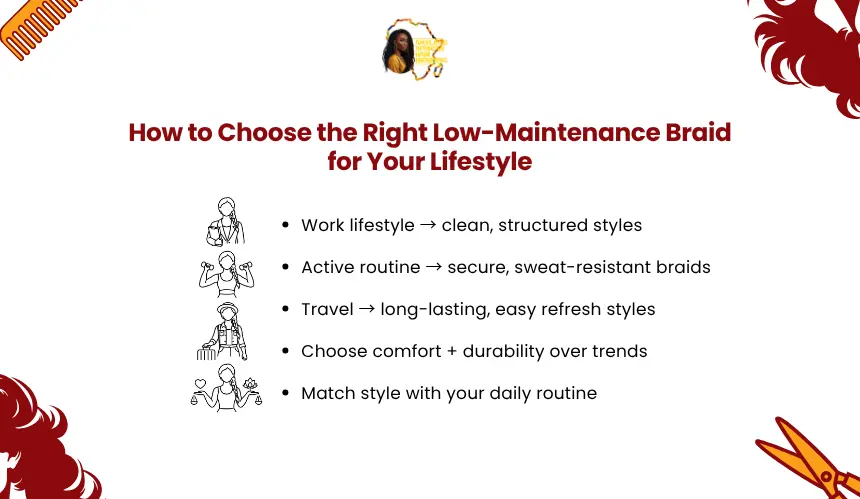
Selecting a braid style is not only about appearance. Lifestyle demands, work environment, activity level, and time availability all influence which protective hairstyle will feel effortless rather than overwhelming. The right choice should align with daily routines while supporting scalp comfort and long-term hair health.
Which Braids Style Works Best for Corporate or Professional Settings?
Professional environments often require polished, structured hairstyles that maintain a neat finish for weeks. Medium knotless braids and straight-back cornrows are commonly preferred because they sit close to the scalp and maintain clean parting. These styles reduce daily styling time while presenting a refined, office-appropriate appearance.
Neutral lengths and moderate thickness also contribute to a balanced, business-friendly look. Choosing lightweight braid extensions with controlled volume helps maintain comfort during long workdays without sacrificing durability.
Which Braids Suit Active or Gym-Focused Lifestyles?
For individuals who exercise frequently, sweat resistance and scalp accessibility become essential. Cornrows and smaller feed-in braids stay secure during workouts and require minimal adjustment afterward. Their close-to-scalp structure limits frizz and reduces movement during high-impact activity.
Lightweight crochet styles can also work well, especially when installed with breathable sectioning. These options allow easier cleansing routines and support scalp hydration after intense physical activity.
Which Braids Style Should Frequent Travelers Consider
Travel-friendly braids should maintain shape through long flights, climate changes, and varying humidity levels. Jumbo braids and medium knotless box braids often perform well because they are durable yet easy to refresh with light braid oil or mousse.
Styles that require minimal product dependency and simple nighttime protection offer greater convenience during trips. Choosing braids that balance longevity and comfort ensures that hair remains manageable without constant restyling while away from home.
How to Maintain Braided Hairstyles With Minimal Effort
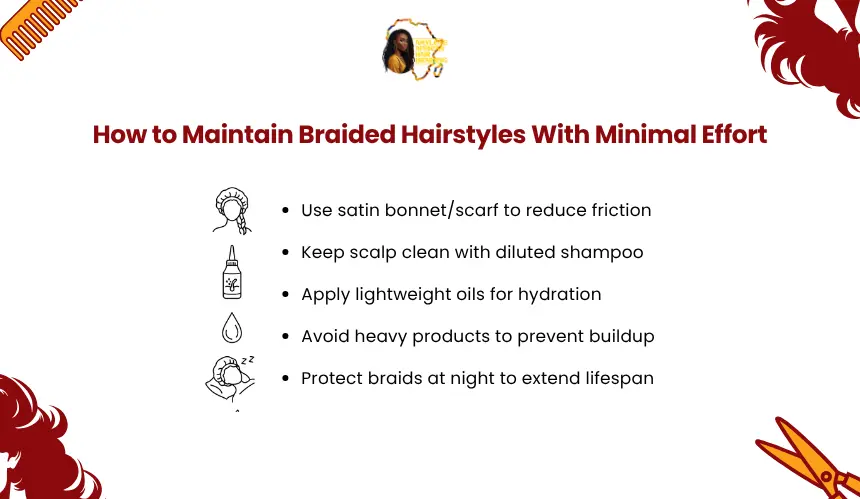
Low-maintenance braids still require intentional care to preserve neatness and protect natural hair. A simple routine focused on scalp health, moisture balance, and friction control can significantly extend the lifespan of protective styles without adding daily stress.
What Is a Simple Night Routine That Preserves Braids?
Night protection plays a major role in preventing frizz and root fuzziness. Wrapping braids with a satin scarf or wearing a silk bonnet reduces friction against cotton pillowcases. This helps maintain clean parting and prolongs the polished look of box braids, cornrows, or crochet styles.
For longer braids, loosely gathering them into a low ponytail or braid at night prevents tangling. A light braid oil applied sparingly to the lengths can support moisture retention without causing buildup.
How Should the Scalp Be Cleansed Without Ruining the Braids?
Scalp hygiene is essential during long-wear protective styling. A diluted shampoo applied directly to the scalp with a nozzle bottle allows targeted cleansing without disturbing the braid structure. Gently massaging with fingertips rather than nails reduces tension and irritation.
After cleansing, a lightweight leave-in spray or braid mist supports scalp hydration. Avoiding heavy creams and thick oils prevents product buildup, which can shorten the lifespan of the style and cause itchiness.
When Is It Time to Remove the Braids?
Even durable braided hairstyles have a healthy wear limit. Excessive root growth, persistent scalp irritation, or visible frizz near the base signal that removal is necessary. Keeping braids installed beyond the recommended duration increases the risk of breakage and tension-related hairline stress.
Timely removal supports natural hair recovery and maintains the protective styling cycle. Monitoring scalp comfort and hair condition ensures that low-maintenance braids remain beneficial rather than damaging.
Common Mistakes That Increase Maintenance (And How to Avoid Them)
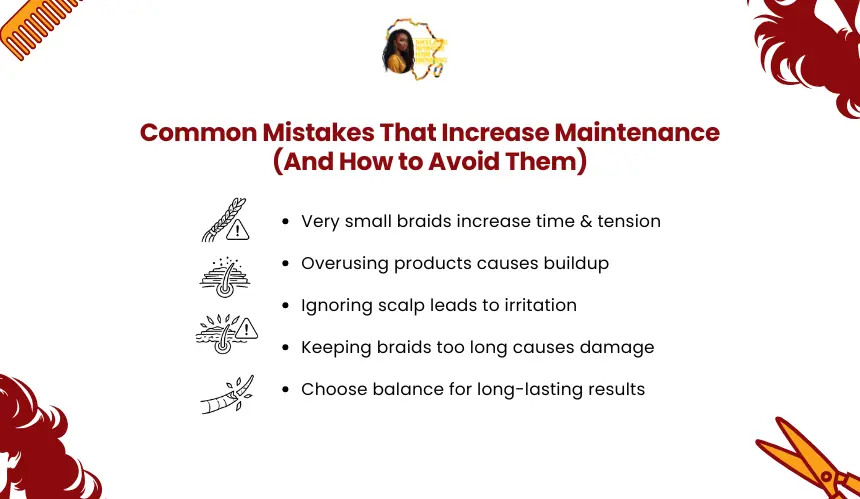
A braid style may start as low maintenance, yet certain choices can quietly increase upkeep and reduce longevity. Avoiding these common errors helps preserve neatness, protect natural hair, and maintain the time-saving benefits of protective styling.
1. Choosing Braids That Are Too Small
Very small braids often require longer installation time and can create higher tension across the scalp if not balanced correctly. While micro braids may look detailed, they usually demand more effort during washing, drying, and edge maintenance.
Medium-sized plaits or knotless braids typically provide a better balance between structure and manageability. They last several weeks without requiring constant touch-ups, making them more practical for busy routines.
2. Overusing Styling Products
Excessive gels, heavy creams, and thick oils can lead to product buildup at the roots and along the braid shaft. This buildup attracts lint, dulls shine, and increases the need for frequent cleansing, which defeats the purpose of a low-maintenance hairstyle.
Lightweight braid sprays and minimal oil application help maintain moisture without creating residue. Controlled product use keeps the style fresh while supporting scalp comfort.
3. Ignoring Scalp Health
Scalp neglect can result in dryness, irritation, or tension-related concerns such as traction alopecia. Once discomfort develops, maintenance becomes more demanding and may require early removal of the braids.
Consistent scalp hydration, gentle cleansing, and monitoring root tension protect hair follicles and reduce breakage risk. Healthy scalp practices ensure that protective braids remain beneficial and truly low-maintenance.
Quick Comparison: Which Braid Style Requires the Least Effort?
After exploring individual braid types, a side-by-side comparison helps clarify which option aligns best with different time commitments.
Effort level depends on installation time, daily upkeep, scalp access, and overall longevity. The table below simplifies decision-making for busy lifestyles.
Style | Installation Time | Wear Duration | Daily Effort Level | Best For |
Medium Box Braids | Moderate | 4 to 8 weeks | Low | Versatile styling and long wear |
Knotless Braids | Moderate | 4 to 6 weeks | Low | Reduced tension and natural finish |
Cornrows | Short to Moderate | 2 to 4 weeks | Very Low | Gym-focused or professional settings |
Fulani Braids | Moderate | 3 to 6 weeks | Low | Structured style with visual detail |
Jumbo Braids | Short | 3 to 5 weeks | Very Low | Faster install and easy washing |
Crochet Braids | Short | 4 to 6 weeks | Low | Low manipulation and texture variety |
Cornrows and jumbo braids generally require the least daily adjustment because of their structured pattern and limited volume. Medium box braids and knotless variations offer longer wear with slightly more styling flexibility. Crochet styles reduce installation time while maintaining a styled appearance with minimal handling of natural hair.
Frequently Asked Questions
How much do low-maintenance braided hairstyles typically cost?
Pricing varies based on braid size, length, hair extensions used, and stylist expertise. Medium box braids or knotless styles often range higher than basic cornrows due to installation time. Crochet braids may cost less because the process is quicker. Salon reputation, city demand, and customization such as color blending or length extension also influence total cost.
Are low-maintenance braids suitable for thin or fine hair?
Individuals with fine or low-density hair can still wear braided styles, but tension control is critical. Knotless techniques and medium-sized sections are often safer choices because they distribute weight more evenly across the scalp. Consulting a stylist for a tension-balanced installation helps prevent stress on delicate strands.
Can braided hairstyles be washed weekly?
Braids can be cleansed weekly if needed, especially for those with active lifestyles or oily scalps. Using diluted shampoo and targeted scalp application prevents disruption to the braid structure. Proper drying afterward is essential to avoid moisture buildup at the roots, which can lead to odor or discomfort.
Do braids help with hair growth?
Braids do not directly accelerate hair growth, but they can support length retention. By reducing daily manipulation, heat exposure, and breakage, protective styling allows natural growth cycles to progress with fewer setbacks. Consistent scalp care and balanced tension are key factors in maintaining healthy growth.
Are braided hairstyles appropriate for formal events?
Many braided styles can transition seamlessly into formal settings. Knotless braids, Fulani styles, or sleek cornrows can be styled into elegant buns or half-up designs suitable for weddings, galas, or professional events. Accessories such as subtle cuffs or minimal beads can enhance appearance without increasing maintenance demands.