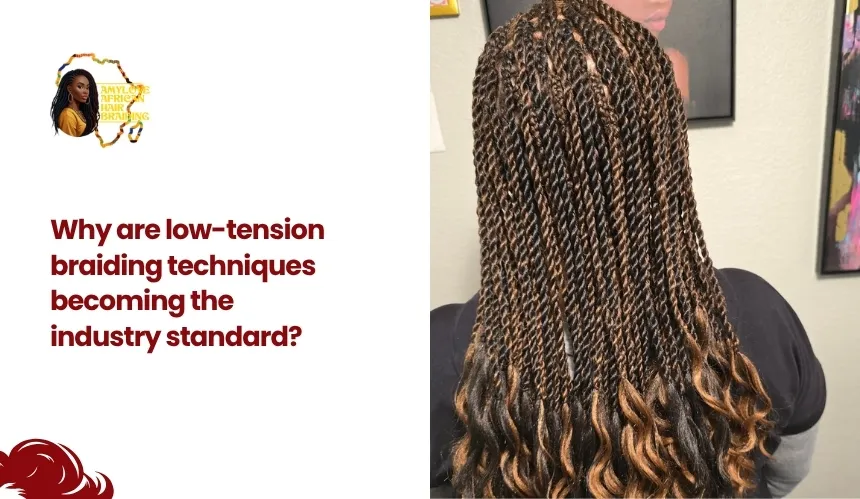
Why are low-tension braiding techniques becoming the industry standard?
Key Takeaways
|
Low-tension braiding is gaining attention because people now expect protective styles to look neat without causing scalp pain, hairline stress, or long-term damage. Braiding is no longer judged only by how tight or polished it looks on day one; comfort, scalp health, and hair retention matter just as much.
As more clients understand the risks of excessive pulling, gentler techniques are becoming a stronger sign of professional, responsible styling. This blog explains why low-tension braiding techniques are becoming the industry standard.
Why Tight Braiding Is Being Questioned More Today
How Does High Tension Stress the Scalp and Hairline?
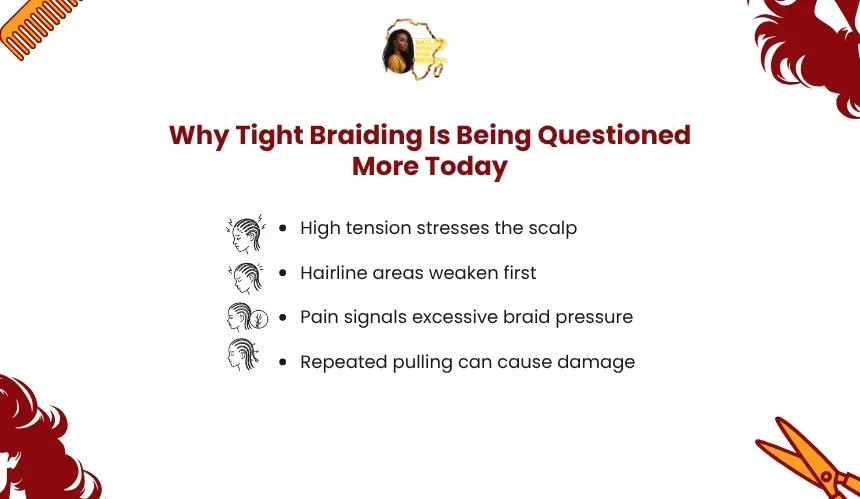
High-tension braiding places constant force on the scalp, especially around the edges, temples, and nape where hair is often finer and more fragile. This pulling can create soreness, redness, tenderness, and small tension bumps because the follicles are being stretched beyond their natural tolerance.
The hairline is usually the first area to show stress because it has less density and less structural support than the center of the scalp. When extension weight, tight parting, and firm hand pressure combine, the roots absorb repeated strain. Over time, this can lead to breakage near the base of the strand, making the style look clean at first but damaging the areas clients are trying to protect.
Why Is Pain No Longer Considered Part Of Neat Braids?
Clients are becoming more aware that pain is not proof of a secure braid style. A professional braid installation should feel stable without causing headaches, scalp tightness, burning, or difficulty moving the face comfortably.
The industry is moving away from the belief that braids must be extremely tight to last longer. Clean parting, balanced braid size, proper section control, and skilled hand placement can create neat results without unnecessary pressure. This shift has changed how clients evaluate braid services: comfort is now part of quality, not a secondary preference.
A style that causes pain immediately after installation often signals excess tension, not better craftsmanship. When clients experience bumps, swelling, or lingering soreness, they are more likely to question the technique and look for braiders who prioritize scalp-safe styling.
How Can Repeated Tension Lead To Long-Term Hair Damage?
Repeated tight braiding can weaken the connection between the hair shaft and follicle. When the same areas are pulled repeatedly, especially during back-to-back protective styles, the follicles may become inflamed or less able to support healthy growth.
One of the biggest concerns is traction alopecia, a form of hair loss linked to prolonged pulling on the scalp. It often appears around the edges, temples, and front hairline, where tension is most concentrated. Early signs may include thinning, short broken hairs, tenderness, or visible gaps along the hairline.
This is why tight braiding is being questioned more seriously. A protective style should reduce manipulation, preserve hair strength, and support retention. If the technique causes follicle stress, edge thinning, or scalp inflammation, it stops functioning as a protective measure and becomes a long-term risk.
Do You Know? A dermatology study reported the prevalence of traction alopecia of 17.1% in African schoolgirls aged 6–21 and 31.7% in women aged 18–86. This shows why braid tension is not just a comfort issue, but a measurable hair-health concern in communities where tension-based hairstyles are common. |
What Makes Low-Tension Braiding Different
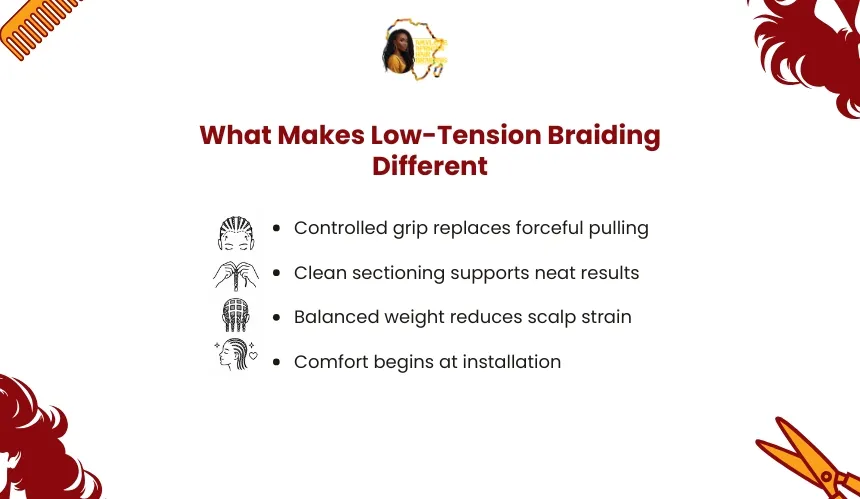
Low-tension braiding is different because it focuses on controlled technique rather than force. The goal is to create a secure, polished braid style while reducing unnecessary pressure on the scalp, roots, and hairline.
Controlled Grip Instead Of Excessive Pulling
Low-tension braiding depends on hand control, clean sectioning, and steady braid formation. Instead of pulling the hair tightly from the root, the braider controls each section with even pressure so the braid holds its shape without straining the follicle.
The foundation matters most. A skilled braider keeps the base secure enough to prevent slipping, but not so tight that the scalp feels stretched or sore. This balance comes from proper finger placement, consistent part sizes, and controlled extension feeding rather than aggressive gripping.
This technique also allows the natural hair to sit in the braid without being forced into unnatural tension. The result is a style that feels stable from the beginning instead of needing several days for the scalp to “loosen up.”
Can Low-Tension Braids Still Look Neat And Last?
Low-tension braids can still look neat when the structure is built correctly. Neatness comes from clean parts, smooth section control, balanced braid size, and proper product use, not from pulling the hair as tightly as possible.
A secure installation should hold the braid pattern without creating scalp tightness. When the braid base is shaped evenly and the extension weight matches the client’s hair density, the style can remain polished while allowing normal scalp movement.
This is why low-tension braiding is becoming more respected in professional styling. It proves that comfort and structure can work together when the technique is precise.
With many people in Lakewood, CA, balancing active schedules between areas like Lakewood Center, local salons near Carson Street, and community spaces around Mayfair Park, protective hairstyles that are both stylish and manageable are often a popular choice. Many clients choose Fulani Braids in Lakewood because the style offers detailed braid patterns and a polished appearance that fits well with both everyday routines and social settings throughout the city. The clean sectioning and controlled braid placement used in Fulani styles can also help create a neater finish without relying on excessive tension around the hairline or scalp.
Better Weight Distribution For Protective Styles
Low-tension braiding reduces stress by spreading weight more evenly across the scalp. Styles such as knotless braids and feed-in braids help because added hair is introduced gradually instead of being anchored heavily at one tight point.
Braid size also affects tension. Very large, long, or heavy braids can overload small sections, while properly sized braids distribute extension weight across enough natural hair to reduce pulling. Lightweight extensions further lower strain, especially for clients with fine hair, fragile edges, or sensitive scalps.
Better weight distribution makes the style more protective because the scalp is not carrying concentrated pressure. The braids feel lighter, the roots stay less stressed, and the finished look remains structured without relying on excessive tightness.
With Lakewood, CA, known for its active neighborhoods, warm weather, and busy areas like Lakewood Center, where many clients look for low-maintenance yet polished hairstyles, comfortable protective styling has become a popular choice throughout the city. Many people choose Knotless Braids in Lakewood because the style feels lightweight and secure while fitting easily into everyday routines. Since the extensions are added gradually instead of being tightly anchored at the base, knotless techniques can help reduce pressure around the scalp and edges while creating a cleaner, more natural-looking braid foundation.
Why Low-Tension Techniques Support Healthier Hair Growth
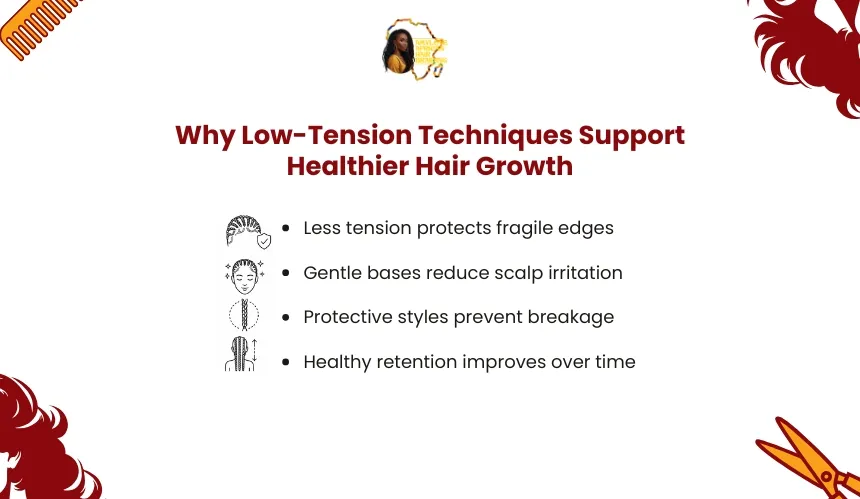
Low-tension techniques support healthier hair growth by reducing the mechanical strain that can interrupt retention. Instead of forcing the roots to carry constant pressure, the style allows the natural hair to remain protected while the scalp stays less reactive during the wear period.
Less Breakage Around Edges And Fragile Areas
This is especially useful for areas where the hair naturally has less density. When the braid foundation is adjusted to match those weaker zones, the strands are less likely to snap at the base or thin from repeated styling pressure.
Low-tension braiding protects these areas by using smaller amounts of pressure at the base and avoiding heavy extensions on delicate sections. This gives fragile hair enough support to stay in place without being stretched, twisted, or pulled from the root.
For clients with fine-textured hair, postpartum shedding, relaxed hair, or previous edge damage, this matters even more. A gentler braid foundation reduces mechanical stress and allows vulnerable strands to remain intact throughout the style.
How Does Low-Tension Braiding Reduce Scalp Irritation?
Low-tension braiding reduces scalp irritation by allowing the skin and follicles to remain in a more natural position. When the scalp is pulled too tightly, it can react with tenderness, itching, redness, bumps, or inflammation because the skin is under constant strain.
Tightness bumps often appear when the follicle area becomes overloaded by pressure from the braid base or extension weight. The discomfort may feel minor at first, but persistent soreness can signal that the scalp is being stressed beyond a healthy limit.
A low-tension approach lowers this risk by keeping the braid secure without compressing or stretching the scalp. Clients can usually move their head, sleep, and style their braids more comfortably because the installation is not forcing the scalp to adjust to unnecessary pressure.
Improved Protective Styling Results Over Time
A protective style only works when it reduces manipulation without creating new damage. Braids are meant to shield the hair from daily combing, heat styling, friction, and frequent handling, but excessive tension can cancel out those benefits by weakening the root and hair shaft.
Low-tension techniques make protective styling more effective because they support both the visible style and the health of the natural hair underneath. The roots stay less stressed, the strands experience less breakage, and the scalp has fewer irritation triggers during the wear period.
Over time, this can improve length retention because the hair is not constantly recovering from tension damage after every braid installation. Healthier protective styling depends on balance: the braids must be secure enough to last, but gentle enough to protect the hair they are covering.
Do You Know? According to NCBI Bookshelf, healthy scalp hair grows at about 0.35 mm per day, which equals roughly 0.5 inches per month or 6 inches per year. This means protective styles should be judged by how well they help preserve existing length, not by whether they make hair grow faster. |
Why Clients Now Prefer Comfort-Focused Braid Services
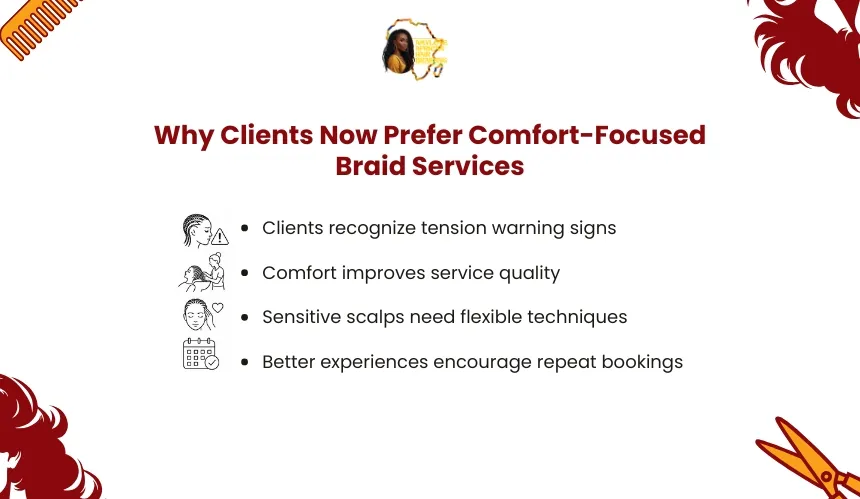
Clients now prefer comfort-focused braid services because they are more informed about what a professional braid appointment should feel like. The client experience now includes communication, tension control, aftercare guidance, and confidence that the style will not create avoidable damage.
More Clients Recognize Early Signs Of Tension Damage
Why Has Comfort Become Part Of Braid Service Quality?
Low-Tension Styles Work Better For Sensitive Scalps
This makes low-tension styling more adaptable across different clients. Instead of forcing every hair type into the same installation method, the braider can adjust pressure, braid size, and extension weight based on the scalp’s tolerance
Sensitive scalps often react faster to pressure. A style that feels slightly tight on one person may cause bumps, tenderness, or inflammation for another. Low-tension braiding allows the service to be adjusted based on hair density, scalp condition, and the client’s comfort level.
This flexibility is one reason the technique is becoming a professional standard. It makes braid services more inclusive, safer for different hair conditions, and more aligned with what clients now expect from a high-quality salon experience.
Why Low-Tension Braiding Is Becoming The New Professional Standard
Low-tension braiding is different because the structure is built through precision rather than tightness. The braider controls the base, braid angle, and extension placement so the style holds securely without depending on excessive pull.
Low-Tension Braiding Reflects Higher Professional Standards
Modern braid services require more than clean parts and a neat finish. Skilled braiders are now expected to assess hair density, scalp sensitivity, edge condition, braid size, and extension weight before beginning the installation.
This makes the service more precise and professional. Instead of using the same level of pressure on every client, the braider adjusts the technique based on how much support the natural hair can safely handle.
Skill-Based Braiding Is Replacing Outdated Tight Styling
Low-tension braiding shows that a secure style does not need to depend on aggressive pulling. Strong results come from proper section control, steady hand placement, balanced braid sizing, and clean extension feeding.
This separates skilled braiding from outdated tight styling. A well-installed braid should hold its structure because the technique is accurate, not because the scalp has been pulled into discomfort.
Safer Techniques Improve Client Retention And Salon Reputation
Low-tension techniques also affect how clients judge the overall service. A client is more likely to return when the braids look polished and the appointment feels professional from start to finish.
This matters for reviews, referrals, and repeat bookings. Clients remember whether the stylist listened, adjusted tension when needed, and protected fragile areas. That type of service creates stronger trust than a style that only looks good on the first day.
Protective Styling Is Being Redefined Around Hair Preservation
The industry is redefining protective styling around hair preservation. Braids should reduce daily manipulation, support length retention, and protect the natural hair underneath the style.
This makes low-tension braiding a stronger technical approach, not a softer version of traditional braiding. The style lasts because the foundation is balanced, the sections are controlled, and the braid pattern is installed with consistency.
Do You Know? A person normally sheds around 50 to 100 hairs per day, according to the Cleveland Clinic. After removing braids, some shed hair may look excessive because trapped strands are released at once. This is different from breakage, thinning patches, or hair loss caused by repeated pulling |
For clients who want braids that look polished without unnecessary scalp stress, AmyLove Hair Braiding offers a more thoughtful approach to protective styling. From clean parting to controlled tension and style-friendly guidance, each service is designed to support comfort, beauty, and better hair care from the first appointment. Reach out today to enjoy braids that feel as good as they look.
Frequently Asked Quetions
How tight should braids feel right after installation?
Braids should feel secure, not painful. Mild awareness of the style is normal, but sharp pulling, headaches, burning, swelling, or difficulty sleeping usually means the tension is too high. A healthy braid installation should allow normal facial movement and scalp comfort from the first day.
Can low-tension braids last as long as tight braids?
Low-tension braids can last well when the foundation is properly built. Longevity depends on clean parting, braid size, extension weight, hair texture, product control, and aftercare. Tightness is not the main factor. A balanced installation often holds better because the roots are not under constant strain.
What should someone do if their braids feel too tight?
If braids feel painfully tight, the client should contact the braider as soon as possible instead of waiting for the style to “loosen.” Applying heavy oils or pulling the braids into different positions may worsen irritation. Persistent pain, bumps, or swelling may require loosening or removing affected braids.
How long should low-tension protective braids stay in?
Most protective braid styles are best worn for a limited period, often around four to eight weeks, depending on hair type, scalp condition, buildup, and growth. Keeping braids in too long can cause matting, dryness, and tension at the roots, even when the original installation was gentle.
Are knotless braids always low-tension?
Knotless braids are often gentler because extension hair is fed in gradually, but they are not automatically low-tension. The result still depends on the braider’s grip, part size, extension weight, and how tightly the base is formed. Poor technique can make even knotless styles uncomfortable.
Can someone wash low-tension braids without making them loose?
Low-tension braids can usually be washed carefully without ruining the style. The key is cleansing the scalp gently, avoiding aggressive rubbing, rinsing thoroughly, and drying the roots properly. A lightweight scalp cleanser or diluted shampoo can reduce buildup while helping the braids stay fresh and manageable.