How Does Proper Tension Improve Comfort and Durability?
Key Takeaways
|
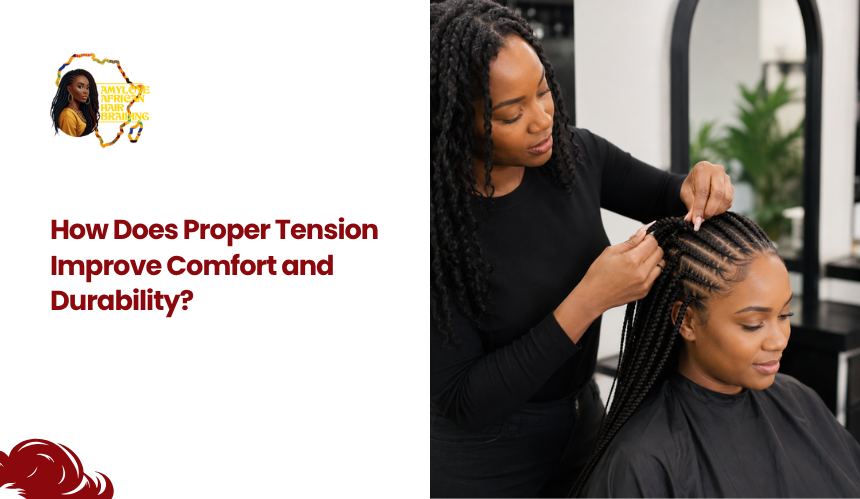
Proper tension is one of the biggest factors behind a comfortable, long-lasting braided style. When braids are installed with the right level of control, they feel secure without putting unnecessary pressure on the scalp, roots, or hairline. This balance helps the style stay neat while allowing the wearer to move, sleep, and style their hair more comfortably.
Braids that are too tight can create soreness, irritation, and stress on fragile areas, while braids that are too loose may lose shape quickly. Proper tension sits in the middle: firm enough to hold the braid structure, but gentle enough to protect the scalp and support healthier wear over time.
Why Braid Tension Matters More Than Most People Realize
Braid tension directly affects how the style feels, how well it holds, and how much stress is placed on the scalp and hairline. The right level of tension creates structure without turning the style into a source of discomfort or damage.
What Does Proper Tension Mean In Braiding?
Proper tension means the braid is firm enough to stay in place but not so tight that it pulls aggressively on the roots, scalp, or edges. The grip should feel controlled, even, and stable from the base of the braid through the ends.
When tension is balanced, the hair is held neatly without forcing the follicles to carry constant pressure. This allows the braid pattern to stay clean while reducing strain on sensitive areas such as the hairline, temples, and nape.
Why Does Too Much Tension Cause Discomfort?
Too much tension places direct stress on the scalp and hair follicles. This can lead to soreness, headaches, itching, small bumps, redness, or a tight pulling sensation that continues after installation.
Excessive pulling is especially risky around the edges because that area is naturally more fragile. When the hairline is repeatedly stressed, it may become more prone to breakage, thinning, or traction-related damage over time.
Do You Know? A dermatology review reported that traction alopecia affects about one-third of women of African descent, especially in communities where tight braiding, extensions, weaves, or chemical relaxers are common. The risk increases when pulling force is repeated over time, which makes balanced braid tension more than a comfort issue. It is also a long-term hair health factor. |
Why Does Too Little Tension Affect Durability?
Too little tension weakens the structure of the braid. When the braid is not anchored securely, the roots may loosen early, strands may slip out, and the overall style can lose shape faster.
Loose tension can also increase frizz because the hair is not held evenly within the braid pattern. As movement, sleeping, washing, and daily styling create friction, the braid may unravel sooner and require touch-ups earlier than expected.
How Proper Tension Improves Scalp Comfort
Controlled braid tension improves scalp comfort by reducing the load placed on the roots during installation and early wear during and after braid installation. When the grip is controlled, the braids feel secure without creating constant pulling, soreness, or pressure across the scalp.
How Does Proper Tension Reduce Pulling On The Roots?
Even tension spreads pressure more consistently across each braid section instead of concentrating force at one point. This prevents the hair follicles from being pulled too tightly, especially in sensitive areas such as the nape, temples, and edges.
When roots are not under excessive strain, the scalp feels more relaxed after installation. This matters because discomfort often comes from repeated tension at the base of the braid, not from the braid itself. A balanced grip supports the style while keeping the follicles from carrying unnecessary stress.
How Does Proper Tension Reduce Scalp Irritation?
Properly installed braids allow the scalp to move naturally instead of staying stretched in one direction. This reduces tightness, itching, redness, and tenderness that can occur when braids are installed with too much force.
Controlled tension also limits friction at the roots. When hair is pulled too tightly, the scalp may become reactive, especially after sleeping, sweating, or styling. A comfortable braid installation leaves enough flexibility for normal scalp movement while still keeping the style neat.
Why Does Proper Tension Improve Daily Comfort?
Balanced tension makes braids easier to wear during everyday activities. The wearer can sleep, turn the head, tie the braids back, or adjust the style without sharp pulling or pressure around the hairline.
This comfort is especially important for longer or heavier braided styles. When the tension is balanced from the start, the braids feel secure without creating pain during movement. The result is a protective style that feels manageable, stable, and easier to maintain throughout daily wear.
Near the active neighborhoods around Lakewood Towne Center and the busy streets near Bridgeport Way, knotless braids are often preferred by people in Lakewood, who want a protective style that feels lighter and more comfortable during everyday wear.
Many residents balancing work, school, commuting, and outdoor activities around places like Fort Steilacoom Park choose knotless braids because the gradual installation creates less pulling on the scalp compared to tighter braided styles. Their flexible movement, natural appearance, and reduced tension make them especially practical for people in Lakewood looking for a long-lasting style that supports both comfort and a polished everyday look.
The Difference Between Secure Braids And Tight Braids
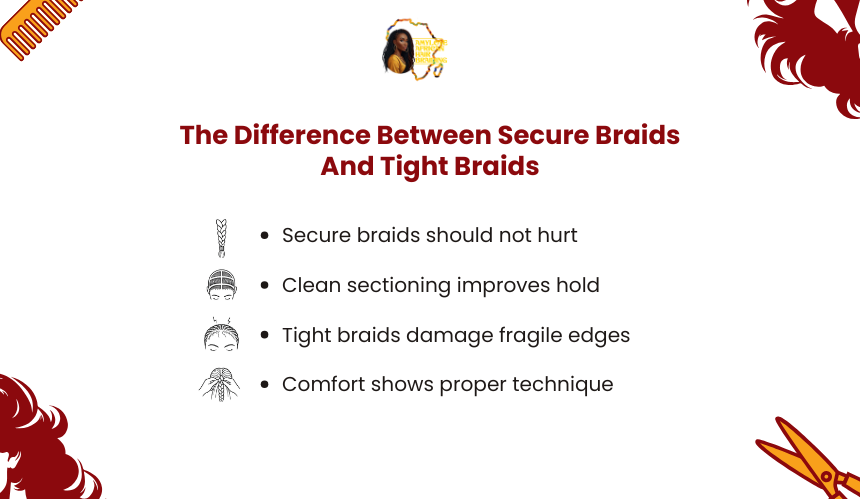
Secure braids are not defined by pain. A durable braided style should feel stable at the root, hold its shape, and allow normal scalp movement without creating sharp pressure or visible stress on the hairline.
How Should Secure Braids Feel?
Secure braids should feel firm, balanced, and controlled. The hair should be anchored neatly, but the scalp should not feel stretched, throbbing, or overly sensitive after installation.
A well-done braid stays in place because of clean sectioning, even grip, and proper braid technique, not because the hair has been pulled as tightly as possible. If the wearer feels immediate pain, swelling, or difficulty moving the scalp comfortably, the tension is likely too high.
Why Can Tight Braids Damage The Edges?
Tight braids can place repeated strain on the edges, temples, and hairline, where the hair is often finer and more fragile. When these areas are pulled too tightly, the follicles absorb constant pressure that can lead to breakage, thinning, or traction-related damage.
This risk increases with heavy extensions, small parts, or styles that pull the braids upward into ponytails and buns. Tightness may create a polished look at first, but the long-term effect can weaken the areas that need the most protection.
Why Is Comfort A Sign Of Proper Technique?
Comfort often reflects better technical control during braid installation. A stylist who uses clean parts, balanced sections, and steady hand pressure can create a neat style without forcing the scalp to carry unnecessary tension.
Proper technique also considers hair density, scalp sensitivity, braid size, and extension weight. When these factors are handled correctly, the braids feel secure, the pattern looks clean, and the wearer can keep the style longer without discomfort forcing early removal.
Key Factors That Affect Braid Tension
Braid tension is influenced by more than the stylist’s grip. Hair texture, section size, braid weight, scalp condition, and installation technique all affect whether the finished style feels balanced or stressful.
Do You Know? A population-based study referenced in the Journal of the American Academy of Dermatology found traction alopecia in 17.1% of African schoolgirls aged 6–21 and 31.7% of women aged 18–86. This shows that tension-related hair loss is not limited to adults. Repeated tight hairstyles can affect younger wearers too. |
How Do Hair Type And Strand Density Affect Tension?
Hair type plays a major role in how much tension the scalp and strands can tolerate. Fine, fragile, thinning, or chemically treated hair usually needs lighter tension because the strands may not have enough strength to handle aggressive pulling.
Thicker or coarser hair may support firmer grip, but that does not mean it should be braided tightly. The goal is to match the tension to the hair’s strength, density, and condition so the braid stays secure without placing unnecessary pressure on the follicles.
Why Do Braid Size And Weight Matter?
Braid size and extension weight directly affect root pressure. Large, extra-long, or heavy braids can pull downward on the scalp, especially when the added hair is not balanced with the person’s natural hair density.
Smaller sections can also create tension issues if too much extension hair is added to each part. A durable style depends on proportion: the braid should be sized so the roots can support the weight comfortably throughout daily wear.
Around the lively areas near Lakewood Towne Center and the neighborhoods surrounding Gravelly Lake Drive, box braids are another popular choice for people in Lakewood, who want a protective style that stays secure and manageable through busy daily routines.
Many residents prefer box braids because their structured design helps keep hair organized for longer periods while still allowing styling flexibility for work, school, fitness, and everyday activities around places like Fort Steilacoom Park. When installed with balanced tension and proper sectioning, box braids offer a durable look that combines long-lasting wear, protective benefits, and practical maintenance for active lifestyles in Lakewood.
How Does Scalp Sensitivity Change The Right Tension Level?
A sensitive scalp may react strongly to pressure that feels normal to someone else. Tenderness, recent irritation, dryness, or previous tension damage can make the scalp less tolerant of firm braiding.
For people with scalp sensitivity, lower-tension protective styling is usually more practical. Softer grip, slightly larger parts, and lighter extensions can reduce discomfort while still allowing the braid pattern to hold.
Why Is Stylist Technique So Important?
Stylist technique determines how evenly tension is distributed across the scalp. Clean parting, consistent section sizes, controlled hand pressure, and proper braid direction help prevent uneven pulling at the roots.
Poor technique often creates tight spots, loose areas, or unnecessary stress around the edges and nape. Skilled braiding focuses on balance, not force, so the style looks neat, feels comfortable, and maintains its shape without relying on excessive tension.
Signs The Tension Is Right Or Wrong
| Do You Know? The American Academy of Dermatology says it is normal to shed 50 to 100 hairs per day. That means a few loose hairs after removing braids is not automatically a warning sign. Concern rises when shedding appears with thinning edges, scalp bumps, soreness, or visible breakage near high-tension areas. |
What Are The Signs Of Proper Tension?
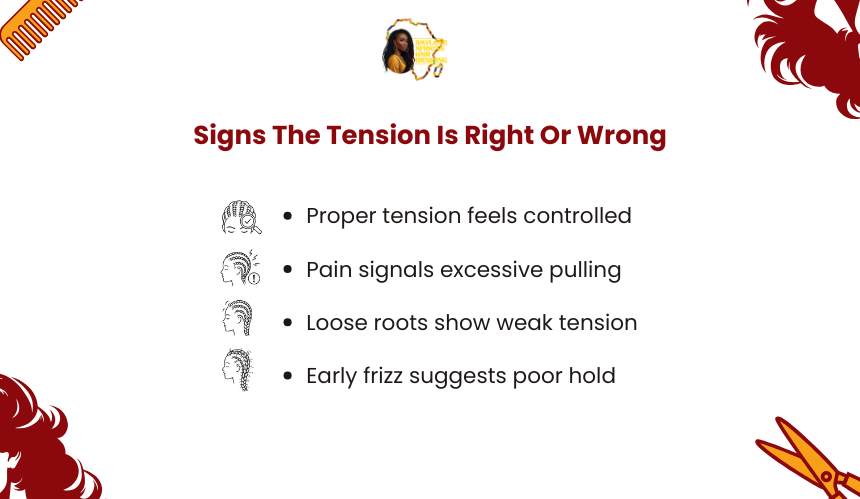
The right tension feels controlled at the roots without causing sharp pulling. The braids sit neatly, the parts look clean, and the scalp does not appear stretched, shiny, red, or swollen.
The wearer should also be able to move naturally. Sleeping, turning the head, or lightly gathering the braids should not cause throbbing or pressure around the hairline. This shows that the style has enough hold without overloading the follicles.
What Are The Signs Of Too Much Tension?
Excessive tension often causes pain soon after installation. Warning signs may include headaches, tenderness, scalp bumps, redness, itching, or a tight sensation that does not settle after a short period.
The hairline may also feel restricted when raising the brows, smiling, or pulling the braids back. These reactions suggest that the roots are under too much force, which can increase the risk of breakage and traction-related hair damage.
What Are The Signs Of Too Little Tension?
Low tension usually shows through weak hold rather than pain. The roots may loosen quickly, the braid pattern may lose definition, and loose strands may begin to escape within a short time.
Early frizz, slipping, uneven shape, or unraveling can indicate that the braid was not anchored consistently. In this case, the style may look older faster and may need touch-ups sooner than expected.
For a comfortable, polished braided style that feels as good as it looks, Amy Love is a trusted choice for knotless braids in Lakewood. With careful tension control, clean parting, and a focus on scalp-friendly styling, Amy Love helps clients achieve long-lasting braids without unnecessary pulling or discomfort.
Frequently Asked Quetions
How long should braids feel tight after getting them done?
Braids may feel slightly firm on the first day, but sharp pain, throbbing, swelling, or headaches should not continue. A properly installed protective style should settle quickly without restricting facial movement or scalp comfort. Lingering tightness often signals excessive root tension, especially around the edges, temples, or nape.
What should someone do if their braids are too tight?
The safest step is to loosen high-pressure areas early instead of waiting for the pain to fade. Warm steam, light scalp massage, and avoiding tight ponytails may reduce mild pressure, but severe soreness, bumps, or redness may require removing or reworking the braids to prevent follicle stress and edge breakage.
Can loose braids be fixed without redoing the whole style?
Loose braids can sometimes be refreshed if the issue is limited to a few sections near the hairline or crown. A stylist may tighten only the weak areas, smooth frizz, or redo slipping braids. When the base is poorly anchored throughout, a full reinstall may be more effective for long-lasting shape retention.
Does braid tension matter more when extensions are added?
Extension weight makes tension control more important because added hair increases pull at the roots. Heavy, extra-long, or oversized braids can overload natural strands if the section size and extension ratio are not balanced. Lightweight braiding hair and proportionate parting help reduce pressure while keeping the style structured.
How can someone ask a stylist for lower-tension braids?
Clear wording works better than vague instructions. A client can say they want a low-tension protective style, softer grip around the edges, lighter extension weight, and no painful pulling at the roots. Mentioning scalp sensitivity, thinning areas, or past tension bumps helps the stylist adjust sectioning and hand pressure.
Is it okay to put fresh braids into a ponytail right away?
Fresh braids should usually be worn down or loosely styled at first, especially if the scalp feels tender. Tight ponytails, buns, or updos can add extra directional pulling before the roots settle. Waiting a few days and using loose, low styles helps reduce strain on the hairline.