
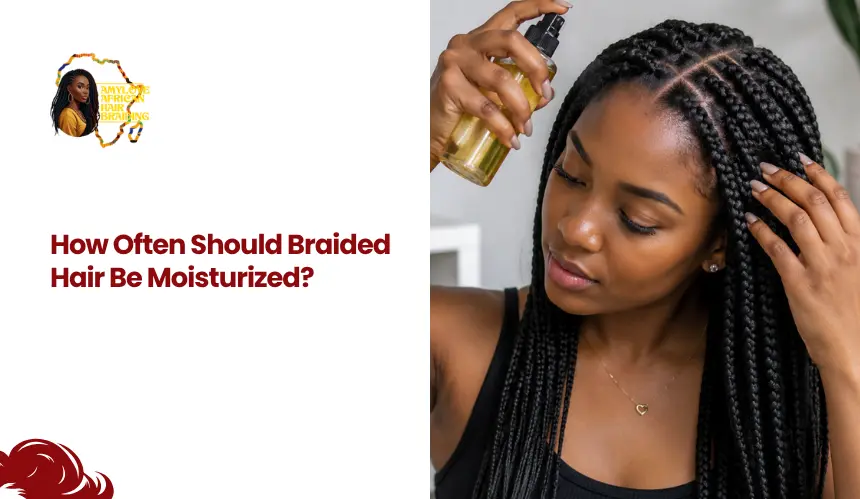
How Often Should Braided Hair Be Moisturized?
Key Takeaways
|
Braided styles protect hair length, but they also restrict direct access to moisture, making dryness one of the most common maintenance issues. Without a structured moisturizing routine, hair beneath the braids can lose elasticity, leading to breakage and scalp imbalance. At the same time, excessive product use can trigger buildup and irritation.
The challenge is not just moisturizing, but knowing how often and how much based on real variables like scalp condition, braid structure, and environment. This article breaks down the exact frequency, influencing factors, and practical methods needed to maintain properly hydrated braided hair.
What Determines How Often Braided Hair Needs Moisture?
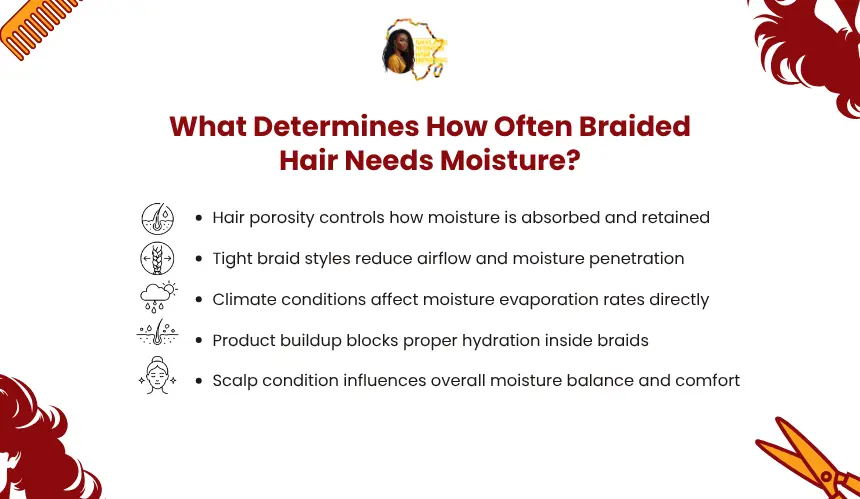
Moisturizing frequency is not fixed because braided hair creates a controlled environment where natural oil distribution, airflow, and hydration absorption behave differently. The correct interval depends on how quickly moisture is lost and how effectively it is retained within the braid structure.
Hair Type and Porosity Impact on Moisture Retention
Hair porosity directly controls how moisture enters and exits the hair shaft. High-porosity hair absorbs moisture quickly but loses it just as fast, requiring more frequent hydration cycles. Low-porosity hair resists moisture penetration, so over-application can sit on the surface and lead to buildup instead of absorption.
Coarse or tightly coiled textures tend to require consistent hydration because natural sebum struggles to travel through the hair strands once braided. In contrast, finer textures may retain moisture longer but are more sensitive to over-saturation.
Braid Style, Size, and Tension Differences
The physical structure of the braid determines how accessible the hair is to moisture. Smaller braids or tightly installed styles reduce airflow and limit product penetration, which increases the need for controlled but frequent moisturizing. Larger or looser braids allow easier access, enabling deeper hydration with less frequent application.
High-tension styles place stress on the roots, increasing the risk of dryness at the scalp level. In these cases, moisture must be targeted more precisely at the base rather than distributed evenly across the braid length.
Environmental Factors Like Climate and Humidity
External conditions directly affect moisture evaporation rates. Dry climates or indoor environments with constant air conditioning accelerate water loss from the hair shaft, increasing the need for frequent moisturizing. In humid conditions, moisture retention improves, but excessive hydration can disrupt scalp balance and lead to residue accumulation.
Seasonal changes also shift requirements. Winter conditions often demand more frequent hydration due to low humidity, while summer routines must balance sweat, humidity, and product buildup.
Product Buildup and Scalp Condition Considerations
Moisturizing frequency must account for how the scalp and hair respond to repeated product application. If residue accumulates along the braid or at the scalp, it can block moisture penetration and create a false sense of hydration while the hair underneath remains dry.
Scalp conditions such as flaking, itching, or excess oil production indicate imbalance. In such cases, adjusting frequency alone is insufficient; the type, quantity, and absorption of products must also be corrected to restore a functional moisture cycle.
How Do Local Climate Patterns in Washington, DC and Surrounding Areas Affect Moisture Needs?
How Often Should You Moisturize Braided Hair for Optimal Health?
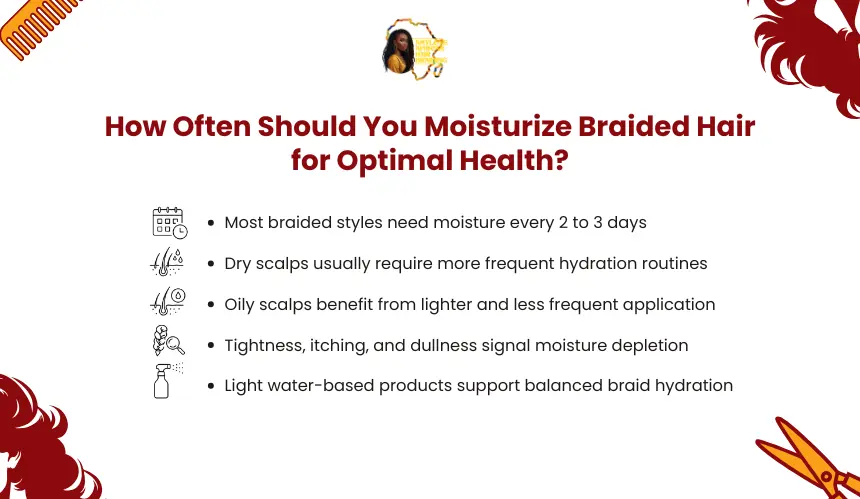
Moisturizing braided hair requires a controlled schedule rather than reactive application. The goal is to maintain internal hydration of the hair shaft while preventing surface buildup on the scalp and braids.
General Rule Of Thumb For Most Braid Styles
For most individuals, moisturizing braided hair every 2 to 3 days maintains adequate hydration without overwhelming the scalp. This interval allows moisture to penetrate and be absorbed before the next application.
This baseline works because braided styles slow down natural oil distribution, making external hydration necessary at regular intervals rather than daily saturation.
Adjusting Frequency For Dry Vs Oily Scalp Conditions
Dry scalps require shorter intervals, often every 1 to 2 days, because moisture evaporates faster and natural oil production is limited. In these cases, hydration should focus on both the scalp and the exposed hair within the braid.
Oily scalps demand reduced frequency, typically every 3 to 5 days, to avoid compounding sebum with product layers. Over-moisturizing in this condition leads to clogged follicles and scalp imbalance rather than improved hydration.
Signs Your Braids Need More Or Less Moisture
Moisturizing frequency should be adjusted based on direct feedback from the hair and scalp rather than fixed routines.
Key indicators include:
- Increased itching or tightness, signaling moisture depletion at the scalp level
- Visible dullness or stiffness in braid lengths, indicating internal dryness
- Sticky residue or coated strands, showing over-application or poor absorption
- Flaking that persists despite moisturizing, suggesting imbalance rather than lack of hydration
These signals help recalibrate frequency before structural damage or buildup occurs.
Should You Moisturize Braids Daily Or Weekly?
Daily moisturizing is only appropriate in high moisture-loss conditions such as very dry climates, high-porosity hair, or tightly installed braids where hydration dissipates within 24 hours. In these cases, light, water-based sprays applied in small amounts prevent dehydration without oversaturating the scalp.
Weekly moisturizing is insufficient for most braided styles because moisture cannot travel efficiently through braided strands. This leads to gradual internal dryness even if the surface feels coated.
A controlled interval of every 2 to 3 days remains optimal for most cases because it aligns with the actual moisture depletion cycle. It restores hydration before structural dryness occurs while allowing enough time for absorption, preventing residue accumulation and scalp imbalance.
What Happens if Braided Hair is Under-Moisturized or Over-Moisturized?
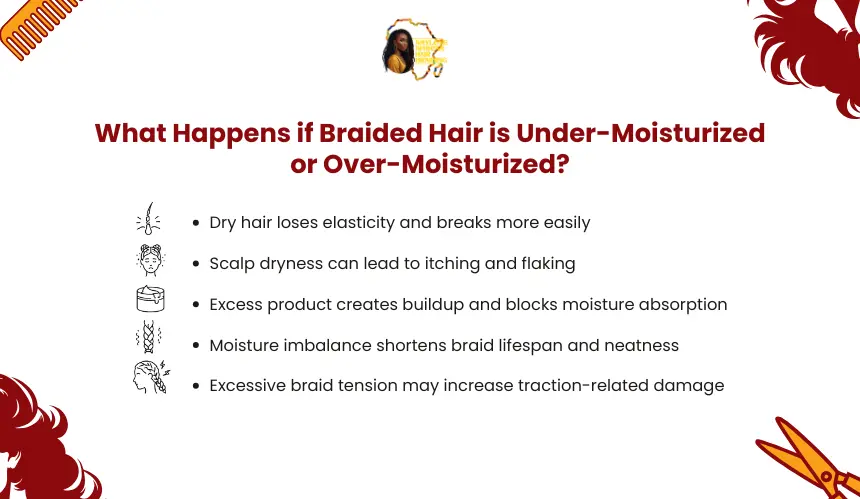
Moisture balance directly affects the structural integrity of hair inside braids. Both deficiency and excess disrupt the hair’s internal protein-moisture equilibrium, leading to different types of damage that are often misinterpreted.
Effects Of Dryness On Hair Breakage And Scalp Health
When moisture levels drop, the hair shaft loses elasticity and becomes rigid. This reduces its ability to withstand tension from braiding, increasing the likelihood of breakage at stress points, especially near the roots.
Dryness at the scalp level also leads to micro-flaking and itching, which can trigger excessive scratching. This mechanical stress weakens follicles over time and can compromise braid longevity.
Risks Of Over-Moisturizing Braids And Product Buildup
Excessive moisturizing does not translate to better hydration. When too much product is applied, especially oils or heavy creams, it forms a barrier that blocks actual moisture penetration.
This creates a cycle where the hair underneath remains dehydrated while the surface accumulates residue. The scalp environment becomes congested, increasing the risk of irritation, odor, and microbial imbalance.
How Moisture Imbalance Affects Braid Longevity And Appearance
Improper moisture control reduces how long braids remain structurally intact and visually clean. Dry hair causes frizzing and loosening of braid patterns due to fiber breakage, while over-moisturized hair leads to swelling and loss of definition.
Both conditions accelerate style degradation. Instead of maintaining braids for several weeks, imbalance shortens their lifespan and increases the need for early removal or reinstallation.
Pro Tip: If braids hurt, feel unusually tight, or create bumps along the hairline, treat that as an early warning sign rather than a normal adjustment period. The American Academy of Dermatology states that pain during braiding signals damaging tension, and persistent tight pulling can contribute to traction alopecia. |
What is the Best Way to Moisturize Braided Hair Without Causing Buildup?
Lightweight Sprays Vs Oils Vs Leave-In Conditioners
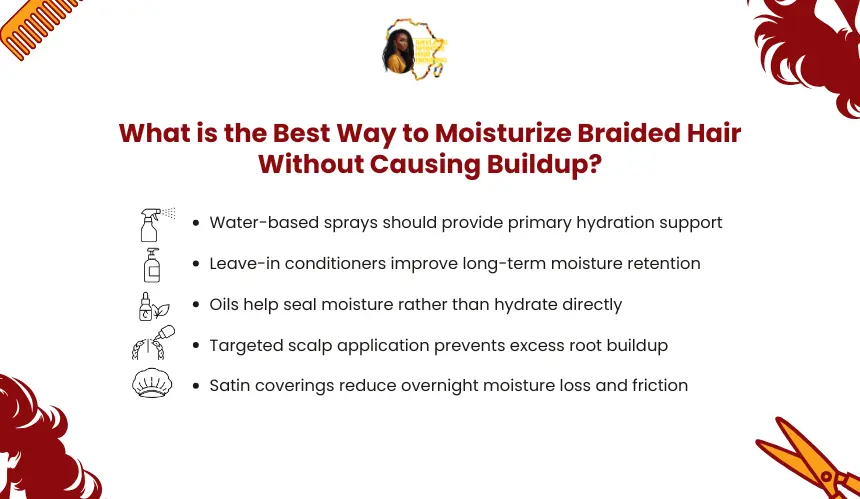
Water-based sprays serve as the primary hydration source because they penetrate the braid structure and reach the hair shaft. Leave-in conditioners provide secondary support by improving moisture retention through light film formation.
Oils should not be used as standalone moisturizers because they do not hydrate. Their function is to seal existing moisture. Using oils without prior hydration leads to dryness being locked in rather than resolved.
Targeting The Scalp Vs Braid Lengths Correctly
Moisture application must be divided between the scalp and the braid lengths based on need. The scalp requires controlled hydration to maintain barrier function without clogging follicles.
Braid lengths require even but light distribution to ensure internal strands receive moisture. Saturating only the surface creates uneven hydration, where outer layers are coated while inner strands remain dry.
Layering Moisture Without Clogging Follicles
Moisturizing should follow a liquid → light leave-in → minimal sealant sequence when needed. Each layer must be applied in small quantities to allow absorption before the next is introduced.
Over-layering disrupts airflow at the scalp and creates buildup zones, especially at the roots. Proper layering maintains hydration while preserving scalp function and cleanliness.
Night Routines And Moisture Sealing Techniques
Moisture retention improves when evaporation is controlled during sleep. Using a satin or silk covering reduces friction and limits moisture loss from the braid surface.
Applying a light hydration layer at night, rather than heavy products, ensures the hair maintains moisture balance without accumulating residue. This supports consistent hydration without increasing cleansing frequency.
How Can You Optimize A Moisturizing Routine For Long-Lasting Braids?
An optimized routine is defined by how moisture is applied, absorbed, and maintained, not how often it is used. The focus is on maximizing hydration efficiency per application while preventing residue accumulation that blocks future moisture intake.
Structuring Each Moisturizing Session For Maximum Absorption
Each session should follow a controlled sequence to ensure moisture reaches the hair shaft inside the braid.
Execution method:
- Start with a fine mist of water-based spray to introduce actual hydration
- Apply a light leave-in conditioner to improve moisture retention
- Use minimal oil only if sealing is required based on dryness level
This sequence ensures hydration enters first, then is retained, rather than coating dry hair with heavy products.
Controlling Product Quantity To Prevent Surface Coating
Effective moisturizing depends on absorption, not saturation. Excess product sits on the braid surface and blocks penetration.
Actionable control points:
- Apply in sections rather than spraying the entire head at once
- Stop once hair feels slightly damp, not wet or dripping
- Avoid reapplying if previous product is still detectable on the surface
If braids appear shiny but feel dry internally, the issue is surface coating, not lack of product.
Maintaining Scalp Access And Follicle Function
The scalp must remain functional for healthy braid maintenance. Over-application at the roots leads to clogged follicles and disrupted oil balance.
Application approach:
- Use targeted nozzle bottles to apply small amounts directly to the scalp
- Avoid thick creams or heavy oils at the root level
- Allow airflow by not layering multiple products in the same area
This maintains a clean scalp environment while supporting hydration where it is actually needed.
Building A Cleanse And Rehydration Reset System
Moisture efficiency declines when residue accumulates, even if the routine is technically correct.
Operational reset method:
- Periodically cleanse the scalp using diluted shampoo or scalp-specific cleansers
- Focus on removing buildup zones rather than aggressively washing braid lengths
- Reapply a light hydration layer immediately after cleansing to restore balance
This reset ensures that each future moisturizing session remains effective, preventing long-term buildup from reducing hydration performance.
Pro Tip: Moisture maintenance works better when braid wear time is capped. Dermatology guidance recommends wearing braids no longer than about 6 to 8 weeks, and protective styles with extensions should generally be rotated out within 2 to 3 months to reduce prolonged traction and give the scalp recovery time. |
Healthy braids don’t last by chance, they last by routine. If you want styles that stay neat, lightweight, and truly protect your hair from root to tip, expert installation and guidance make the difference. At AmyLove African Hair Braiding, every style is designed with scalp health, tension balance, and long-term maintenance in mind so your braids look better and last longer.
Frequently Asked Quetions
Can moisturizing braids too often make them smell or feel dirty faster?
Why do my braids still feel dry even after I moisturize them?
Braids often feel dry after moisturizing when the product sits on the outer surface instead of reaching the hair shaft inside. This usually happens with low-porosity hair, dense braid patterns, or excessive oil use. Applying moisture in sections with a fine mist and light leave-in conditioner improves penetration and reduces false hydration.