How Can Braids Help Minimize Heat Damage?
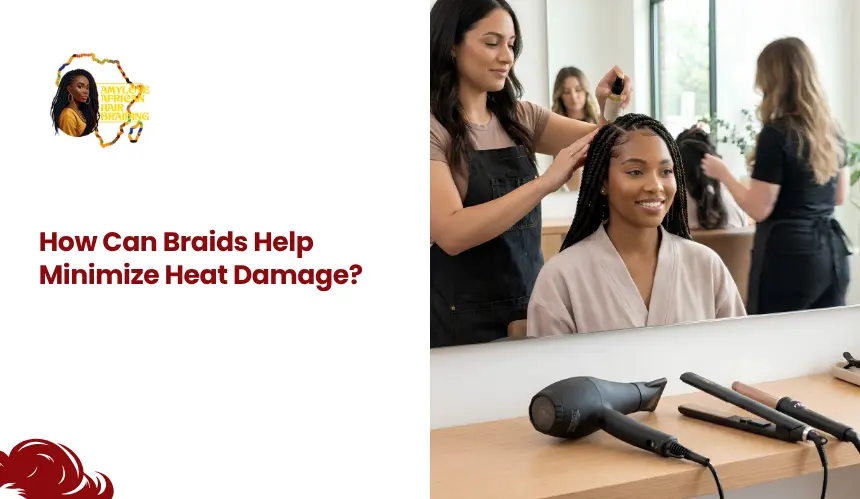
Frequent use of flat irons, blow dryers, and curling tools alters the internal structure of hair, leading to dryness, breakage, and permanent texture loss. Many people rely on heat styling for manageability or aesthetics, but repeated exposure compounds structural damage over time. This creates a need for alternatives that maintain style without stressing the hair fiber.
Braids offer a practical approach by reducing dependency on heat while preserving shape, texture, and control. This article explains how braiding functions as a protective method and when it effectively minimizes heat-related damage.
Key Takeaways:
|
Why Heat Damage Occurs in Hair
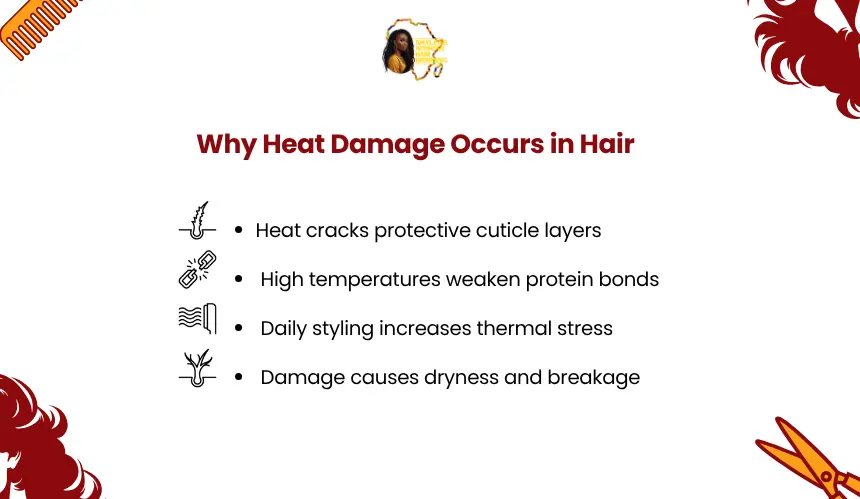
Heat damage originates at the structural level, where repeated exposure to high temperatures disrupts the integrity of the hair fiber. Understanding this mechanism clarifies why minimizing heat is essential for long-term hair health.
How Does Heat Alter the Hair Cuticle and Cortex?
Hair consists of a protective outer cuticle and an inner cortex responsible for strength and elasticity. High temperatures lift and crack the cuticle layers, exposing the cortex to direct stress.
This weakens protein bonds, particularly keratin, leading to reduced elasticity and increased porosity. Once these internal bonds are altered beyond a threshold, the damage becomes irreversible.
Common Sources of Heat Exposure in Daily Styling
Most heat damage accumulates through routine use of styling tools such as flat irons, blow dryers, and curling wands. These tools often operate between 150°C and 230°C, a range that exceeds the tolerance level of unprotected hair.
Frequent touch-ups, especially on already styled sections, amplify thermal stress and accelerate degradation of the hair structure.
What are the Early and Advanced Signs of Heat Damage?
Initial signs include dryness, rough texture, and loss of natural shine due to cuticle disruption. As damage progresses, hair begins to lose its original curl pattern or straight structure, indicating cortex-level alteration.
Split ends, increased breakage, and difficulty retaining moisture signal advanced damage, where structural recovery is no longer possible through standard conditioning methods.
How Braids Reduce The Need For Heat Styling
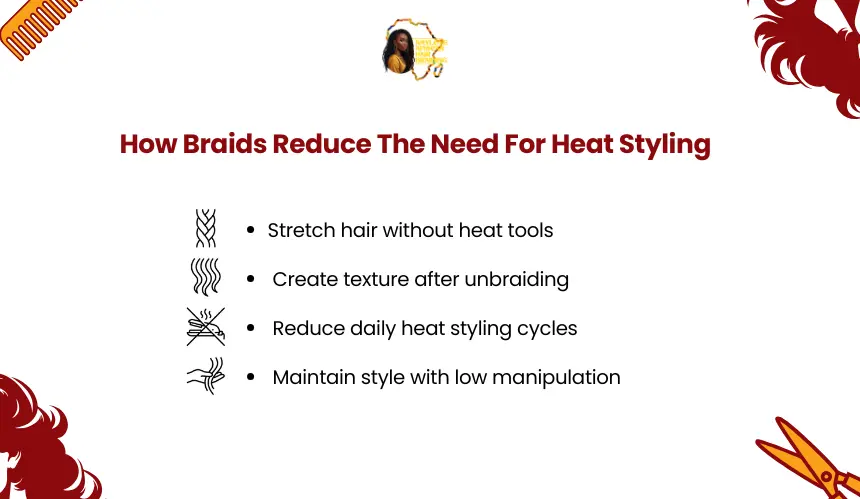
Braids function as a styling method that reshapes and controls hair without applying thermal stress. By relying on mechanical structuring rather than heat, they reduce how often high-temperature tools are required.
How Do Braids Stretch Hair Without Heat?
Braiding holds hair in an elongated position for extended periods, allowing it to dry and set in a stretched form. This controlled tension redistributes the natural curl or wave pattern, reducing shrinkage without altering internal protein bonds. As a result, hair becomes easier to manage and style without requiring blow-drying or straightening.
How Do Braids Create Lasting Texture After Unbraiding?
Once braids are removed, the hair retains a patterned texture such as waves or crimped sections. This effect is created by the temporary reshaping of hydrogen bonds during the braiding period, which resets as the hair dries. The outcome provides a styled appearance without the need for curling irons or heat-based texturizing tools.
How Does Braiding Reduce Overall Heat Exposure Frequency?
When hair is kept in braids for multiple days, daily styling cycles are eliminated. This directly lowers the frequency of heat application, which is a key factor in cumulative damage.
Instead of repeated exposure across the week, styling is consolidated into low-manipulation routines that maintain appearance without continuous thermal input.
Protective Benefits Of Braids Against Heat Damage
Beyond reducing heat usage, braids act as a physical barrier that limits external stressors and stabilizes the hair environment. This protective setup supports structural preservation during daily activities.
How Do Braids Limit Direct Exposure To External Heat Sources?
How Do Braids Reduce Daily Mechanical Stress On Hair?
Loose hair undergoes repeated friction from brushing, styling, and environmental contact. Braids consolidate strands into fixed sections, minimizing friction points and reducing the need for constant handling. Lower manipulation frequency directly limits stress-related breakage that often compounds alongside heat-related weakening.
How Do Braids Support Moisture Retention In Hair Fibers?
Braided styles restrict excessive exposure to air, which slows down moisture evaporation from the hair shaft. This helps maintain internal hydration levels, making hair less prone to dryness when exposed to occasional heat. Consistent moisture retention also supports flexibility, reducing the likelihood of brittle responses under thermal conditions.
Factors That Influence How Effective Braids Are
Braids do not deliver uniform protection across all scenarios. Their effectiveness depends on how they are installed, maintained, and aligned with individual hair characteristics.
How Does Hair Type And Texture Affect Results?
Coarser and tightly coiled hair structures tend to hold braided patterns longer, which extends the duration of low-manipulation styling. Finer or straighter hair may loosen faster, requiring more frequent re-styling and reducing the protective window. Porosity levels also influence how well the hair retains the reshaped form after braiding.
How Does Braid Tightness Impact Hair Health?
Excessive tension at the roots introduces strain on follicles and can lead to traction-related breakage. While tighter braids may appear more structured, they increase localized stress and reduce scalp flexibility. Moderate tension maintains style integrity without compromising root stability or causing unnecessary stress on the hairline.
How Does Duration Of Wear Affect Protection?
Keeping braids for an optimal timeframe supports consistent protection, but extended wear without maintenance leads to buildup, tangling, and weakened strands.
Over time, trapped debris and lack of scalp access can disrupt the hair environment, reducing the overall benefit of the style.
How Do Maintenance Practices Influence Outcomes?
Regular scalp care, controlled cleansing, and proper hydration determine whether braids remain protective or become a source of stress. Neglecting maintenance allows dryness and buildup to accumulate, which weakens strands and offsets the protective advantage provided by the braided structure.
When Braids May Not Fully Prevent Heat Damage
Braids reduce exposure, but they do not eliminate all risk. Certain styling habits and handling methods can reintroduce stress that offsets the protective advantage.
Does Using Heat Before Or After Braiding Reduce Protection?
Applying heat immediately before braiding weakens the fiber before it is placed under tension. Post-braid heat, such as touching up edges or ends, concentrates thermal stress on specific sections. In both cases, the protective function becomes secondary because the structure has already been compromised or selectively exposed.
Can Improper Braid Removal Cause Structural Damage?
Rough takedown techniques introduce sudden tension and friction across interlocked strands. Pulling through knots or skipping detangling phases leads to breakage at weak points formed during wear. Controlled removal, supported by lubrication and sectioning, prevents mechanical stress that mimics or exceeds heat-related damage.
Does Over-Reliance On Braids Without Hair Care Create Risk?
Keeping hair in repeated braided cycles without restoring moisture or elasticity leads to cumulative dryness. Lack of conditioning between installs reduces flexibility, making strands less resilient when exposed to occasional heat or environmental stress. Protection declines when recovery phases are ignored.
Best Practices To Maximize Heat Protection With Braids
The effectiveness of braids depends on preparation, execution, and post-install care. Structured routines ensure that braiding consistently reduces heat-related risk rather than introducing new stress factors.
How Should Hair Be Prepared Before Braiding?
Hair should be detangled, hydrated, and conditioned to restore elasticity before installation. Applying leave-in conditioners or light oils improves strand flexibility, allowing hair to withstand the tension of braiding without internal stress. Proper preparation ensures that the structure is stable before entering a low-manipulation phase.
Which Braid Styles Offer Lower Stress On Hair?
Looser styles that distribute tension evenly across sections reduce strain on individual follicles. Larger braids or protective styles that avoid excessive pulling at the scalp maintain structural balance. Style selection directly influences how evenly stress is distributed across the hair system.
How Should Hair Be Maintained During And After Braids?
Maintaining hydration through light moisturizers and periodic scalp care preserves internal moisture balance. After removal, deep conditioning and controlled detangling restore elasticity and reduce residual stress. This recovery phase ensures that hair remains resilient before any future styling, including occasional heat use.
Frequently Asked Quetions
Are braids better than using a heat protectant?
Braids and heat protectants serve different roles. A heat protectant reduces thermal stress when hot tools are used, while braids reduce the need for hot tools altogether.
For people trying to limit cumulative heat exposure, braiding is usually more preventive because it lowers styling frequency instead of only buffering damage.
Can sleeping in braids reduce heat styling in the morning?
Sleeping in loose braids can help maintain shape, reduce tangling, and create a soft texture by morning. This can reduce the need for curling irons, straighteners, or blow-dryer touch-ups.
The braids should not be tight, especially near the hairline, because overnight tension can create scalp strain and breakage.
Is it safe to braid hair while it is damp?
Damp hair can be braided, but it should not be soaking wet. Hair is more elastic and vulnerable when wet, so heavy tension can stretch the strand and increase breakage risk. Slightly damp, conditioned hair may set better, but it should be handled gently and allowed to dry fully.
Do braids help damaged hair recover from heat styling?
Braids can support recovery by reducing further heat exposure and lowering daily manipulation. They do not reverse structural heat damage already present in the hair fiber.
Damaged hair still needs trimming, protein-moisture balance, gentle detangling, and recovery periods between protective styles to prevent breakage from progressing.
What type of braids are best for reducing heat damage?
Loose, low-tension braids are generally best because they control the hair without pulling aggressively at the roots. Simple three-strand braids, loose box braids, and larger protective styles often reduce styling stress better than tight micro-braids. The best option depends on hair density, texture, scalp sensitivity, and maintenance habits.