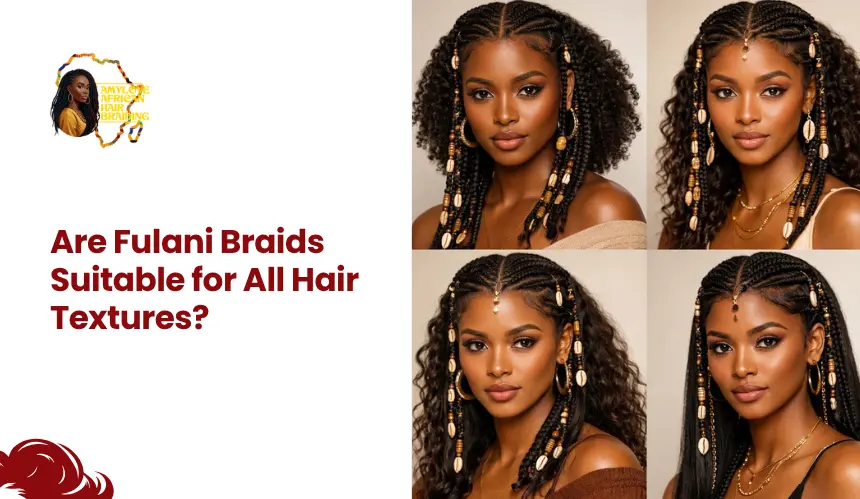
Are Fulani Braids Suitable for All Hair Textures?
Key Takeaways
|
Choosing a braided style often comes down to one important question: will it actually work with a specific hair texture? Many people are drawn to Fulani braids for their cultural significance, structured design, and protective styling benefits, but not every hair type responds the same way to braiding techniques.
This guide breaks down whether Fulani braids are suitable across different hair textures, helping readers understand where the style performs best and where adjustments may be needed.
Understanding Fulani Braids and Their Structural Requirements
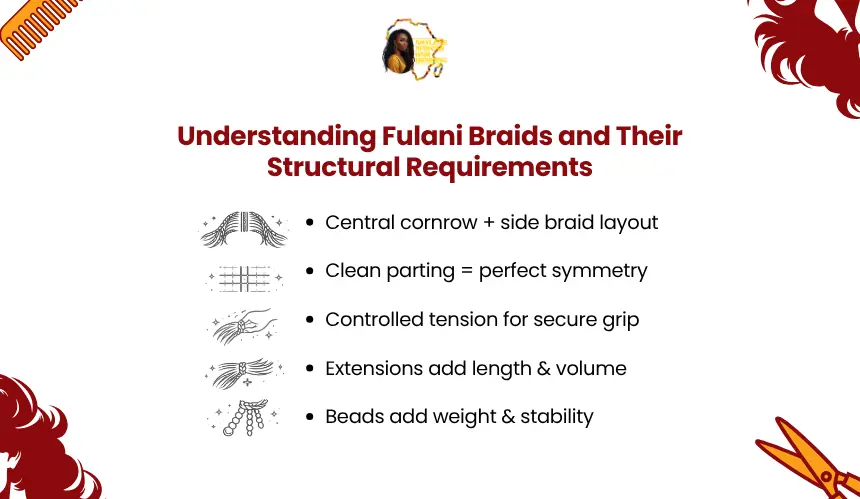
Fulani braids are not just a visual style. Their structure relies on precision, grip, and consistent sectioning, which directly affects how different hair textures respond to the style. Understanding this foundation helps explain why some hair types hold the braids effortlessly while others require added support.
Core Features That Influence Compatibility
The defining element of Fulani braids is the combination of a central cornrow pattern with evenly spaced side braids. This layout depends heavily on clean parting and controlled tension to maintain symmetry. Extensions are often integrated to enhance length and thickness, especially when natural hair lacks volume.
Another key feature is the use of beads or accessories at the ends, which adds slight weight. This weight can help stabilize the braid structure, but it also requires the base to be secure enough to handle the added tension without slipping.
Why Hair Texture Impacts Braiding Results
Hair texture determines how well strands interlock during braiding. Coarser textures with tighter curl patterns naturally create more friction, which improves grip and keeps the braid intact for longer periods. In contrast, smoother or straighter textures have less friction, making them more prone to loosening or unraveling.
Density also plays a role. Thicker hair provides a stronger base for sectioning and helps maintain uniform braid size, while low-density hair may struggle to support the structure without extensions. These variations explain why the same Fulani braid technique can produce very different outcomes depending on the hair type being worked on.
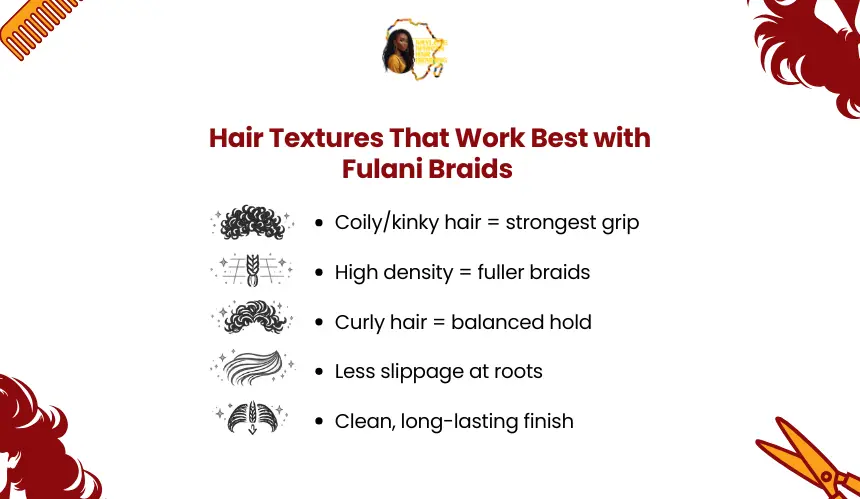
Hair Textures That Work Best with Fulani Braids
1. Coily and Kinky Hair (Type 4 Textures)
Coily and kinky hair textures are considered the most compatible for Fulani braids because of their tightly packed curl pattern. This natural structure creates strong friction between strands, allowing braids to hold firmly from root to tip without constant maintenance. The hair easily grips itself during cornrowing, which reduces the risk of slippage.
Another advantage is density. Type 4 hair often provides enough volume to create well-defined sections and fuller braids without relying heavily on extensions. This makes the style more lightweight and reduces tension on the scalp, improving overall comfort during wear.
2. Curly Hair (Type 3 Textures)
Curly hair also adapts well to Fulani braids, although it may require slight preparation to achieve a polished finish. The looser curl pattern offers moderate grip, which is usually enough to hold braids securely when combined with light styling products such as gel or edge control.
This texture strikes a balance between flexibility and structure. It allows for smooth sectioning while still maintaining enough hold to support the braid pattern. With proper prep, Fulani braids on curly hair can achieve a neat appearance and reasonable longevity without excessive tension or product buildup.
Hair Textures That May Need Preparation for Fulani Braids
1. Wavy Hair (Type 2 Textures)
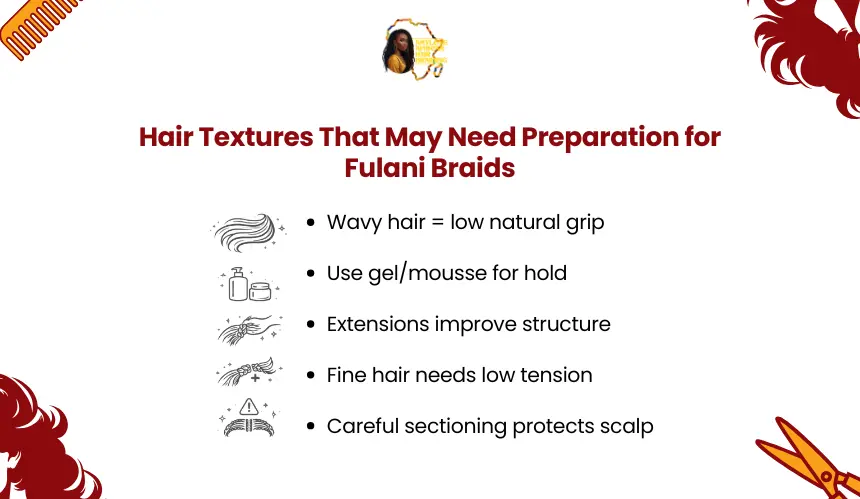
Wavy hair has a softer pattern that does not interlock as tightly as curls or coils. This reduces friction between strands, which can cause braids to loosen earlier than expected. To improve performance, stylists often rely on texturizing sprays, lightweight gels, or mousse to add grip before sectioning.
Extensions also play an important role here. They help reinforce the braid structure and create a more defined shape that the natural hair alone may not hold. When prepared correctly, wavy hair can achieve a clean Fulani braid look, though it may require more frequent maintenance.
2. Fine or Low-Density Hair
Fine or low-density hair presents a different challenge. The issue is not just texture, but the lack of volume needed to create strong, balanced sections. Smaller sections can make braids appear thinner, and excessive tension can place stress on delicate strands.
A lighter approach is necessary. Using minimal tension, smaller amounts of extension hair, and careful parting helps maintain scalp comfort while still achieving the style. In this case, preparation is about protecting the hair while enhancing structure, rather than forcing the braid to hold unnaturally.
Fulani Braids on Hair Textures That May Not Be Ideal Without Modification
1. Straight Hair (Type 1 Textures)
Straight hair presents the biggest challenge for Fulani braids because of its smooth surface and lack of natural friction. The strands tend to slip against each other, making it difficult for braids to stay tight and secure over time. Even with precise sectioning, the structure may loosen quickly without reinforcement.
To counter this, stylists often use strong-hold products such as braiding gel or wax to create artificial grip. Extensions are almost always necessary to anchor the braid and maintain its shape. Even with these adjustments, the style may not last as long as it would on textured hair, and frequent touch-ups may be required.
2. Extremely Fragile or Damaged Hair
Hair that is already weakened from chemical processing, heat damage, or breakage may not be suitable for Fulani braids in its current condition. The tension required to create clean cornrows can place additional stress on compromised strands, increasing the risk of hair loss or thinning along the hairline.
In such cases, the focus should shift toward restoring hair health before attempting a protective style. Strengthening treatments, moisture balance, and reduced manipulation help rebuild resilience. Once the hair is in a healthier state, Fulani braids can be considered with a gentler approach and controlled tension to minimize stress on the scalp.
| Pro tip: The hairline should be treated as a separate zone during Fulani braid installation. Edges are typically more delicate than the rest of the hair, so reducing tension around the perimeter can help prevent thinning and make the style more comfortable to wear. |
Key Factors That Matter More Than Hair Texture for Fulani Braids
Braiding Technique and Tension Control
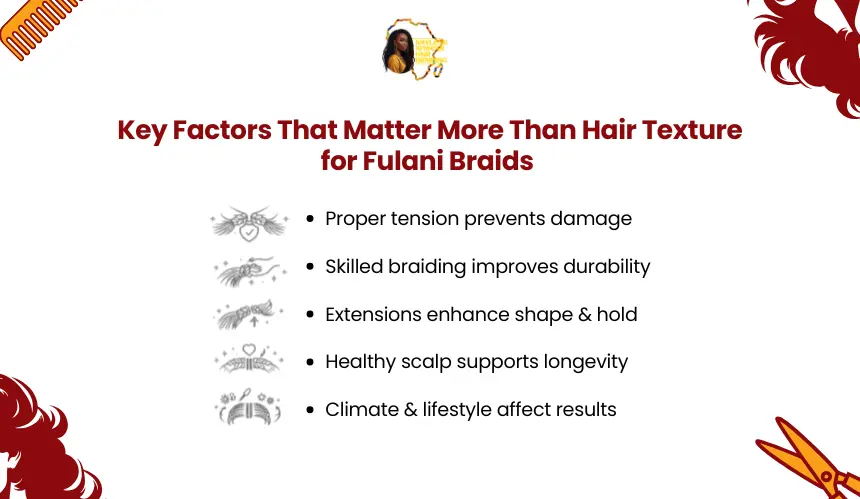
The way the braid is installed directly affects both durability and scalp comfort. Clean sectioning and consistent tension allow the braids to sit evenly without pulling too tightly at the roots. Excessive tension can lead to discomfort, inflammation, or even traction-related hair loss, especially around the edges.
A balanced approach ensures that the braids are secure without stressing the scalp. Skilled stylists adjust their grip based on the hair’s response, which helps maintain structure while protecting the hair follicles.
| Pro tip: If Fulani braids feel painful, cause scalp tenderness, or trigger a headache soon after installation, the tension is likely too high. A secure style should feel firm, not painful. Early discomfort is often a sign that the braids need to be loosened before they place unnecessary stress on the hairline. |
Use of Extensions and Styling Products
Extensions are often used to improve length, thickness, and overall definition. For hair textures with lower natural grip, extensions act as a supportive base that helps the braid hold its shape. The choice of extension type also affects weight and tension, which should be carefully managed to avoid strain.
Styling products such as braiding gel, mousse, or edge control enhance smoothness and improve hold during installation. These products help create cleaner parts and reduce frizz, especially for softer or looser textures that may not stay in place naturally.
Scalp Health and Hair Condition
A healthy scalp creates the right environment for any protective style. Dryness, buildup, or sensitivity can affect how comfortable Fulani braids feel after installation. Proper cleansing, hydration, and scalp care before braiding reduce irritation and improve overall results.
Hair condition is equally important. Well-moisturized and strengthened strands are more flexible and less likely to break under tension. When the scalp and hair are properly prepared, the style not only lasts longer but also supports healthier hair over time.
How Local Climate and Lifestyle Conditions Affect Fulani Braids
Environmental conditions can directly impact how Fulani braids hold, especially in the South Puget Sound region. Areas like Lakewood and Parkland experience consistent annual rainfall, often exceeding 35–40 inches. This higher moisture level in the air can cause frizz at the roots and reduce braid definition over time if the hair is not properly sealed with anti-humidity products.
In Puyallup, seasonal transitions are more noticeable. Winters tend to be damp and cool, which can slow down drying after washing and lead to scalp buildup if braids are not maintained properly. On the other hand, summer months bring increased outdoor activity, especially during events like the Washington State Fair, where prolonged sun exposure and sweat can affect braid longevity and scalp balance.
Residents in University Place often deal with a mix of coastal air influence and active daily routines. Proximity to Puget Sound means occasional salty air exposure, which can contribute to dryness at the ends if moisture is not maintained.
At the same time, walking trails and outdoor recreation in areas like Chambers Bay increase sweat and friction, making nighttime protection essential to preserve neatness.
These localized factors highlight an important point. The performance of Fulani braids is not just about hair texture or technique. Climate patterns, daily habits, and environmental exposure all shape how well the style holds and how the scalp responds over time.
Thinking about trying Fulani braids but unsure if they will suit your hair texture? The right technique makes all the difference. At AmyLove African Hair Braiding, every style is tailored to your hair type, ensuring a secure, comfortable, and long-lasting result. Let experienced hands create a look that not only stands out but also protects your hair the right way.
Frequently Asked Questions
How long does it take to install Fulani braids?
Installation time depends on braid size, length, and design complexity. On average, Fulani braids take between 3 to 6 hours. More intricate patterns with beads or extensions may extend the process, especially when precise parting and symmetry are required.
Can Fulani braids be styled in different ways after installation?
Fulani braids offer styling flexibility beyond the initial look. They can be tied into ponytails, buns, or half-up styles without disturbing the base pattern. Accessories like cuffs or beads can also be changed to refresh the appearance without redoing the braids.
Are Fulani braids suitable for short hair lengths?
Short hair can still achieve Fulani braids with the help of extensions. Even if the natural length is limited, extensions provide the structure and length needed to create the signature braid pattern while maintaining a balanced and fuller look.
How should Fulani braids be maintained during sleep?
Protecting the braids at night helps preserve neatness and reduce frizz. Using a satin or silk scarf, bonnet, or pillowcase minimizes friction and prevents the braid pattern from loosening prematurely due to movement during sleep.