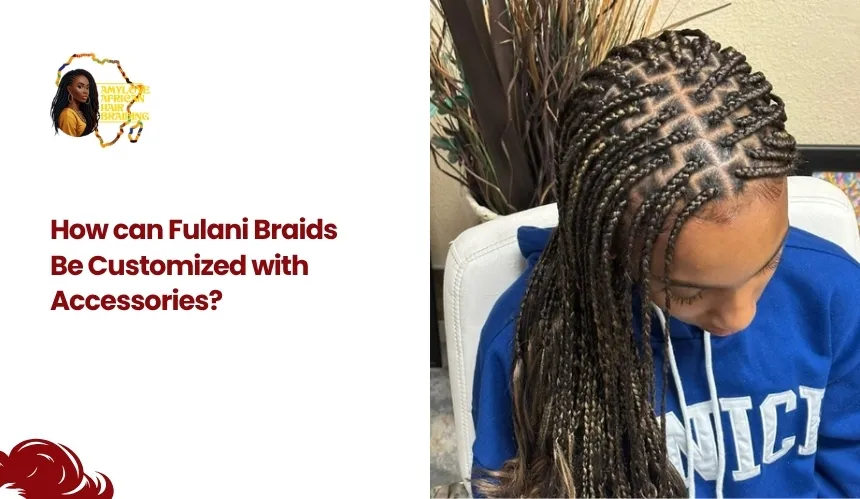
How can Fulani Braids Be Customized with Accessories?
Key Takeaways:
|
Fulani braids already carry a strong visual structure through center parts, braid patterns, and layered sections, but accessories are what transform the style into something more personalized and visually distinctive.
The wrong accessory combination can make the hairstyle feel overcrowded, heavy, or impractical for long-term wear, while the right additions can enhance symmetry, movement, texture, and overall styling balance.
This blog explains how Fulani braids can be customized with accessories, which styling combinations work best, and what factors should be considered before adding decorative elements.
Why Accessories Change the Look and Feel of Fulani Braids
Fulani braids already create a strong visual structure through center parts, curved braid patterns, and layered sections. Accessories modify that structure by adding contrast, texture variation, movement, and focal points without changing the braid foundation itself.
Beads change the visual weight and motion of the hairstyle. Larger beads create a heavier, more dimensional finish, while lightweight acrylic or wooden beads produce softer movement at the braid ends. Metallic cuffs and braid rings reflect light differently, making braid patterns and facial framing sections appear more defined.
Accessory placement also affects styling balance. Concentrating cuffs near the front braids enhances face-framing detail, while evenly distributed beads create a more symmetrical appearance. Over-accessorizing smaller braids can visually compress the hairstyle and increase tension near the roots.
Customization also changes the functional styling outcome. Minimal accessories support everyday wear and easier maintenance, while layered beads, shells, and wrapped thread create a more statement-focused look suited for events, fashion styling, or editorial braid designs.
The Most Popular Accessories Used with Fulani Braids
Different accessories change the appearance, weight distribution, texture contrast, and styling versatility of Fulani braids. The right combination depends on braid thickness, hairstyle length, scalp comfort, and the desired visual finish.
1.Beads for Movement, Color, and Traditional Styling
Beads are one of the most recognizable Fulani braid accessories because they add motion and visual layering at the braid ends. Clear beads create a lighter and cleaner appearance, while wooden and metallic beads produce a more textured or traditional finish.
Bead size also affects braid tension and movement. Large beads add more pull near the ends, especially on thinner braids, while lightweight acrylic beads reduce strain and support longer wear. Multi-colored beads are commonly used to create contrast against dark braided hair or highlighted extensions.
2. Hair Cuffs and Rings for Detail Enhancement
Hair cuffs and braid rings add definition without significantly increasing braid weight. They are usually placed around front-facing braids, side sections, or near curved braid patterns to emphasize braid direction and scalp design.
Gold and silver cuffs create sharper visual contrast, especially on darker braids, while matte finishes produce a softer appearance. Adjustable cuffs are generally preferred because fixed metal pieces can tighten around braids and create friction during removal.
3. Strings, Wraps, and Thread Accents
Thread wrapping adds color variation and texture without relying on heavier decorative pieces. Thin metallic string creates a cleaner modern finish, while fabric wraps and colored thread produce a more layered or bohemian braid style.
Wrapped sections are often applied selectively around a few braids rather than the entire hairstyle to avoid visual overcrowding. Contrasting thread colors are commonly used to highlight front braids or longer side sections.
4. Shells, Charms, and Decorative Pieces
Cowrie shells and braid charms are typically used as focal accessories rather than full-style additions. Their placement is usually concentrated near the front or lower braid sections to maintain styling balance.
Lightweight shells work better for longer wear because oversized decorative pieces can increase braid pull and create discomfort during sleep or daily movement. Small charms and symbolic accents are often combined with cuffs or beads for more customized braid detailing.
In areas like Lakewood, braided styles with lightweight cuffs and acrylic beads are often preferred during outdoor events around Belmar Park and seasonal community festivals where longer wear and movement comfort matter.
Minimal metallic accessories are also commonly chosen for everyday styling because they hold up better during windy conditions near the open Green Mountain surroundings.
How to Match Accessories with Different Fulani Braid Styles
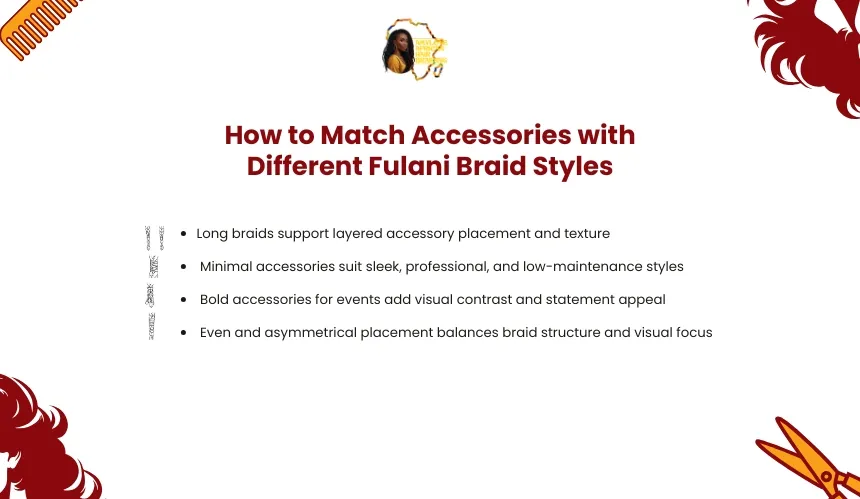
Accessory selection works best when it matches the braid structure, hairstyle density, and intended use of the style. The same accessory can create a balanced finish on one braid type and an overcrowded appearance on another, depending on braid length, thickness, and placement spacing.
Accessories for Long Fulani Braids
Long Fulani braids support layered accessory placement because the additional length creates more visual separation between decorative elements. Beads placed toward the lower third of the braids help maintain scalp balance while still adding movement and texture.
Mixed-metal cuffs and alternating bead sizes are commonly used on longer styles to prevent repetitive visual patterns. Spacing accessories evenly also reduces concentrated weight in one section of the hairstyle.
Minimal Accessories for Sleek or Professional Looks
Smaller cuffs, neutral beads, and thin wrap accents create a cleaner finish suited for low-maintenance styling or professional settings. Minimal accessory placement keeps braid patterns visible without overwhelming the hairstyle structure.
Matte metallic cuffs and transparent beads are often preferred because they blend more naturally with darker braiding hair and reduce excessive visual contrast. This approach also makes daily styling, tying, and maintenance easier.
Bold Accessories for Events and Statement Hairstyles
Statement styling typically uses larger beads, stacked cuffs, layered wraps, or shell combinations to create stronger visual contrast. These accessories are usually concentrated around front braids, braid ends, or side sections to create focal detailing without affecting the entire hairstyle.
High-density accessorizing works better on medium-to-large braids because thicker braid foundations handle additional weight more effectively. Combining too many oversized pieces on smaller braids can increase scalp tension and reduce styling flexibility.
For clients exploring Fulani Braids in Lakewood, WA, bold accessory combinations are often styled for community gatherings, cultural events, and nightlife areas near Pacific Highway SW, where more expressive braid detailing is common.
Layered cuffs and shell accents are also popular for longer braid styles because they stand out well in outdoor waterfront settings around American Lake and Fort Steilacoom Park.
Factors to Consider Before Adding Accessories to Fulani Braids
Accessories can improve braid styling visually, but they also affect scalp tension, braid durability, maintenance effort, and daily comfort. Poor accessory selection or placement can shorten the lifespan of the hairstyle and increase stress on natural hair.
1. Weight and Tension on Natural Hair
Heavy accessories create additional downward pull on braided sections, especially near the hairline and crown, where tension sensitivity is usually higher. This becomes more noticeable with thinner braids because smaller braid foundations distribute weight less efficiently.
Large beads, stacked cuffs, and oversized charms can gradually loosen braid roots or create strain during movement and sleeping. Lightweight accessories are generally safer for long-term protective styling and reduce unnecessary tension buildup on the scalp.
2. Accessory Material and Hair Compatibility
Accessory surface texture directly affects friction against braiding hair and natural strands. Rough metal edges, poorly coated cuffs, or sharp decorative pieces can snag synthetic hair fibers and weaken braid sections over time.
Smooth acrylic beads, polished cuffs, and lightweight resin materials are commonly preferred because they reduce friction and minimize breakage risk. Water-sensitive materials should also be considered carefully since exposure to moisture, oils, and styling products can cause fading, corrosion, or residue buildup.
The American Academy of Dermatology estimates that more than 18% of people in North America are allergic to nickel, so nickel-free, coated, or polished metal cuffs are better options for clients who react to costume jewelry. |
3. Maintenance and Daily Wear Practicality
Highly accessorized Fulani braids usually require more maintenance during washing, wrapping, and nighttime protection. Loose charms and oversized beads can catch on satin bonnets, scarves, or clothing, increasing friction during daily wear.
Accessory spacing also affects cleaning efficiency. Overcrowded decorative placement near the scalp can trap product residue and make scalp cleansing more difficult. Keeping decorative elements concentrated toward the mid-length or lower braid sections generally improves comfort and maintenance access.
The American Academy of Dermatology recommends washing Black hair once a week or every other week to reduce product buildup, which makes accessory spacing near the scalp important for keeping cleansing access practical.
Best Styling Combinations for a Balanced and Modern Look
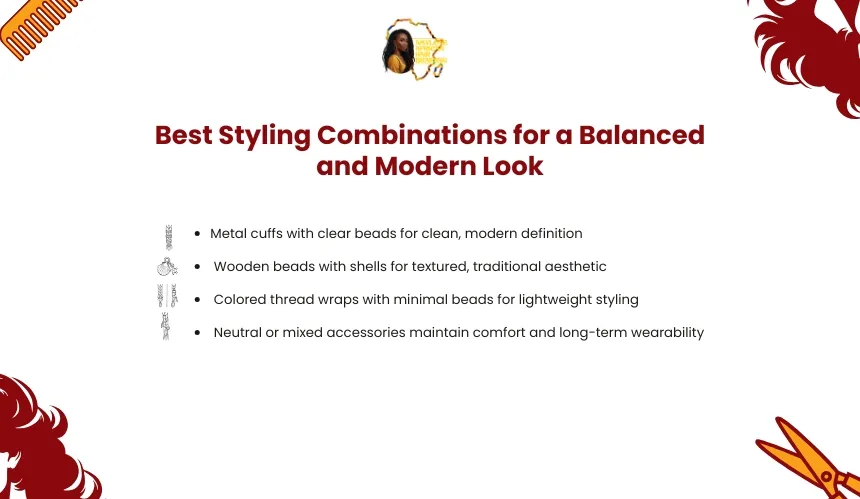
Effective Fulani braid customization depends on balance, spacing, and accessory distribution rather than excessive layering. The most visually clean styles usually combine different accessory types with controlled placement and consistent texture contrast.
- Metal cuffs with transparent beads for a clean, modern finish: Small gold or silver cuffs placed near front braids paired with clear beads at the ends create definition without overpowering the braid pattern. This combination works well for medium and long Fulani braids.
- Wooden beads with cowrie shells for a textured, traditional look: Natural-toned wooden beads combined with selective shell placement create stronger texture variation and a more heritage-inspired braid aesthetic. Spacing shells apart prevents excessive braid weight.
- Colored thread wraps with minimal bead placement for lightweight styling: Thin wrap accents around selected braids add color contrast without increasing tension. This approach maintains flexibility and reduces accessory pull during long-term wear.
- Symmetrical cuff placement for sharper braid definition: Evenly placing cuffs along matching braid sections enhances center parts, curved braid lines, and facial framing. Symmetry helps the hairstyle appear cleaner and more structured.
- Asymmetrical accessory placement for statement styling: Concentrating accessories on one side braid section or around selected front braids creates visual contrast while keeping the rest of the hairstyle balanced. This works best with medium-to-large braid sizes.
- Neutral-toned accessories for professional or everyday wear: Matte metallic cuffs, brown wooden beads, and transparent accents maintain a lower-contrast appearance that blends naturally with darker braided hair and supports easier daily styling.
- Lightweight mixed-accessory combinations for long-term comfort: Combining small beads, thin wraps, and minimal cuffs distributes weight more evenly across the hairstyle and reduces tension buildup near braid roots.
- Looking for customized Fulani braid styles that balance detail, comfort, and long-term wearability? AmyLove Africa Hair Braiding creates accessory-enhanced braid designs with clean parting, balanced styling combinations, and personalized finishing details tailored to different looks and occasions.
Frequently Asked Quetions
How many accessories should be added to Fulani braids without making them look too busy?
A balanced Fulani braid style usually works best with one main accessory type and one supporting detail. For example, beads at the ends can pair well with a few cuffs near the front braids. Too many shells, wraps, beads, and rings in the same section can reduce braid definition.
Can accessories make Fulani braids uncomfortable after a few days?
Discomfort usually comes from accessory weight, tight placement, or friction during sleep and movement. Heavy beads and stacked charms can pull on the braid roots, especially around the hairline. Lightweight acrylic beads, smooth cuffs, and spaced-out decorations reduce pressure while keeping the style detailed.
What accessories are best for Fulani braids on sensitive scalps?
Sensitive scalps usually respond better to lightweight beads, soft thread wraps, and smooth adjustable cuffs. Accessories should not sit too close to the roots because scalp tension can build over time. Avoid sharp metal rings, oversized charms, or tightly clamped cuffs that can pull on braided sections.
Can Fulani braid accessories be changed after the style is installed?
Many accessories can be adjusted after installation, especially beads, cuffs, rings, and wraps. However, removal should be gentle to avoid frizz, snagging, or loosening the braid. Clip-on cuffs and slide-on beads are easier to change than tightly wrapped thread or decorative pieces secured near the braid base.
What accessory colors look best with Fulani braids?
Accessory color depends on the desired finish. Gold and bronze tones create a warm contrast on dark braided hair, silver gives a sharper modern look, and clear beads keep the style cleaner. Colored beads or thread wraps work better when matched with outfits, hair highlights, makeup tones, or event styling.
Are Fulani braids with accessories practical for everyday wear?
Fulani braids can remain practical for daily wear when accessories are lightweight, smooth, and placed away from high-friction areas. Minimal cuffs, transparent beads, and lower-end bead placement make washing, wrapping, and sleeping easier. Heavier decorative combinations are usually better for short-term event styling.