
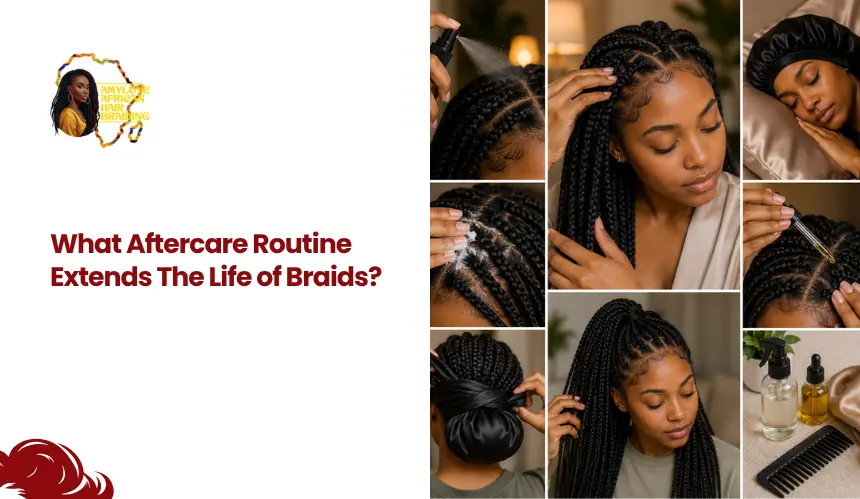
What Aftercare Routine Extends The Life of Braids?
Key Takeaways
|
Braids are designed to be low-maintenance, but without a structured aftercare routine, they begin to loosen, frizz, and lose definition much earlier than expected. Most issues stem from friction, moisture imbalance, and scalp neglect rather than the braiding technique itself. This leads to reduced style lifespan and potential stress on natural hair underneath.
A controlled aftercare approach directly impacts how long braids remain neat, secure, and protective. This article breaks down the exact routine, habits, and factors that extend braid longevity without causing damage.
Why Do Braids Deteriorate Faster Without Proper Aftercare
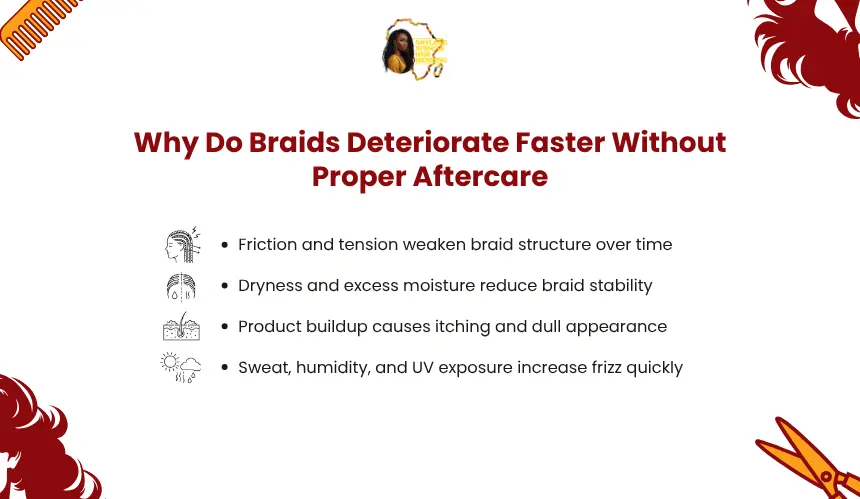
Braids begin to break down when external stress and internal imbalance are not managed consistently. The structure of a braid depends on tension distribution, scalp condition, and fiber stability, all of which are affected by daily habits.
- Tension redistribution over time
Natural hair growth shifts the anchor point of each braid away from the scalp. Without maintenance, this creates uneven tension, causing loosening at the roots and increased strain on mid-lengths, which accelerates frizz and structural breakdown. - Friction-driven fiber disruption
Continuous contact with rough surfaces such as cotton pillowcases or clothing causes micro-friction. This lifts the cuticle layer of the hair, leading to fuzziness and loss of braid definition, especially along the edges and ends. - Moisture imbalance and scalp neglect
A dry scalp reduces elasticity at the roots, making braids appear dull and brittle. Excess moisture, on the other hand, weakens grip by softening the hair shaft, resulting in slippage and faster unraveling. - Product buildup and pore blockage
Heavy oils, creams, or improper cleansing accumulate at the scalp and along braid lengths. This buildup restricts airflow, attracts dirt, and creates a residue layer that dulls appearance and contributes to itching and flaking. - Environmental exposure and stress factors
Sweat, humidity, UV exposure, and airborne particles degrade both natural hair and synthetic extensions. Without controlled protection, these factors increase odor, roughness, and premature wear of the braid structure.
What Is The Ideal Daily And Weekly Aftercare Routine For Braids?
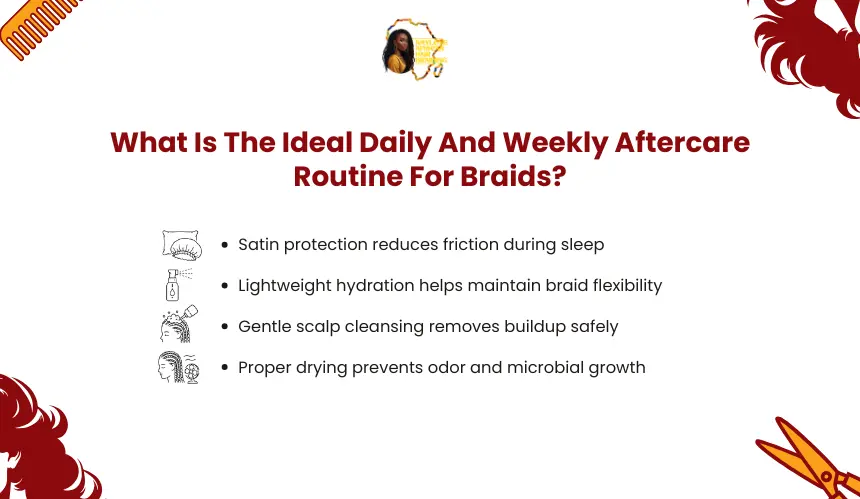
A consistent routine preserves braid tension, controls frizz, and maintains scalp balance without disrupting the installed pattern. The goal is to protect the braid structure while keeping the underlying hair and scalp in a stable condition.
Daily Maintenance Habits That Protect Braid Structure
Daily care focuses on minimizing mechanical stress and maintaining light hydration without weakening the braid grip.
- Use a satin or silk covering during sleep to reduce friction and prevent surface fraying
- Keep handling minimal to avoid loosening the braid pattern through repeated manipulation
- Apply a light, water-based hydration mist to maintain flexibility without saturating the hair shaft
- Smooth exposed lengths gently with hands to control early-stage frizz before it spreads
Weekly Care Routine to Maintain Scalp and Braid health
Weekly maintenance addresses buildup, scalp condition, and controlled moisture balance without disturbing the braid base.
- Cleanse the scalp using diluted shampoo or targeted applicators to remove residue without excessive agitation
- Use lightweight oils in small quantities to maintain scalp lubrication and reduce dryness-related tension
- Focus on drying thoroughly after cleansing to prevent odor and microbial buildup within dense braid sections
- Remove surface buildup gradually instead of aggressive scrubbing, which can weaken the braid hold
Which Products And Ingredients Help Extend The Life Of Braids?
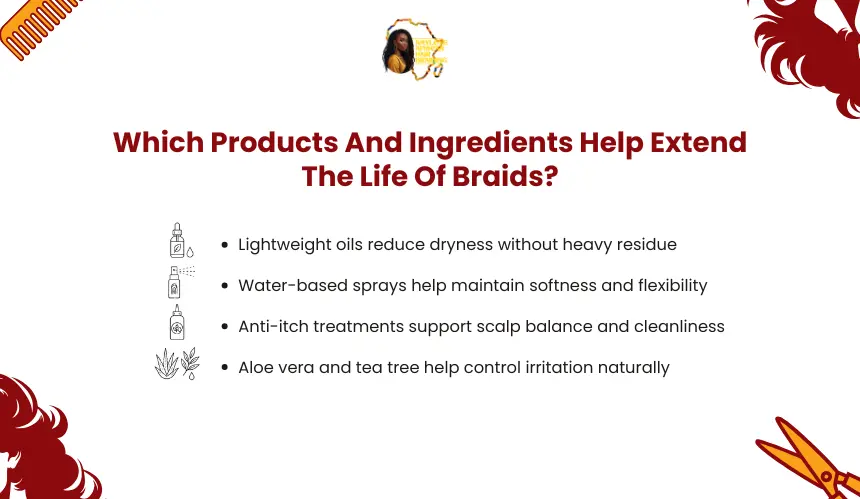
Product selection directly affects braid retention, scalp balance, and surface finish. The most effective braid care products support moisture control and scalp hygiene without adding film, weight, or residue that compromises the braid base.
Essential Product Categories For Braid Care
Each product category should solve a specific maintenance need rather than overload the style with multiple layers.
Lightweight Oils for Scalp Nourishment
Low-density oils such as jojoba, grapeseed, and fractionated blends help reduce dryness and itch without creating heavy residue around the roots. Their role is to maintain scalp comfort and flexibility, not to saturate the braid pattern.
Water-Based Sprays for Hydration
Hydration sprays with a light water-first formulation help preserve softness in the natural hair underneath the braids. This reduces brittleness, especially around exposed areas and along the braid base, without causing the expansion or slippage that heavier products can trigger.
Anti-Itch and Anti-Buildup Solutions
Targeted scalp treatments help manage irritation, sweat residue, and product accumulation between wash cycles. Well-formulated scalp rinses, clarifying tonics, or braid-safe cleansers maintain a cleaner scalp environment and reduce the risk of flaking or odor-related deterioration.
A 2025 dermatology review found that synthetic braiding hair itself can trigger contact dermatitis through allergens such as acrylates and disperse dyes, so persistent itching is not always a scalp-care failure. When irritation starts immediately after installation, the extension fiber may need to be evaluated alongside the product routine. |
Ingredients to prioritize vs avoid for Braids Care
Ingredient quality matters more than product volume. Braids typically perform better when formulations are functional, lightweight, and scalp-compatible.
Beneficial Ingredients for Braids
Aloe vera supports light hydration and helps calm scalp irritation without leaving a thick coating. Tea tree oil is commonly used in controlled amounts to help manage itch, buildup, and microbial activity at the scalp.
Balanced humectants such as glycerin can help retain moisture when used in moderate concentrations, particularly where dryness is contributing to roughness and early frizz.
Harmful Ingredients
Heavy waxes, dense pomades, and thick butters tend to sit on the braid surface and around the roots, increasing buildup and making cleansing less efficient. High-alcohol formulas can strip moisture too aggressively, which increases dryness, dullness, and surface fraying.
Products that leave visible residue or require frequent reapplication usually shorten braid lifespan rather than extend it.
What Habits Shorten The Lifespan Of Braids And How To Avoid Them
Braid longevity is often compromised by operational missteps rather than installation quality. Repetitive stress, improper maintenance cycles, and uncontrolled exposure conditions accelerate structural breakdown and reduce retention time.
1. Overwashing or High-Agitation Cleansing Methods
Frequent washing with undiluted shampoo increases friction at the root level and disrupts tension integrity. This leads to early loosening and expansion of the braid base. Controlled cleansing frequency with low-agitation application maintains cleanliness without destabilizing the structure.
2. High-Tension Styling and Load Concentration
Tight buns, ponytails, or repeated updos concentrate stress at specific anchor points. This creates localized strain on the roots, increasing the risk of traction-related damage and premature braid slippage. Load distribution should remain balanced to preserve uniform tension.
3. Unmanaged Scalp Conditions
Ignoring early signs of dryness, irritation, or buildup leads to inflammation and flaking. This weakens the grip at the scalp interface, reducing braid hold and increasing the likelihood of unraveling. Routine scalp assessment and targeted treatment prevent escalation.
4. Sweat Accumulation Without Post-Activity Management
Sweat introduces salt and moisture into the braid system, altering hair texture and increasing friction once dried. Without post-activity drying or cleansing protocols, this accelerates odor formation, buildup, and fiber roughness.
5. Inconsistent Nighttime Protection Protocols
Skipping protective wrapping exposes braids to continuous friction cycles during sleep. This results in surface fraying, edge breakdown, and loss of definition across the braid length. Consistent low-friction covering is required to maintain surface integrity.
How To Maintain Braids In Different Lifestyles And Conditions
Braid performance is directly influenced by environmental exposure and daily activity patterns. A static routine often fails under varying conditions, so adjustments are required to maintain structural integrity across different use cases.
Active Lifestyles and Sweat Management
Physical activity increases moisture load and salt deposition within braid layers, which alters texture and accelerates surface roughness if not managed.
- Allow braids to dry completely after workouts to prevent prolonged moisture retention at the roots
- Use absorbent headbands during activity to limit sweat migration into the braid base
- Apply light post-activity refresh sprays to neutralize odor and restore flexibility without oversaturation
- Avoid immediate tight styling after workouts, as damp hair is more prone to tension-related stress
Climate-Based Adjustments (Humid vs Dry Environments)
Environmental humidity levels influence how hair fibers respond within the braid structure, requiring controlled moisture strategies.
- In dry climates, increase frequency of light hydration to prevent brittleness and surface fraying
- In humid conditions, reduce product layering to prevent swelling of the hair shaft and loss of braid definition
- Use anti-frizz formulations selectively in high humidity to maintain a compact braid pattern
- Monitor scalp condition closely, as both extremes can trigger imbalance if unmanaged
NOAA’s Washington climate summary notes that a typical station in western Washington sees one to two 2-inch precipitation events per year, which helps explain why braid routines in the Puget Sound region need stricter drying discipline and lighter product layering than the same style might require in a drier market.
Work and Daily Activity Considerations
Routine exposure to friction and movement varies based on occupation and daily habits, affecting how braids wear over time.
- Use low-friction coverings in high-contact environments to reduce repeated surface disruption
- Keep braids secured in loose, low-tension styles during extended activity periods to prevent localized strain
- Limit frequent restyling, as repeated manipulation accelerates loosening at the roots
- Maintain consistent grooming intervals to control early-stage frizz before it spreads across the braid length
When Should Braids Be Refreshed Or Removed?
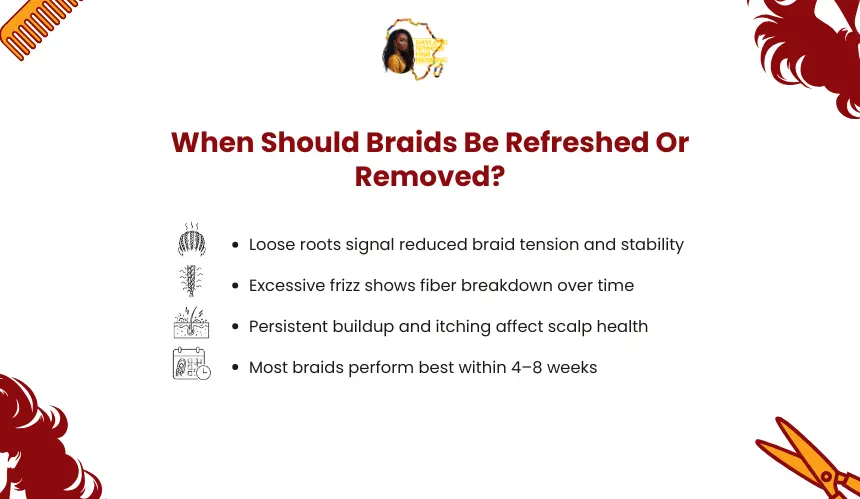
Braid longevity has a functional limit based on tension retention, scalp condition, and new growth displacement. Extending wear beyond this threshold shifts the style from protective to damaging, increasing stress on the natural hair system.
- Visible loss of structural tension at the roots
As new growth increases, the braid anchor point weakens and begins to shift. This creates instability at the base, making the style prone to slippage and uneven weight distribution across strands. - Excessive frizz and pattern distortion
When frizz expands beyond surface-level fuzz and starts affecting the braid shape, it indicates fiber breakdown. At this stage, maintenance no longer restores definition, and refresh or removal becomes necessary. - Scalp stress indicators and buildup accumulation
Persistent itching, flaking, or residue that cannot be cleared through routine cleansing signals compromised scalp conditions. Continued wear under these conditions increases the risk of inflammation and follicle stress. - Typical wear timelines based on braid type
Most standard braiding styles maintain optimal performance within a 4 to 8 week window. Smaller braids may last longer with controlled care, while larger braids lose definition faster due to reduced tension density. - Risk of extended wear beyond optimal duration
Keeping braids installed for prolonged periods leads to matting at the roots, excessive shedding buildup, and difficulty during takedown. This increases breakage risk and prolongs recovery time for the natural hair.
A 2024 Baylor dermatologist guideline recommends four to six weeks as the optimal wear window, with eight weeks as the upper limit, because extended wear increases root tension, product matting, and breakage during takedown. That gives the refresh decision a clinical threshold instead of leaving it as a purely visual judgment. |
Frequently Asked Questions
How soon after getting braids should the scalp be washed?
A full wash is usually better delayed until the braid base has settled, but the scalp still needs light maintenance early on if there is sweat, itch, or residue. A gentle scalp cleanse around the one to two week mark is commonly recommended, using low-agitation methods that protect the fresh installation.
What are the earliest signs that braids are too tight?
Pain that lasts beyond installation day, scalp tenderness, small bumps, headaches, or visible pulling around the hairline usually signal excessive tension. That is not a normal adjustment phase. Early correction matters because repeated traction can inflame follicles and raise the risk of traction alopecia, especially around the edges.