Box Braids vs. Knotless Braids: Key Differences Explained
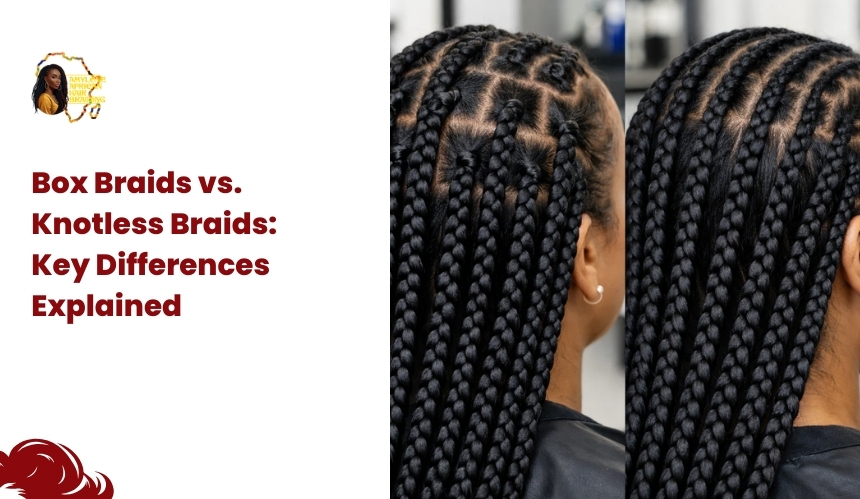
A Quick Answer: Box braids and knotless braids differ mainly in how the extensions are installed, how they feel on the scalp, and how they look at the roots. Box braids use a visible knot at the base where extensions are secured, while knotless braids rely on a gradual feed-in method that creates a flatter, lighter, and more natural-looking result. |
Both styles fall under protective braiding, but they serve different needs and preferences. Some people prioritize structure and longevity, while others care more about comfort, scalp sensitivity, or a natural finish.
Because of this, the choice between box braids and knotless braids is rarely about which style is “better” and more about which method aligns with hair type, lifestyle, and comfort expectations.
This article breaks down the differences, to help you understand how each braid style works, what sets them apart, and how those differences affect wear, appearance, and overall experience.
What Are Box Braids?
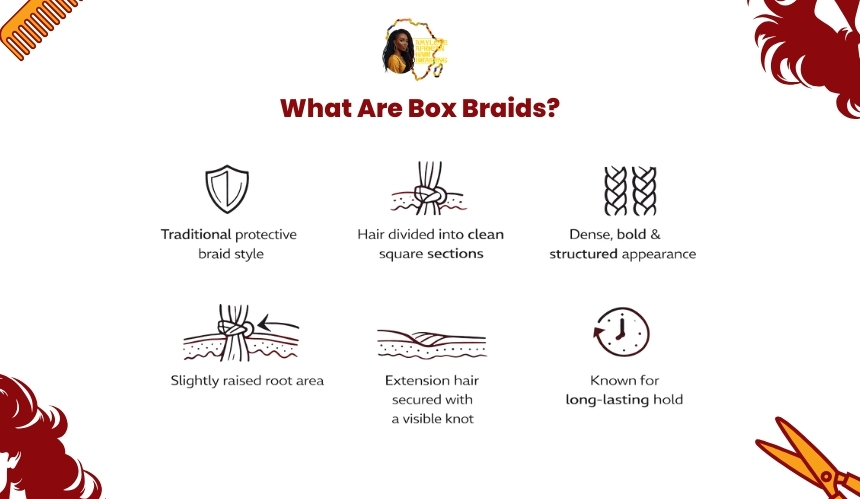
Box braids are a traditional protective hairstyle recognized for their structured appearance and clearly defined parting pattern. The hair is divided into small, square-shaped sections across the scalp, which gives the style its name and creates a uniform foundation for each braid.
This sectioning method plays a major role in how box braids look once completed, contributing to their clean, bold, and organized appearance.
A defining characteristic of box braids is the knot formed at the base of each braid where the extension hair is secured to the natural hair. This knot creates a slightly raised root area, resulting in a fuller and more structured look near the scalp.
Because of this construction, box braids tend to appear dense, consistent in size, and visually striking, which is why they remain a popular choice for those who prefer a classic, well-defined braided style.
What Are Knotless Braids?
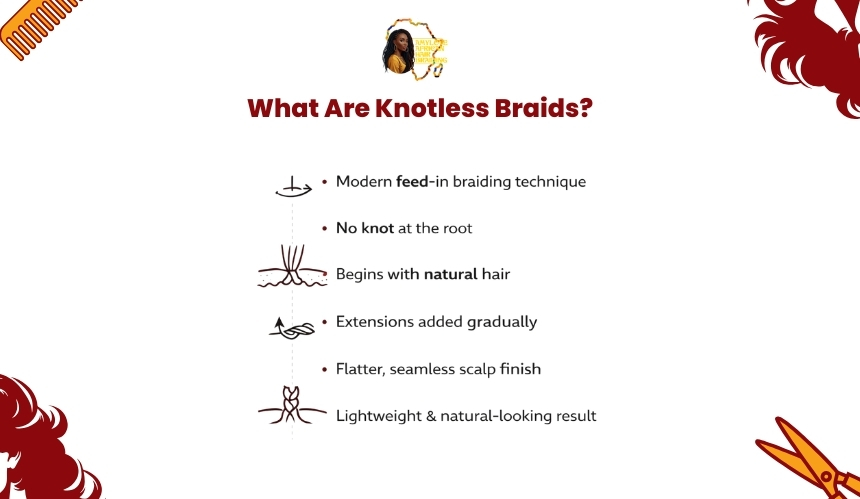
Knotless braids are a more recent evolution of traditional braiding techniques, designed to create a lighter and more natural-looking result. While they still fall under the category of protective braiding, their defining feature is the absence of a knot at the root.
Instead of securing extensions at the scalp, the braid begins with natural hair and gradually incorporates extension hair as it moves downward.
Because there is no knot at the base, knotless braids sit flatter against the scalp and appear to flow directly from the natural hair. This creates a softer, more seamless look that closely mimics natural hair growth.
The reduced bulk at the roots also gives knotless braids a lighter visual presence, making them especially appealing to those who value a smooth finish and a less rigid braid structure.
Key Differences Between Box Braids and Knotless Braids
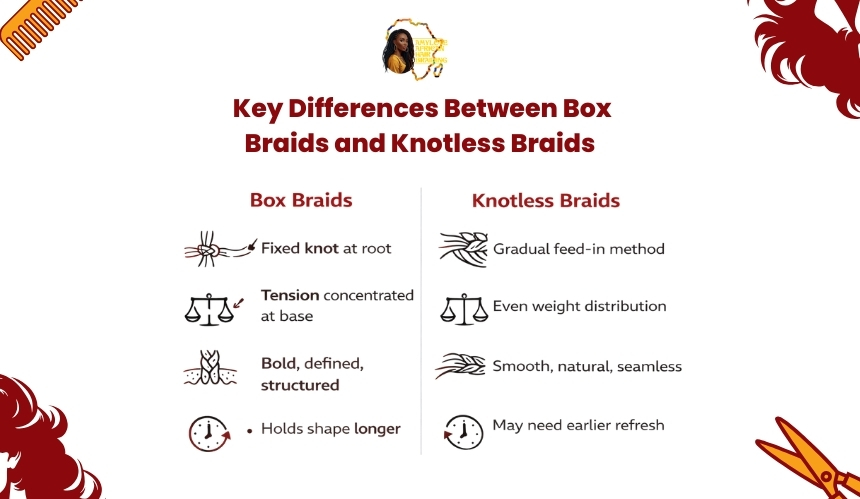
Although box braids and knotless braids are both protective styles, the differences between them go beyond surface appearance. Each method affects scalp health, daily comfort, long-term wear, and styling flexibility in distinct ways.
1. Installation Technique And Root Structure
Box braids begin with a fixed knot that secures extension hair directly at the scalp. This anchoring point creates a strong foundation that keeps each braid firmly in place, which contributes to the style’s structured and uniform appearance.
Knotless braids rely on a gradual feed-in method, where extension hair is introduced in small amounts as the braid forms. This removes the need for a knot and allows the braid to start more naturally from the scalp.
The difference in structure influences not only how the braids look but also how they respond to movement and tension over time, a distinction that a skilled knotless braids stylist must carefully control during installation.
2. Tension Distribution And Scalp Comfort
The knot used in box braids concentrates weight and tension at the root, which can cause tightness during the initial days after installation. For some people, this sensation fades as the hair adjusts, while others may continue to feel discomfort.
Knotless braids spread the weight of the extension hair along the length of the braid instead of focusing it at one point. This even distribution often reduces pulling at the scalp and lowers the risk of irritation, making knotless braids a more comfortable option for those with sensitive scalps or fine hair.
3. Scalp Appearance And Visual Finish
Box braids create a visible and slightly raised root that gives the style a bold, defined look. The parting is clear and intentional, which many people associate with a classic braided aesthetic.
Knotless braids sit flatter against the scalp, creating a smoother transition between natural hair and extensions. This flatter profile makes the braids appear as though they are growing directly from the scalp, which results in a softer and more natural visual finish, especially when the hair is parted or styled upward.
4. Braid Weight And Natural Movement
Because box braids have a knot and additional bulk at the base, they often feel heavier, particularly when longer lengths or thicker extensions are used. This added weight contributes to their solid, long-lasting structure but can reduce flexibility.
Knotless braids eliminate root bulk, which allows the braids to move more freely and feel lighter overall. This difference becomes noticeable during everyday activities, such as tying the hair back, wearing it down, or engaging in physical movement.
5. Longevity And Style Durability
Box braids are widely known for their ability to maintain a neat appearance over extended periods. The knot at the root helps prevent slippage and keeps the braid pattern intact as new hair growth appears.
This structural reliability is why a skilled Box braids stylist often recommends this style for clients who want long-lasting wear with fewer maintenance sessions over time.
Knotless braids, while comfortable and visually natural, may show loosening or frizz at the roots sooner because there is no knot holding the extensions firmly in place. This means the style may require earlier maintenance to maintain a freshly installed look.
6. Maintenance And Upkeep Requirements
Maintenance expectations differ as each style ages. Box braids typically need minimal root attention during the early weeks, as the knot preserves structure and spacing.
Knotless braids often benefit from earlier touch-ups or scalp care routines to keep the roots looking neat and defined. This difference influences how often styling products, edge control, or professional refresh services may be used throughout the lifespan of the style.
Choosing Box or Knotless Braids by Hair Type and Lifestyle
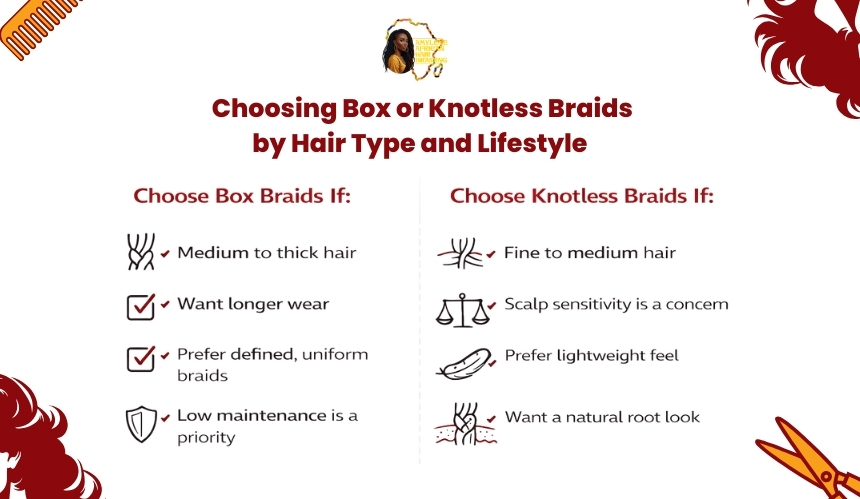
When deciding between box braids and knotless braids, hair characteristics and daily routines play a defining role. The right choice depends on how much structure, comfort, and flexibility the hair and scalp can realistically support over time.
Choose box braids if:
- Your hair is medium to thick in density and can comfortably support a structured braid base
- Long-lasting wear with fewer touch-ups is a priority
- A low-maintenance protective style is preferred for busy schedules or extended styling cycles
- A more defined, uniform braid appearance is appealing
- Your scalp is not highly sensitive to initial tension at the roots
Choose knotless braids if:
- Your hair is fine to medium in density and benefits from a lighter styling approach
- Scalp sensitivity or discomfort from tight styles is a concern
- Daily routines include physical activity, frequent updos, or movement that benefits from flexibility
- A natural-looking root and seamless braid appearance is preferred
- You value comfort and reduced tension, even if earlier maintenance is needed
This decision-focused breakdown makes it easier to match the braid style to real-life needs rather than relying on trends or visual appeal alone.
Frequently Asked Questions
Do box braids or knotless braids help with hair growth?
Neither braid style directly causes hair growth, but both can support length retention when installed and maintained properly. Protective braiding limits daily manipulation, which helps reduce breakage. Growth results depend more on scalp care, moisture balance, and how long the style is worn without excessive tension or neglect.
Can box braids or knotless braids be washed regularly?
Both styles can be washed, but technique matters. Cleansing focuses on the scalp rather than the braid length to avoid frizz and loosening. Diluted shampoo, gentle massage, and proper drying are essential. Washing frequency often depends on scalp oil production rather than the braid type itself.
Are knotless braids better for thinning edges?
Knotless braids are often preferred for thinning edges because they place less stress on the hairline. The feed-in method reduces concentrated tension at the front, which can help minimize further strain. However, braid size, parting, and styling habits play an equally important role in edge preservation.
Which braid style is easier to take down?
Box braids are generally easier and faster to remove because the knot provides a clear starting point for unraveling. Knotless braids require more patience during takedown since the extension hair is blended gradually, making the starting point less defined.
Can both box and knotless braids be styled into updos and ponytails?
Yes, both styles support versatile styling, but the experience differs. Knotless braids typically feel more comfortable in high ponytails and buns due to reduced root tension. Box braids can also be styled up, though the added root bulk may feel tighter during extended wear.
How soon after box or knotless braids installation can the hair be moisturized?
Moisturizing can begin immediately after installation for both styles. Lightweight oils or sprays applied directly to the scalp help prevent dryness and itching. Heavy products should be avoided early on, as buildup can dull the appearance of freshly installed braids.