Why is Personalized Hair Braiding Important for Hair Health?
Key Takeaways
|
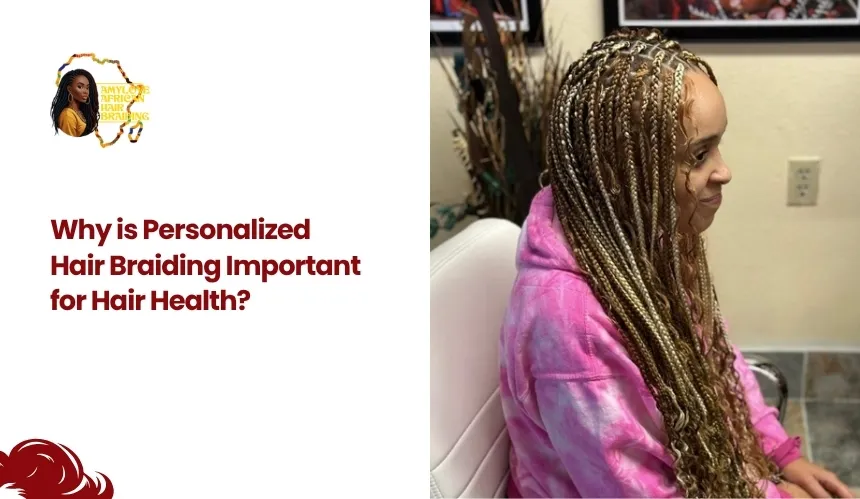
Personalized hair braiding is important because every hair type, scalp condition, and styling goal is different. A braid style that works well for one person may cause tension, dryness, breakage, or discomfort for another. When braids are customized to the client’s natural hair, they can protect the strands, support scalp comfort, and help maintain healthier hair over time.
How Personalized Braiding Protects Your Natural Hair
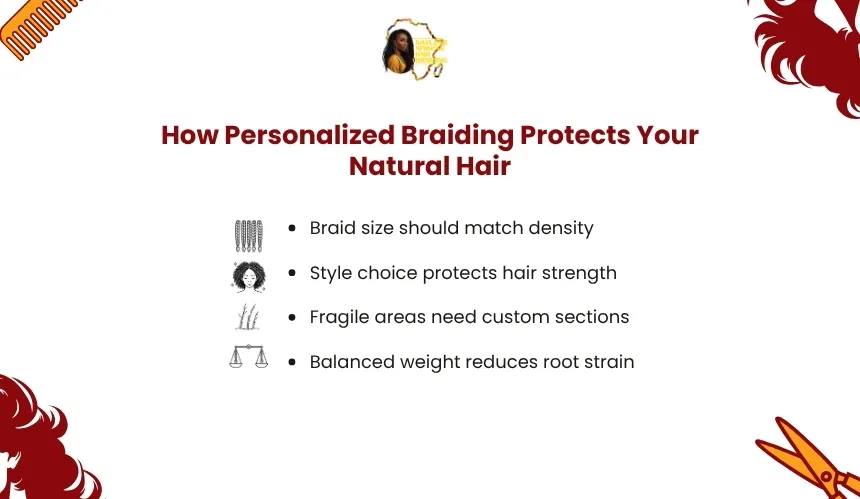
Personalized braiding protects natural hair by matching the style to the hair’s actual condition, not just the desired look. When braid size, tension, parting, and weight are adjusted correctly, the hair can stay protected without unnecessary strain on the scalp, roots, or ends.
The rainy climate in Puyallup can make protective styling especially useful for clients who want to reduce frizz, limit daily manipulation, and keep natural hair easier to manage between wash days. In areas such as Downtown Puyallup, South Hill, and East Valley, Knotless Braids in Puyallup are often chosen because the style combines a cleaner braided look with less root tension, better scalp comfort, and flexible wear for busy routines.
Do You Know? Normal hair shedding can look more dramatic after taking braids out. The American Academy of Dermatology says it is normal to shed 50 to 100 hairs per day. When hair stays braided for weeks, those naturally shed strands may collect inside the style instead of falling out daily. |
How Does Matching Braid Size To Hair Density Reduce Damage?
Braid size should align with hair density because thin, fine, or low-density hair cannot safely carry the same braid weight as thicker hair. Oversized braids on sparse sections can pull at the roots, weaken the follicles, and place excess pressure on the hairline.
A personalized braid plan uses smaller, lighter, or more evenly distributed sections where the hair is delicate. This reduces tension points, keeps the style balanced, and lowers the risk of breakage during wear and removal.
Why Should Braid Style Match Hair Length And Strength?
Hair length and strand strength determine how much grip, extension weight, and manipulation the hair can tolerate. Short, fragile, color-treated, or recently damaged hair may not hold certain braid styles safely without slipping, pulling, or snapping.
A customized approach selects braid patterns, extension length, and installation methods that support the hair instead of forcing it into a style it cannot maintain. This helps preserve strand integrity while still allowing a neat, protective finish.
How Can Custom Braiding Protect Weak Or Fragile Areas?
Custom braiding protects weak areas by mapping the hair before installation. Short pieces, thinning sections, dry ends, and uneven density need different parting decisions than stronger areas of the head.
Instead of forcing one uniform pattern, the stylist can adjust section placement, braid direction, and extension distribution. This prevents fragile zones from carrying more weight than they can safely support.
Why Scalp Condition Should Guide Every Braid Style
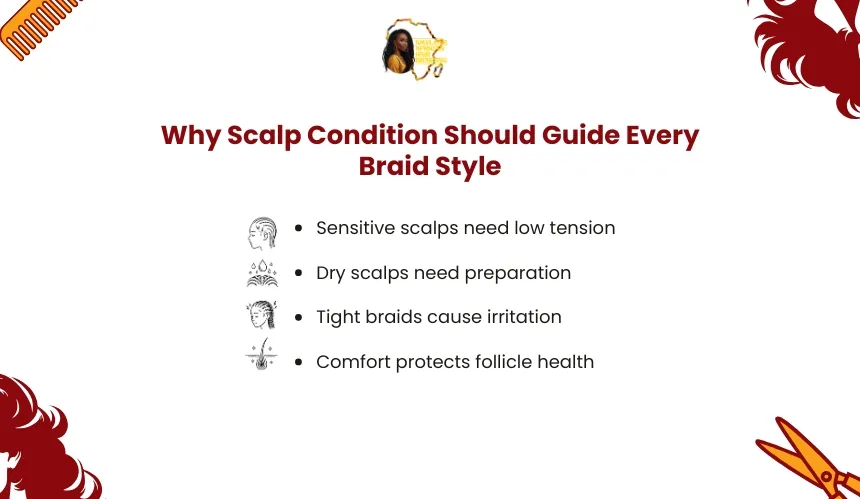
Scalp condition should guide braid selection because the scalp carries the tension, parting pressure, and product buildup created during installation. When sensitivity, dryness, or irritation is ignored, even a protective hairstyle can become uncomfortable, short-lived, or damaging.
Why Do Sensitive Scalps Need Lower-Tension Techniques?
Sensitive scalps react faster to pulling, tight parting, and prolonged pressure at the root. High-tension braiding can cause soreness, bumps, redness, and inflammation because the follicles are placed under stress before the style has time to settle.
A personalized braiding approach reduces grip intensity, adjusts section size, and avoids excessive pulling around the hairline, nape, and crown. This allows the style to feel secure without creating scalp pain or follicle strain.
How Should Dry Or Flaky Scalps Be Prepared Before Braiding?
Dry or flaky scalps need proper cleansing, hydration, and spacing before braids are installed. Braiding over buildup, dandruff, or dehydration can trap irritation beneath the style and make itching worse during wear.
A customized braid plan may include lighter products, cleaner parting, breathable spacing, and scalp-safe moisturization. This creates a healthier base for the style and reduces the risk of flakes, tightness, and early removal.
How Can Tight Braids Trigger Irritation And Traction Stress?
Tight braids can trigger scalp irritation by creating immediate pressure around the follicles. This may show up as soreness, itching, redness, bumps, or a tight feeling that does not settle after installation.
A healthy braid should feel secure without sharp pulling or visible swelling. If discomfort continues, the style may be placing too much pressure on the scalp and should be adjusted early.
How Custom Braid Tension Helps Prevent Breakage
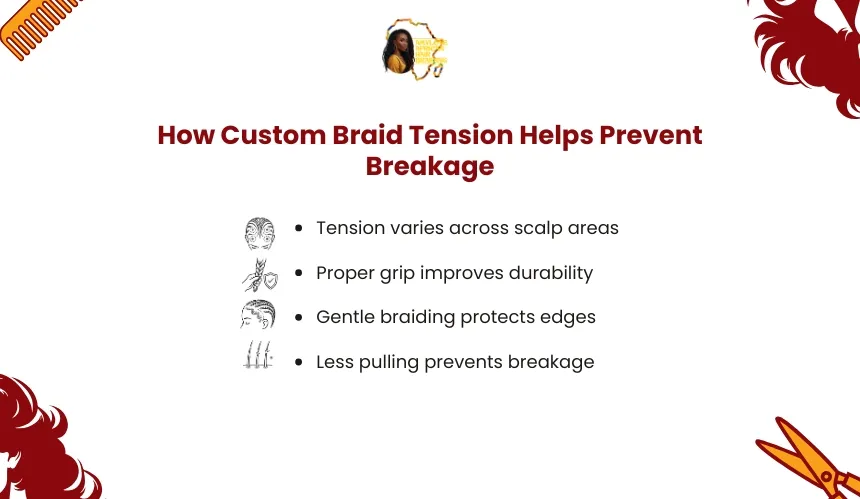
Custom braid tension prevents breakage by controlling how much force is placed on the scalp, roots, edges, and individual strands. When tension is adjusted to the client’s hair texture, density, and sensitivity, the braid can stay secure without weakening the hair shaft or stressing the follicles.
Why Does One Tension Level Not Work For Everyone?
One tension level does not work for everyone because the scalp has different pressure points across the head. The hairline, crown, nape, and thicker middle sections may each need a different grip level.
A skilled braider adjusts tension as the style progresses instead of using the same pull from start to finish. This creates a more controlled installation that protects fragile areas while keeping stronger sections neat and secure.
How Does Proper Grip Support Comfort And Durability?
Proper grip keeps each braid anchored without forcing the root into constant strain. The goal is controlled hold, not maximum tightness, because excessive pressure can shorten wear time by causing soreness or early removal.
A balanced grip also helps the braid keep its shape during sleeping, styling, and movement. This gives the client a cleaner finish while reducing unnecessary stress during both wear and takedown.
What Is The Link Between Tight Braids And Traction Alopecia?
Tight braids can contribute to traction alopecia when repeated pulling places long-term stress on the hair follicles. The hairline, temples, and nape are especially vulnerable because these areas often have finer strands and less density.
Early signs may include tenderness, bumps, thinning edges, or small broken hairs around the parting lines. Personalized braid tension reduces this risk by limiting excessive pulling and protecting follicle health throughout the styling process.
Why Lifestyle And Maintenance Habits Affect Braid Choice
Lifestyle and maintenance habits affect braid choice because the style must fit how the client moves, sleeps, works, sweats, and cares for their scalp. A personalized braid plan reduces avoidable tension, product buildup, frizz, and early damage by matching the hairstyle to real daily routines.
Do You Know? The American Academy of Dermatology recommends washing Black hair once a week or every other week to help prevent product buildup that can dry out the hair. This matters for braided styles because low-maintenance should not mean leaving the scalp unmanaged. |
How Should Active Routines Influence Braid Selection?
Active routines require braid styles that can tolerate sweat, movement, and frequent friction. Clients who work out, work outdoors, or wear head coverings may need styles with breathable parts and manageable length.
The braid choice should also account for how often the scalp will need cleansing or refreshing. A lighter, easier-to-manage style usually performs better for active clients than heavy braids that trap moisture and create friction.
For clients dealing with rainy commutes, damp air, and busy routines around the Washington State Fair area, Clarks Creek, or Rainier Woods, Crochet Braids have gained popularity in Puyallup as a practical protective hairstyle. The installation can help reduce daily manipulation, control frizz caused by moisture-heavy weather, and make scalp access easier than some heavier braid styles.
Since Puyallup often has wet, overcast winters and milder dry summers, crochet styles work well for clients who want natural hair protection without a complicated upkeep routine
Why Should Maintenance Ability Guide The Final Style?
Maintenance ability should guide braid choice because some styles require more scalp care, wrapping, moisturizing, and frizz control than others. A client who prefers low-maintenance styling may struggle with braids that need frequent touch-ups or detailed aftercare.
Personalized braiding considers how often the client can cleanse the scalp, apply lightweight moisture, protect the style at night, and manage new growth. This makes the hairstyle easier to maintain without allowing dryness, buildup, or matting to affect hair health.
How Do You Balance Style Longevity With Hair Health?
Style longevity should never come at the cost of scalp comfort or strand protection. Keeping braids in too long can increase tangling, shed hair buildup, dryness, and breakage during takedown, especially around fragile areas.
A personalized approach sets a realistic wear time based on hair texture, braid size, scalp condition, and aftercare habits. This protects the natural hair while still allowing the client to enjoy a neat, durable braided style.
How Personalized Braiding Supports Long-Term Hair Growth Goals
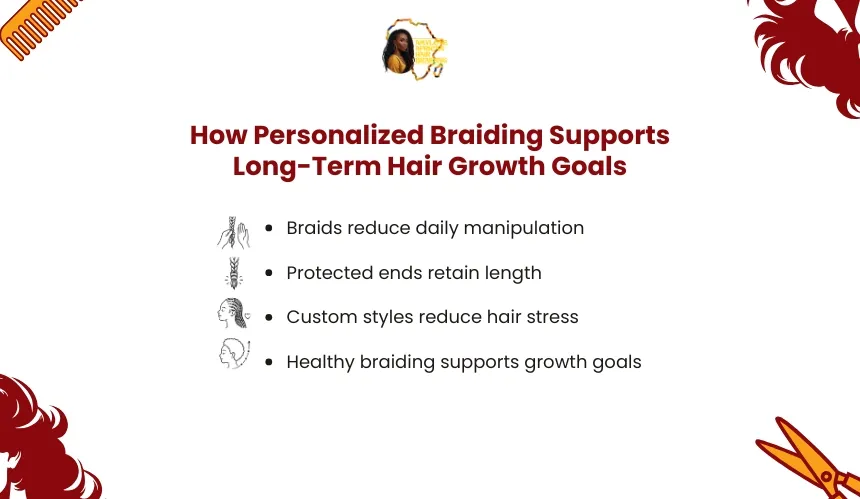
Personalized braiding supports long-term hair growth by reducing avoidable stress on the hair while protecting the strands during daily wear. When the braid style matches the client’s hair condition, scalp needs, and maintenance routine, it creates better conditions for healthier length retention.
Do You Know? Braids do not make hair grow faster. Cleveland Clinic explains that hair growth starts inside the follicle, where the root receives blood supply and nutrients. Hair grows about 1 centimeter per month, so personalized braiding supports growth mainly by helping protect the length that already exists. |
How Does Reducing Manipulation Between Wash Days Support Growth?
Reducing manipulation protects the hair from repeated combing, brushing, heat styling, and daily tension. Natural hair can become weaker when it is constantly pulled, detangled, or restyled, especially if the strands are dry, fine, or prone to breakage.
A personalized braid style keeps the hair contained in a stable pattern between wash days. This limits mechanical damage and gives the strands a stronger chance to retain length without constant friction or handling.
Why Is Protecting The Ends Important In Braided Styles?
The ends are the oldest and most fragile part of the hair, making them more vulnerable to dryness, splitting, and friction. If braid length, tuck method, or extension weight is not chosen carefully, the ends can become exposed, rough, or tangled.
Custom braiding protects the ends by securing them properly within the style and reducing contact with clothing, bedding, and environmental dryness. This helps preserve strand integrity and lowers the risk of breakage during takedown.
How Does Personalized Braiding Improve Length Retention?
Personalized braiding improves length retention by controlling the factors that usually cause hair loss before visible growth is maintained. Breakage, excessive tension, poor takedown practices, and dryness can make hair appear as if it is not growing.
A customized braid plan reduces these risks by matching braid size, tension, weight, and wear time to the client’s hair health. This creates a safer protective style that supports growth goals without sacrificing scalp comfort or strand strength.
What To Discuss Before Choosing A Braid Style
Before choosing a braid style, the client should discuss hair condition, scalp tolerance, extension weight, and maintenance expectations. This prevents the style from being selected only by appearance and allows the braider to recommend an option that protects the hair during installation, wear, and takedown.
Do You Know? The British Association of Dermatologists notes that braiding soon after a relaxer can increase the risk of breakage. It also advises that braids should not be left in for longer than 6 weeks, especially when hair is prone to tension or fragility. |
Why Should Hair History And Recent Damage Be Discussed First?
Hair history gives the stylist a clear view of what the hair can safely handle. Recent color treatments, heat damage, shedding, thinning edges, breakage, or past tension issues can change which braid styles are suitable.
A personalized consultation helps identify weak areas before tension or extension weight is added. This allows the braider to adjust parting, braid size, grip, and style choice so damaged sections are not placed under avoidable stress.
How Do Desired Style, Weight, And Length Affect Hair Health?
Desired style, weight, and length affect how the finished look distributes pressure across the natural hair. Longer or fuller braids may require more extension hair, which can change how the style moves and pulls during daily wear.
A consultation helps align the client’s preferred look with a safer structure. The stylist may suggest reduced length, smaller extensions, or a different braid pattern to achieve the style without overloading weaker strands.
Why Should Scalp Sensitivity And Aftercare Routine Be Shared?
Scalp sensitivity and aftercare habits should be shared before styling because they help the braider choose a realistic, wearable option. The client should mention past soreness, itching, flaking, bumps, product reactions, or difficulty maintaining braids.
This information allows the stylist to plan safer spacing, product use, braid size, and wear time. It also prevents the client from choosing a style that looks good at first but becomes difficult to maintain.
Healthy braids start with a style that fits the client’s hair, scalp, and daily routine. At AmyLove Africa Hair Braiding, each braid style is planned with comfort, protection, and long-term hair health in mind. Whether the client wants knotless braids, crochet braids, twists, or another protective style, the goal is to create a look that feels beautiful while helping natural hair stay stronger, healthier, and easier to maintain.
Frequently Asked Quetions
How can someone tell if a braid style is too heavy for their natural hair?
A braid style may be too heavy if the scalp feels pulled when the hair moves, the parts look stretched, or the roots feel sore after normal activity. Heavier extensions can also make the neck and hairline feel strained. A safer style should move comfortably without constant pressure at the roots.
Are knotless braids better for people with sensitive edges?
Knotless braids are often preferred for sensitive edges because they start with the natural hair before extension hair is gradually added. This can create a lighter feel at the root compared with traditional box braids. However, the result still depends on braid size, installation tension, and the client’s existing hairline condition.
How often should braided hair be moisturized without causing buildup?
Braided hair usually needs lightweight moisture a few times per week, depending on scalp dryness, weather, and product type. Water-based sprays, light oils, or scalp-friendly leave-ins are easier to manage than heavy creams. Too much product can collect between parts, causing itching, flakes, or a coated feeling.
Why does hair sometimes feel thinner after removing braids?
Hair may feel thinner after braid removal because shed strands that were trapped in the style come out during takedown. This can look alarming, especially after several weeks. The concern increases if there is snapping, bald-looking patches, soreness, or broken hairs around the hairline instead of normal shed strands.
Can crochet braids be a good option for rainy or humid weather?
Crochet braids can work well in rainy or humid weather because they reduce daily manipulation and can help manage frizz-prone natural hair. The style also allows different textures, lengths, and densities without requiring every strand to be individually braided. Proper scalp cleansing still matters in damp climates.
What should someone avoid doing right after getting braids installed?
Right after installation, avoid tight ponytails, heavy buns, excessive edge styling, and pulling the braids into high-tension updos. The scalp needs time to settle. Sleeping with a satin scarf or bonnet, keeping the style loose, and watching for soreness can help prevent early irritation.