What Mistakes Should People Avoid Before a Braiding Appointment?
Key Takeaways
|
A braiding appointment can either leave someone feeling confident and protected or dealing with discomfort, breakage, and regret. The difference often has little to do with the stylist’s skill. It usually starts before the first section is even parted.
Many people focus only on the final look. Few consider how pre-braid hair care, scalp condition, and appointment readiness directly influence grip, comfort, and long-term hair health. This guide highlights the most common mistakes people make before a braiding appointment and explains how to avoid them.
1. Arriving Without Properly Cleansed and Prepared Hair
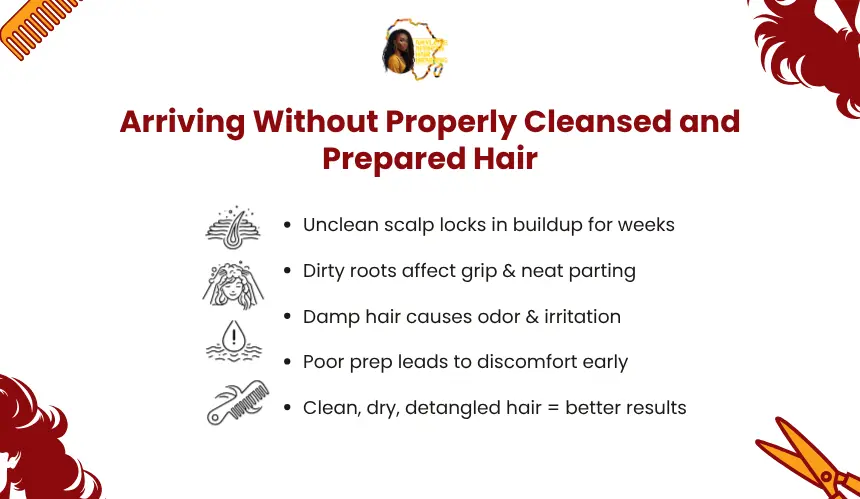
Braids are installed to last for weeks. Whatever condition the hair and scalp are in at the time of installation gets sealed into that style. If the foundation is not clean, dry, and properly stretched, the final result often feels uncomfortable and looks less polished within days.
Proper preparation improves sectioning accuracy, reduces unnecessary pulling, and supports overall protective styling results.
Skipping a Clarifying Wash Before Braids
One of the most common mistakes before a braiding appointment is arriving with product buildup on the scalp. Heavy oils, leave-in conditioners, edge control residue, and dry shampoo can coat the roots. This buildup interferes with clean parting and reduces grip at the base of the braid.
A clarifying shampoo helps remove excess sebum, styling residue, and environmental debris. A clean scalp creates a healthier environment for long-term wear and reduces the risk of itchiness during the first week. Clean hair does not mean stripped or dry. It means balanced, refreshed, and free from buildup that can compromise braid longevity.
Leaving Hair Damp or Poorly Dried
Moisture trapped at the roots is another avoidable mistake. Braiding damp hair can create an unpleasant odor after a few days because the style limits airflow to the scalp. In some cases, prolonged dampness may contribute to fungal irritation.
Fully drying the hair before the appointment supports better tension control and cleaner sections. Many stylists prefer stretched natural hair or a light blow-dry because it allows for smoother installation, especially for box braids preparation or knotless braids prep. Dry hair also minimizes shrinkage during the braiding process, which helps maintain consistent braid length.
Did you know? Studies on scalp microbiome balance show that prolonged moisture trapped against the scalp can disrupt normal microbial levels. When braids are installed on damp hair, limited airflow creates a humid environment that may increase odor and irritation within days. |
Not Fully Detangling Natural Hair
Arriving with tangled roots or matted ends can significantly increase installation time. It also forces the braider to detangle during sectioning, which can lead to discomfort and breakage.
Proper detangling before braids involves working through the hair in sections using a wide-tooth comb or detangling brush. This step supports the even distribution of braiding hair extensions and reduces unnecessary tension on the scalp. Smooth, stretched hair allows for cleaner parts, neater finishes, and a more comfortable overall experience.
Clean, dry, and detangled hair creates a stable base. When this foundation is handled correctly, the rest of the appointment becomes more efficient, controlled, and protective for the hair underneath.
2. Ignoring Scalp Health and Sensitivity
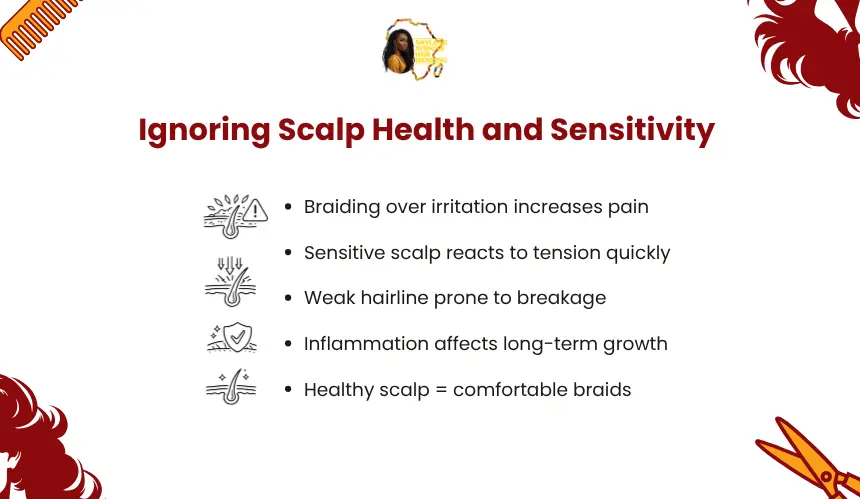
Braids place controlled tension on the hair shaft and follicle. If the scalp is already compromised, that added tension can quickly turn minor irritation into a painful or damaging experience. Scalp condition directly influences comfort, inflammation levels, and how well a protective hairstyle can be tolerated for several weeks.
Many people focus only on hair length or thickness before a braiding appointment. The scalp, however, is the living foundation of hair growth. When it is inflamed, dry, or stressed, installing braids without addressing those concerns can increase the risk of follicle strain and long-term thinning.
Braiding Over an Irritated or Inflamed Scalp
Redness, tenderness, flaking, or small bumps are warning signs that the scalp needs attention before installation. Braiding over active irritation can intensify discomfort and may worsen underlying conditions such as dermatitis or psoriasis.
A healthy scalp should feel calm and balanced. If there is active inflammation, rescheduling the appointment may be the safer choice. Installing braids on a compromised scalp increases sensitivity to tension and can make the first few days extremely uncomfortable. In some cases, it may contribute to traction-related stress around vulnerable areas.
Not Addressing Existing Breakage or Hairline Stress
Edges and temple areas are particularly fragile. If thinning or short broken hairs are already present, tight installation can accelerate damage. Early signs of traction alopecia often appear along the hairline, especially in individuals who frequently wear tight protective styles.
Before braiding, it is important to assess hair density near the perimeter. Choosing lighter extensions or requesting looser tension around delicate areas can reduce strain on follicles.
Protecting the hairline during installation supports long-term retention and minimizes unnecessary shedding after removal.
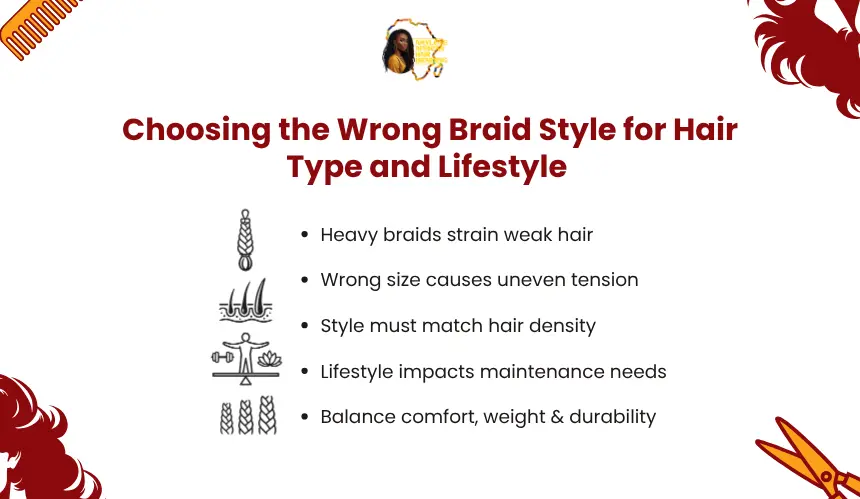
3. Choosing the Wrong Braid Style for Hair Type and Lifestyle
Not every braid style suits every head of hair. Social media trends often highlight ultra-long, waist-length braids or extra-small parts, but those looks are not universally compatible with all hair textures, densities, or daily routines.
Selecting the wrong style before a braiding appointment can lead to discomfort, premature removal, or unnecessary stress on the hair shaft.
Protective styling works best when the braid size, extension weight, and overall design align with natural hair strength and personal lifestyle habits. Ignoring this match is one of the most overlooked preparation mistakes.
Selecting a Style That Is Too Heavy
Long braids with thick braiding hair extensions may look dramatic and elegant, but they add noticeable weight to the scalp. For individuals with fine strands or low hair density, excessive extension weight can strain follicles and increase tension at the root.
Heavier styles also swing and pull during daily movement, which compounds stress over time. Lightweight braid styles or medium-length options often provide better balance for those with fragile or chemically treated hair.
Choosing a manageable weight supports comfort and reduces the risk of tension damage throughout the wear period.
Pro Insight: Hair can only tolerate a limited amount of mechanical load per strand. Research in cosmetic science shows that adding excessive extension weight increases tensile stress at the follicle attachment point. Over time, repetitive pulling weakens anchoring strength, especially along the hairline. |
Ignoring Hair Density and Texture Compatibility
Hair density determines how much extension hair can be safely added to each section. Smaller parts with thick synthetic fiber can overwhelm fine natural hair, while very large sections may not hold securely in coarse textures.
Texture also influences shrinkage and grip. For example, tightly coiled hair may require proper stretching before installation to ensure even braid length. Considering these factors during box braids preparation or knotless braids prep helps create uniform sections without placing uneven stress on certain areas.
Matching braid size and extension volume to natural hair characteristics improves durability and supports healthier retention after removal.
Not Considering Lifestyle and Maintenance Ability
A braid style that looks stunning on day one still needs daily management. Individuals who exercise frequently, swim, or work in humid environments must consider how sweat and moisture will affect the scalp.
Very small braids take longer to dry after washing and may require more maintenance time. Longer styles can be harder to secure at night. Protective style maintenance includes wrapping with satin, managing scalp hydration, and scheduling timely removal.
Choosing a style without considering these lifestyle variables often leads to frustration or early takedown. The most successful braiding outcomes occur when aesthetics, hair strength, and daily routine are aligned from the start.
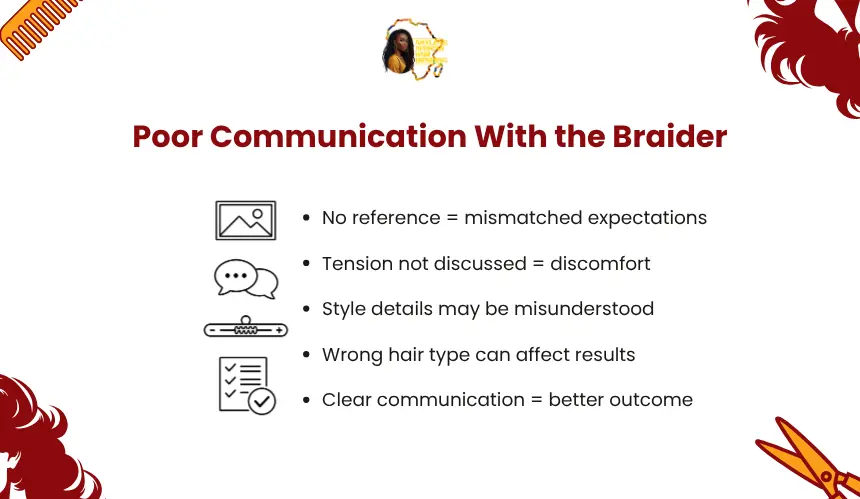
4. Poor Communication With the Braider
Even when hair is properly prepared and the scalp is healthy, miscommunication can quietly undermine the entire appointment. Braiding is a collaborative process.
The stylist brings technical skill, but the client brings expectations, comfort thresholds, and personal preferences. When those details are not discussed clearly, the final result may feel disappointing or uncomfortable.
Not Bringing Reference Photos
Describing a braid style verbally often leads to different interpretations. Terms like medium, long, or small can mean different things to different people. A reference photo provides visual clarity about part size, braid density, and overall length.
Photos also help align expectations around the finish. For example, some box braids have a sleek, gel-defined base, while others have a more natural root appearance. Showing an image minimizes guesswork and reduces the chance of surprise at the end of the appointment.
Failing to Discuss Tension Preferences
Many people assume tight braids are necessary for longevity. In reality, excessive tension can cause scalp soreness, bumps, and long-term follicle stress. Comfortable braiding tension supports retention without causing pain.
Before installation begins, clients should clearly state their sensitivity level. If discomfort starts during braiding, it should be addressed immediately. Adjusting grip strength, section size, or braid weight early prevents unnecessary strain and reduces the risk of traction-related thinning.
Did you know? Dermatologists note that if scalp soreness lasts longer than 48 hours after installation, the tension may be excessive. Prolonged tightness restricts blood flow to the follicle and increases the risk of inflammation, which can contribute to traction alopecia over time. |
Not Confirming Hair Requirements in Advance
Different salons have different policies regarding braiding hair extensions. Some provide synthetic fiber hair, while others require clients to bring specific brands or pre-stretched braiding hair. Failing to confirm these details can delay the appointment or affect the final result.
Clarifying hair color, texture, and quantity beforehand ensures a seamless process. It also allows the client to budget properly and avoid last-minute substitutions that may not blend well with natural hair.
Effective communication transforms a routine braiding appointment into a structured, predictable experience. When expectations, comfort levels, and materials are aligned from the start, the outcome feels intentional rather than accidental.
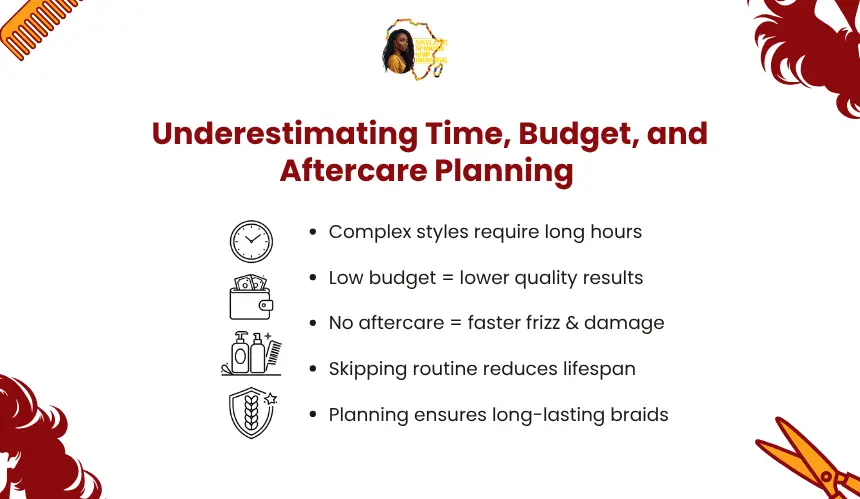
5. Underestimating Time, Budget, and Aftercare Planning
A braiding appointment is not just a few hours in a salon chair. It is a time investment, a financial commitment, and a multi-week responsibility. When people underestimate any of these factors, frustration often follows. Proper planning ensures the style remains protective, comfortable, and worth the effort.
Preparation at this stage is logistical rather than technical. It focuses on realistic scheduling, budgeting for quality materials, and understanding the maintenance required after installation.
Arriving Late or Booking Too Little Time
Intricate braid styles such as small box braids or waist-length knotless braids can take several hours to complete. Rushing the process increases the risk of uneven tension and inconsistent sectioning.
Arriving late compresses the installation window and may cause unnecessary stress for both client and stylist. Allocating sufficient time allows for careful parting, balanced tension distribution, and proper finishing. When time is respected, the outcome tends to look neater and feel more comfortable.
Not Budgeting for Quality Hair and Maintenance Products
Low-cost braiding hair extensions may tangle easily or create excessive friction against natural hair. Higher-quality synthetic fiber or pre-stretched braiding hair typically installs more smoothly and maintains its appearance longer.
Beyond installation, maintenance products are essential. A lightweight scalp oil, braid mousse, and satin wrap help preserve neatness and reduce frizz. Skipping this planning stage often leads to dryness, buildup, or premature aging of the style.
Budgeting should include both installation and upkeep. Protective styling is most effective when supported with proper care tools.
Ignoring Post-Appointment Care Planning
Once braids are installed, maintenance begins immediately. Without a plan, tension, stress, dryness, and frizz can appear within days. Wearing a satin scarf or bonnet at night reduces friction and supports braid longevity.
Scalp hydration should be balanced. Heavy oils can cause buildup, while complete neglect may lead to dryness. Planning an appropriate removal timeline is equally important. Most protective hairstyles should be worn between four and eight weeks, depending on hair growth rate and tension tolerance.
Leaving braids in for too long increases the risk of matting at the roots and makes detangling after removal more difficult. Planning ahead ensures that the protective style remains beneficial rather than damaging.
Aftercare Considerations for Washington, DC Climate
In Washington, DC, seasonal weather plays a noticeable role in braid maintenance. Summer humidity and heat can increase scalp perspiration, which may lead to buildup or frizz at the roots if cleansing and moisture balance are not managed carefully. Those commuting through Metro stations or spending time outdoors often experience faster moisture accumulation.
During colder months, indoor heating can dry out the scalp, causing flaking beneath protective hairstyles. Using lightweight, water-based hydration instead of heavy oils helps maintain balance. Adjusting aftercare based on DC’s climate supports braid longevity and overall scalp health.
Common Misconceptions That Lead to Braiding Mistakes
Many pre-appointment errors are rooted in myths that have circulated for years. These assumptions sound convincing, but they often conflict with basic scalp biology and tension science. Believing them can quietly turn protective hairstyles into a source of stress for the hair and follicles.
Myth 1: Braids Should Hurt to Last Longer
Pain is not a sign of quality installation. Excessive tightness places unnecessary strain on the hair follicle and increases the risk of traction alopecia, especially along the hairline and temples. While slight tension is expected during installation, persistent throbbing, bumps, or headaches indicate that the braids are too tight.
Longevity comes from proper sectioning and balanced extension weight, not discomfort. Protective hairstyles are meant to reduce manipulation, not create inflammation.
Myth 2: Dirty Hair Holds Braids Better
Some believe that unwashed hair provides better grip for braiding. In reality, excess oil and product buildup can cause slipping at the root and increase scalp irritation once the hair is enclosed for weeks.
Clean, properly dried hair allows for neater parts and more controlled tension distribution. A balanced scalp environment supports comfort throughout the wear period and reduces itching during the first few days.
Myth 3: Tighter Braids Always Look Neater
Neatness depends on precise parting, smooth integration of braiding hair extensions, and consistent tension control. Over-tightening may initially create a sleek appearance, but it often leads to redness, raised follicles, and early thinning around fragile areas.
A skilled braider can achieve a polished finish without excessive force. Controlled technique produces a cleaner, more sustainable result than tightness alone.
Myth 4: All Hair Types Can Handle Heavy Extensions
Hair density, strand thickness, and elasticity vary widely from person to person. Fine or low-density hair may struggle to support thick, long extensions without added stress. Ignoring these biological differences can shorten the lifespan of the style and compromise natural hair strength.
Matching braid size and extension volume to individual hair characteristics ensures that the style remains protective rather than harmful.
Understanding these myths removes confusion and sets realistic expectations. When decisions are based on scalp health, follicle strength, and proper installation principles, braiding becomes a supportive strategy instead of a risky experiment.
Ready for braids that protect your hair and elevate your look? At AmyLove African Hair Braiding, every style starts with proper preparation, balanced tension, and attention to scalp health. Book your appointment with confidence and let your next protective style feel as good as it looks.
Frequently Asked Questions
Can I braid my hair if I recently colored or bleached it?
Freshly colored or bleached hair can be more porous and fragile due to chemical processing. It is generally safer to wait at least one to two weeks after coloring before installing braids. This allows the cuticle layer to stabilize and reduces the risk of breakage under tension. A protein treatment before braiding can help reinforce weakened strands.
Is it safe to get braids during postpartum hair shedding?
Postpartum shedding is a common hormonal response that typically peaks around three to four months after childbirth. During this phase, hair density may feel thinner. Installing very heavy or long braids can place added strain on already shedding follicles. Choosing lighter styles and moderate lengths is often a safer option during this temporary shedding period.
Should I trim my hair before getting braids?
If the ends are visibly split or excessively dry, a light trim before braiding can improve overall neatness and prevent further splitting under extension weight. Trimming is not mandatory for everyone, but removing damaged ends can make the final style look smoother and may reduce tangling when the braids are taken down.
Can braids affect hair growth?
Braids do not directly accelerate hair growth. Hair grows from the follicle beneath the scalp at a biologically determined rate. However, protective hairstyles can help retain length by minimizing daily manipulation, friction, and breakage. When installed and removed properly, braids support length retention rather than changing growth speed.
Is it okay to take pain relievers before a long braiding session?
Some individuals take mild over-the-counter pain relievers before extended appointments to manage sensitivity. While this may reduce temporary discomfort, it should not replace proper tension control during installation. If a person anticipates significant scalp sensitivity, it is better to communicate openly with the stylist rather than rely solely on medication.