The Art and Heritage of African Hair Braiding: Celebrating Tradition in Tacoma, WA
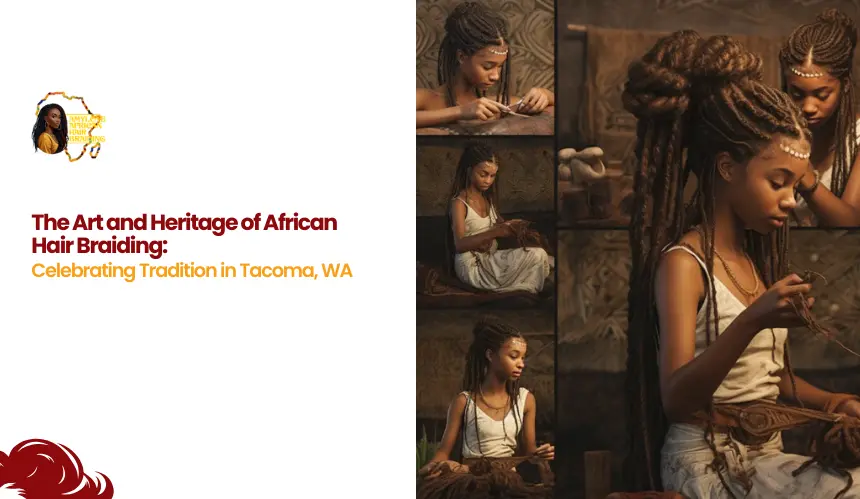
Hair braiding is more than a hairstyle; it’s a centuries-old language of identity, artistry, and community. Across Africa, intricate braids once signified age, tribe, social standing, and family heritage. Today, that same spirit thrives in salons across the U.S., where expert braiders continue to weave tradition into modern beauty.
In Tacoma and the surrounding Lakewood area, Amy Love African Hair Braiding honors this legacy by turning every style into a personal statement of pride and culture.
The Cultural Roots of African Hair Braiding
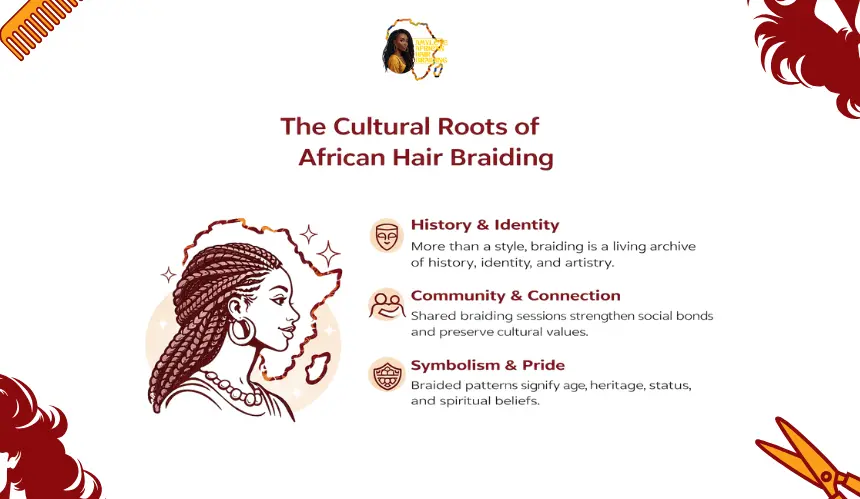
African hair braiding is far more than a hairstyle; it’s a living archive of history, identity, and artistry. Long before modern salons existed, braiding was a sacred practice shared among families and communities. Women gathered under trees or in open courtyards, weaving intricate patterns that carried centuries of meaning. Every twist and braid told a story, reflecting the values, creativity, and unity of African culture.
Braiding as a Language of Identity
In many African regions, braiding styles were once a visual language. Hair patterns revealed details such as tribal heritage, social class, age, marital status, and even spiritual beliefs. For example, specific braid designs might mark coming-of-age ceremonies, while others were worn only by royalty or newly married women. This cultural symbolism transformed hair into a wearable expression of identity and pride.
A Symbol of Community and Connection
The act of braiding has always been about more than beauty; it’s about togetherness. In traditional African societies, mothers taught daughters, and friends braided each other’s hair while sharing stories, laughter, and wisdom. These intimate sessions strengthened bonds and reinforced community values. Even today, the rhythm of braiding continues to connect generations, creating moments of calm, creativity, and care.
Spiritual and Cultural Significance
Braiding also carried spiritual undertones. In some tribes, hair was believed to hold divine energy, connecting the body and spirit. Because of this belief, not just anyone could braid another’s hair; it was considered an act of trust. The intricate designs symbolized blessings, protection, and alignment with cultural traditions that honored ancestry and nature.
An Evolving Art Form Across Continents
As African communities migrated around the world, braiding adapted and evolved. What began as a tribal expression transformed into a global art form, blending traditional patterns with modern fashion and techniques. Styles like box braids, Fulani braids, and Senegalese twists showcase both deep heritage and contemporary creativity.
Braiding as Cultural Preservation in the Diaspora
For African Americans and descendants across the diaspora, braiding became a way to preserve identity during displacement. During periods of enslavement, braiding was used as a quiet act of resistance and resilience; a reminder of origin and dignity when cultural expression was forbidden. Today, professional braiders in places like Tacoma and Lakewood continue this legacy, ensuring the artistry remains alive and respected.
Modern Revival of Traditional Techniques
With the natural hair movement gaining momentum, African braiding has re-emerged as both a fashion statement and a symbol of empowerment. Modern salons honor traditional patterns while offering innovations such as knotless braids and feed-in techniques that reduce tension and enhance comfort.
In cities like Tacoma, WA, stylists such as Amy Love African Hair Braiding bridge the past and present, preserving African heritage while embracing evolving beauty trends that celebrate textured hair in its truest form.
Modern Braiding in Washington: Blending Culture and Care
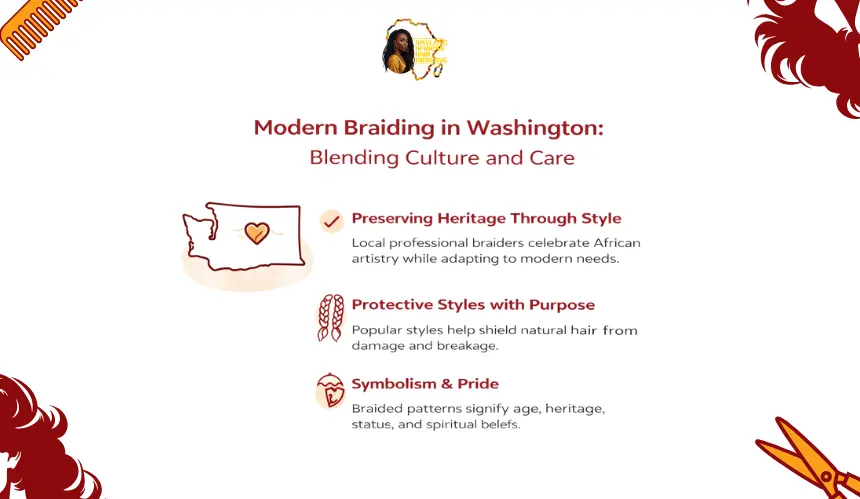
In the Pacific Northwest, natural hair culture has flourished. Local salons now combine traditional craftsmanship with modern techniques designed to protect and nurture textured hair.
Preserving Heritage Through Style
Professional braiders in Tacoma and Lakewood celebrate African artistry while adapting it to today’s lifestyles, creating looks that are stylish, practical, and deeply rooted in identity.
Protective Styles with Purpose
Popular styles such as knotless braids, feed-in braids, and cornrows not only look beautiful but also help protect natural hair from breakage and harsh weather.
Popular Braid Styles with Cultural Significance
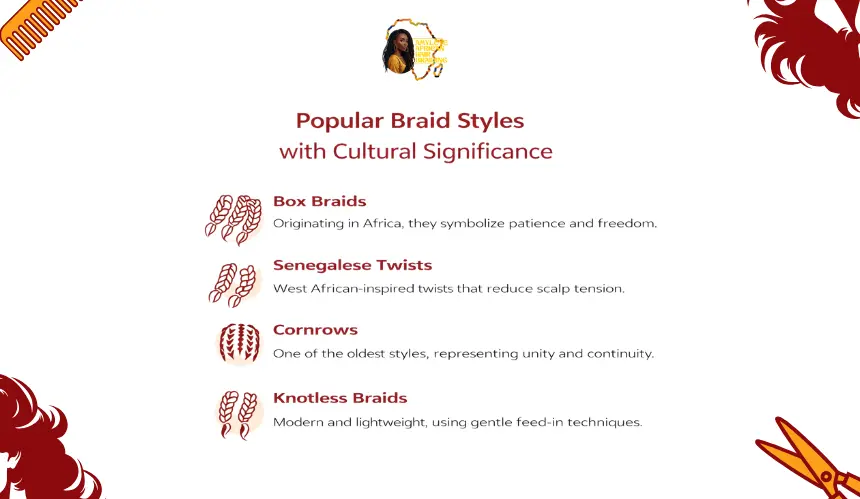
Each braid tells its own story, shaped by origin and technique.
Box Braids
Originating in South Africa, box braids symbolize patience, creativity, and freedom of expression. Their low-maintenance nature makes them ideal for busy schedules.
Senegalese Twists
These silky, rope-like twists, inspired by West African traditions, offer elegance while reducing scalp tension.
Cornrows
One of the oldest recorded styles, cornrows represent unity and continuity. Modern designs incorporate geometric patterns that highlight artistic skill.
Knotless Braids
A newer innovation, knotless braids blend comfort and longevity, using feed-in techniques for a lightweight, natural finish.
The Artistry Behind Every Braid
True African braiding requires not only technical ability but also artistic intuition. Experienced stylists understand how to balance tension, symmetry, and design for every hair texture.
A Personal Touch
Every client’s style begins with consultation, choosing the right braid size, pattern, and length to complement their face shape and lifestyle.
Skill Meets Heritage
At salons like Amy Love’s, each braid is handcrafted with care, ensuring durability and scalp comfort while celebrating the deep cultural meaning behind the craft.
Why Professional Braiders Make the Difference
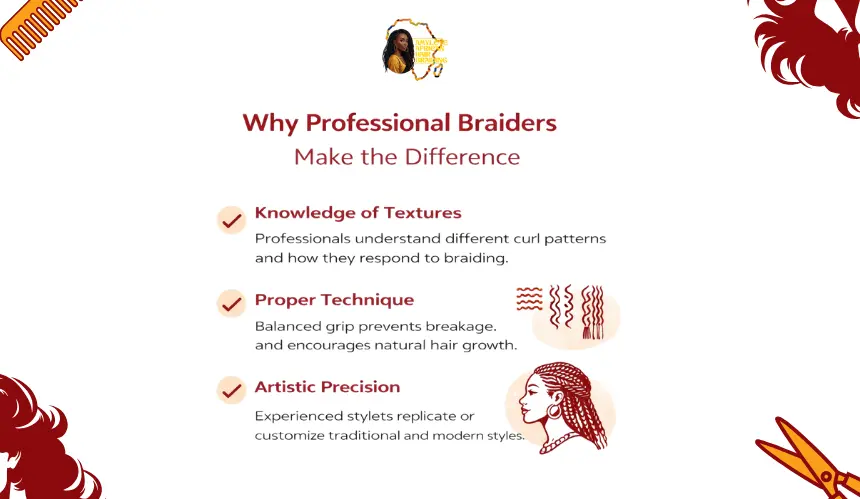
Though braiding can be done at home, professional braiders bring expertise that safeguards both hair health and authenticity.
- Knowledge of Textures: Professionals understand how different curl patterns respond to tension and products.
- Proper Technique: Balanced grip prevents breakage and promotes natural hair growth.
- Artistic Precision: Experienced stylists can replicate or customize any traditional or modern look.
Choosing a licensed, reputable salon in the Tacoma–Lakewood area ensures your braids are not only beautiful but also protective and long-lasting.
Frequently Asked Questions (FAQs)
Why has African hair braiding remained important for generations?
Because braiding connects culture, identity, and creativity, it’s not just styling; it’s a shared tradition that expresses community pride and preserves ancestral artistry.
How does braiding help protect natural hair?
Braids reduce daily manipulation, shield ends from breakage, and lock in moisture, making them one of the best protective styles for textured hair.
Are modern braid styles still traditional?
Absolutely. Today’s styles, like knotless braids and feed-in cornrows, use modern methods but retain the same craftsmanship, symbolism, and attention to detail.
What’s the benefit of visiting a local braiding salon instead of a chain?
Local experts like Amy Love African Hair Braiding offer personalized consultation, cultural authenticity, and protective techniques tailored to your scalp and lifestyle.
Why are protective styles so popular in places like Tacoma and Lakewood?
The Pacific Northwest’s damp, cool climate can be harsh on textured hair. Protective braids keep it safe from humidity and daily styling stress.
Can anyone wear African braiding styles?
Yes, these styles are inclusive expressions of artistry and technique, but it’s essential to wear them with respect and cultural understanding.
How long should you keep braids in?
Typically, 6–8 weeks for larger braids and 4–6 weeks for smaller ones, long enough to protect, but not so long that it causes buildup or tension.
Celebrating African Heritage Through Modern Beauty
African hair braiding continues to bridge generations, uniting ancestral heritage with modern creativity. For many clients, it’s a way to wear culture proudly and honor centuries of tradition while embracing individuality.
In Tacoma, Amy Love African Hair Braiding carries this legacy forward with expert craftsmanship, warm service, and deep respect for cultural artistry. Each style tells a story of history, resilience, and beauty that transcends time.